Bill proposes fines and jail terms for hospitals, medics over preventable maternal deaths
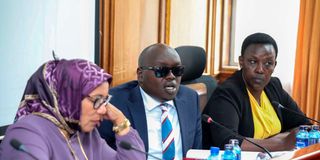
From left: Senators Abdalla Shakilla Mohamed, Cherarkey Samson and Beatrice Ogolla at a past event. Ms Ogolla has sponsored the Maternal, Newborn and Child Health Bill 2023, which proposes fines of up to Sh1 million and jail terms of up to five years for medics and facilities whose negligence leads to maternal or infant deaths.

What you need to know:
- Every year, 5,000 to 6,000 Kenyan women die from pregnancy or childbirth‑related complications; about 16 deaths daily.
The death of Lilian Otieno, 31, and her foetus in May this year exposed the difficulties expectant women face during delivery. Lilian died at Kendu Adventist Hospital, moments after being referred from Kendu Sub-County Hospital, where she had first reported. She could have delivered at the first facility, but a lack of blood for transfusion forced health workers to turn her away. Earlier, she had given birth along the road at 3am in the rain. The baby died from cold, and a retained placenta complicated her condition.
Lilian had registered with the Social Health Authority, prepared a birth plan, and attended antenatal clinic six times at Oyombe Health Centre, where she was assured of a successful delivery. She had learned her lesson four years earlier, when she delivered by the roadside and nearly lost her life. Every year, approximately 5,000 to 6,000 Kenyan women die from pregnancy or childbirth-related complications, about 16 deaths daily, according to the United Nations Population Fund.
Also read:
Nominated Senator Beatrice Ogolla wants to strengthen efforts to reduce these deaths and has sponsored the Maternal, Newborn and Child Health Bill 2023. The Bill seeks to impose fines on health facilities and individuals whose actions lead to the death of women and their children, and also introduces services for children up to 12 years old.
The senator cited anaemia as a major cause of death among expectant women, noting that most of these deaths are preventable. However, in some cases, health workers are accused of laxity, which has led to the loss of both maternal and infant lives.
"No mother should die while trying to give life," Senator Ogolla said. "The Bill has provisions that will impose penalties for negligence, including a fine of up to Sh1 million or a jail term of up to five years." She also proposes making it illegal to deny pregnant women or infants certain essential services.
In Lilian's case, Homa Bay County defended itself against accusations of negligence. Dr Kevin Osuri, the county Medical Service chief officer, explained that Kendu Sub-County Hospital lacked sufficient blood when Lilian arrived. "She had to be referred to a facility where there was blood. Though we try our best, sometimes we have stock-outs," he said, adding that the county relies on the Regional Blood Transfusion Centre in Kisumu for screening, which takes time.
Senator Ogolla said her proposal is one way to reduce the high prevalence of maternal and neonatal deaths, including those linked to medical negligence. The Bill also includes a monitoring component for expectant women during delivery. Not all women attend hospital; some end up delivering with traditional birth attendants, increasing complication risks. Senator Ogolla drew parallels with HIV programmes, where patients are monitored and supported if they miss treatment, and suggested similar tracking for pregnant women.
"Women need to be prepared when they are pregnant, just as you prepare your farm before planting. The government must put in services that prepare women for pregnancy. This will reduce medical emergencies," she said.
The Bill also highlights post-childbirth services and extends care beyond infancy to 12 years. It also supports expectant women with disabilities.
Homa Bay consistently records one of Kenya's highest maternal mortality rates: 516 to 583 deaths per 100,000 live births, well above the national average of 355 to 488. According to the 2022 Kenya Demographic and Health Survey, the county's neonatal mortality stands at 31 per 1,000 live births (national: 21), infant mortality at 42 (national: 32), and under-five mortality at 61 (national: 41). Most deaths are from preventable causes such as postpartum haemorrhage, obstetric complications, and eclampsia, worsened by delays in skilled attendance and emergency care.
The Senate has already debated and passed the Bill, which has now been moved to the National Assembly for second reading. Senator Ogolla appealed to MPs to pass it, and held a public sensitisation meeting in Ndhiwa to rally support.
At the meeting, MSI Reproductive Choices advocacy officer Mark Okundi said barriers to access include inability to get family planning methods of choice. "The Bill will eliminate some of the problems women face regarding reproductive health. Besides, it will enable hospitals to have adequate stocks of medicine," he said.
County medical outreach coordinator Molly Ochar said the county is working with community health promoters to link expectant women to hospitals for safe delivery. Residents of Ndhiwa called on the Ministry of Health to strengthen ambulance services, raised concerns about accessibility for persons with disability, and urged the creation of child-friendly environments to reduce fear among minors visiting hospitals.