Combating climate crisis with energy-saving stoves

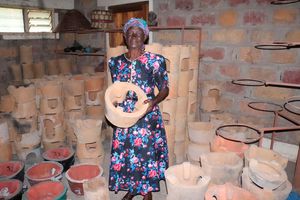
An energy-saving cooking stove at a home in Alego Usonga, Siaya County.

What you need to know:
- A well-designed wood or charcoal burning efficient stove reduces the fuel used in cooking by about 50 per cent, while reducing toxic emissions by up to 70 per cent.
As the climate crisis becomes more serious and more obvious, residents of Siaya County have started making baby steps towards reducing carbon emissions. Through locally-led climate action, thousands of households have adopted the use of energy efficient cooking stoves.
The stoves use just a third of the firewood that the original African three-stone burner uses.
A well-designed wood or charcoal burning efficient stove reduces the fuel used in cooking by about 50 per cent, while reducing toxic emissions by up to 70 per cent.
Tembea Youth Center for Sustainable Development, a local community organisation based in Ugunja, is championing adoption of the stoves. So far, it has reached 120,000 households in Siaya.
Teresa Atieno from Got Ojur village in Alego Usonga said the new burner is much more efficient compared to the traditional one that she grew up using.
“Ever since I acquired this new burner, things have changed. The firewood that I would previously use for a week today serves me for almost a month because the new stove uses less wood to produce the heat necessary to cook meals,” said Ms Atieno, 70.
The stove is constructed within the kitchen using readily available materials that an average household can afford.
“All that I was asked to pay was a deposit of Sh200. I paid the remaining amount in installments. In total, I paid Sh1,000. Paying such an amount for an effective and efficient cooking stove is worth it,” she added.
The stove is constructed using 20 building bricks, clay and vegetables leaves that are available in the rural farms.
The stove has two burners that accommodate different sizes of cooking pots.
Mr Daniel Ongoma, a village elder who has been championing the use of the new stove, said: “As Africans, we often make traditional meals like githeri, which requires a lot of heat. But the new stove cooks githeri and other meals faster than the three-stone traditional stove.”
According to the Siaya County Integrated Development Plan 2023-2027; 84 per cent of residents still use the traditional burner as a method of cooking.
Nicholas Ngesa, an officer from Tembea Youth Center for Sustainable Development, said the stove’s efficiency contributes to broader success in mitigating the effects of climate change.
“We have so far installed the stoves in 120,000 households within Siaya County in the last 10 years and we are targeting another 58,000 households,” said Mr Ngesa.
He noted that the stove also reduces the amount of carbon that is emitted in the atmosphere by 50 per cent.
“Carbon emissions are one of the contributors to the climate crisis. If all the households that are currently using the traditional three-stone burners can adopt the new energy-efficient stove, we can clean the atmosphere and mitigate the effects of climate change,” he added.
Siaya County Director for Environment, Climate Change and Natural Resources Gabriel Oduong said the new cooking technology is timely and deserves support from different stakeholders to reach as many people as possible.
“The organisation has succeeded in championing the use of the new stove and they have plans to extend to the neighboring Busia County, which also has a high population depending on wood fuel,” says Mr Oduong.
He added: “These are the locally-led initiatives that need support from different stakeholders. This stove reduces carbon emissions into the atmosphere by 50 per cent. This is what the world needs. If the entire globe can reduce carbon emissions by half, then the planet will be a better place.”
The organisation also trains the local community on proper farming methods.