COP30 fell short by sidestepping intensive animal agriculture realities
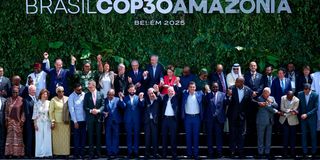
Brazil's President Luiz Inacio Lula da Silva, United Nations Secretary-General Antonio Guterres and other delegates attending the Belem Climate Summit ahead of the United Nations Climate Change Conference (COP30) in Belem, Brazil, November 7, 2025.
What you need to know:
- COP30 was hosted in Belém on the edge of the Brazilian Amazon, a region that symbolises both immense natural beauty and a growing environmental risk.
- Food systems finally emerged as a noticeable theme in both the negotiations and the Belém Declaration on Hunger, Poverty and Human-Centred Climate Action
We cannot protect the planet while propping up an industry that destroys forests, fuels the climate crisis and subjects billions of animals to immense suffering. Yet at COP30, widely expected to be a moment of truth, the reality of intensive animal agriculture was once again avoided.
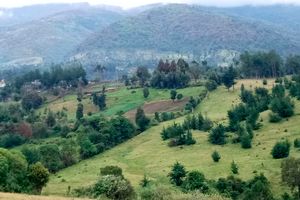
COP30 was hosted in Belém on the edge of the Brazilian Amazon, a region that symbolises both immense natural beauty and a growing environmental risk. The summit carried enormous symbolic weight. It took place in a landscape where biodiversity, indigenous communities and one of the world’s most important carbon sinks exist. However, symbol and substance diverged. For a conference situated at the heart of the Amazon rainforest, the limited attention given to deforestation was deeply disappointing.
The Belem Political Package adopted at COP30 weakened earlier commitments on tackling deforestation through a roadmap, a disturbing retreat at a time when forest loss is accelerating. The wildlife, Indigenous peoples, and global communities who benefit from the forest deserved far better than vague language and diluted ambition. Their lives and livelihoods depend on the survival of the Amazon, and so does ours here in Africa, given that forest loss in key regions destabilizes global weather patterns, impacts international commodity prices, and directly threatens our own food security and economic stability.
It also overlooked a fundamental driver of environmental destruction. Intensive animal production continues to be a leading cause of global deforestation. It generates significant greenhouse gas emissions, degrades land, drives biodiversity loss and causes immense animal suffering.
Cutting down forests to grow crops that feed billions of farmed animals and not people make no economic, environmental, or moral sense. Yet the negotiations tiptoed around this reality. This omission is striking, especially for a COP hosted in a region where land conflicts, forest fires, and intensive farming are deeply intertwined.
Food systems finally emerged as a noticeable theme in both the negotiations and the Belém Declaration on Hunger, Poverty and Human-Centred Climate Action. Recognising smallholder farmers who grow much of the world’s food and are highly vulnerable to climate shocks, is an encouraging step.
A major win was on just transition where the final decision agreed to a mechanism aiming to enhance international cooperation, technical assistance, capacity-building, and knowledge-sharing. The just transition text includes food production and thus provides fertile ground for our call to move away from intensive animal agriculture.
What remained glaringly absent was any mention of animal welfare. This is not a niche issue. The health of animals, the stability of our ecosystems, and the future of our climate are inseparably linked. Intensive animal agriculture relies on practices that harm animals, damage soil, contaminate water, undermine rural livelihoods, and heat the planet.
Africa is witnessing these consequences first hand. Droughts, floods, failed harvests, and food insecurity are now yearly headlines. We cannot continue advocating for climate solutions that ignore the interconnectedness of all life.
It is encouraging to see some of the African countries taking action. Kenya’s Nationally Determined Contributions (NDC 3.0) place strong emphasis on transforming food systems, restoring degraded land, and strengthening climate-resilient agriculture.
But these commitments cannot be realised while intensive animal production continues to expand. The alternative is already taking shape. In Murang’a County, agro ecology initiatives are demonstrating that sustainable, low-input farming can restore soils, increase yields, and strengthen livelihoods without harming animals or the environment. These home-grown successes show that sustainable agriculture rooted in African knowledge systems is not an aspiration, it is a working proven model.
COP30 will also be remembered for its vibrant energy. Outside the official halls, the voices of people advocating for animals, climate justice, Indigenous rights and sustainable food systems grew louder and more united. We stood alongside these movements, leading and joining the protests that challenged the power of major agribusinesses whose profits depend on environmental destruction.
As attention now shifts to COP31, the world has another chance to correct the omissions of Belém and confront the drivers of deforestation, land degradation and climate injustice with greater honesty. COP31 will be a crucial moment to keep food systems on the agenda and push governments to take stronger, enforceable action.
Beyond that, COP32 in Ethiopia offers a historic opening. With Africa as host, the global climate process will stand on our continent’s soil, and African voices, priorities and lived experiences can move from the margins to the centre. We look forward to bringing these perspectives into sharper focus. COP32 will be an opportunity to showcase African climate leadership, highlight sustainable food system solutions rooted in our communities and champion a future where animals, people and the planet are all protected.
Sally Kahiu is the External Affairs Lead at World Animal Protection.