Every drop counts: The back-breaking labour of breastfeeding premature babies

Mary Wachira Mburu and her husband, Brian Mburu, practising Kangaroo care to their preterm baby. The baby was born weighing 845 grammes.

What you need to know:
- Kenya has achieved a 60 per cent exclusive breastfeeding rate in the first six months of life, exceeding the WHO’s 2025 target of 50 per cent and the global average of 48 per cent.
- But behind the good news, the full picture is more complicated. The real problem is not the policies but what happens in hospitals, workplaces and homes.
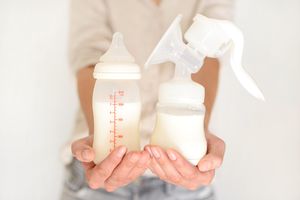
Every two hours, day and night, a mother sits alone with a pump.
Her baby is not in the room, and may not even be in the same building she slept in the previous night. She is trying to make her body do something it is not yet ready for: produce milk for a baby born too early to breastfeed, still too fragile to hold. It is an unseen part of motherhood and a breastfeeding journey that many people never get to see.
Three mothers have lived it.
Lucy Fredricks never expected to be in the labour ward at 29 weeks.

Lucy Fredrick, who gave birth to a premature baby weighing 1.2 kilogrammes.
She had first noticed swelling in her feet and face, and gone in to get checked. Doctors flagged pre-eclampsia as something to watch, though her blood pressure was only a little high, nothing alarming, and there was no protein in her urine, the usual sign of kidney trouble. So, she was sent home. She went about her pregnancy, telling herself she was fine.
Then, at 29 weeks and three days, her body said otherwise. She went back to hospital that evening, unable to walk. The blood work came back with a diagnosis she had never heard of before: HELLP syndrome, a rare and dangerous complication of pregnancy that breaks down red blood cells, raises liver enzymes and lowers platelet counts. By then there was nothing left to do but deliver, and fast, to save both mother and baby.
“I tried looking for sanity, but everyone said there was no time,” she says.
Her daughter was born by emergency caesarean section, weighing 1.2kg, and by the end of that first day she had already lost 200g, down to a single kilogramme. She was put on a breathing machine and given medication for her lungs; she was too small to breathe on her own, too small even for clothes.
Lucy was still recovering from the anaesthesia while all this was happening, and did not see her daughter until the second day. Even then, she could not pump because she had no milk. The anxiety and the tension meant her body would not generate any.
Lucy’s first expression came at home, four days after her discharge. She produced 15ml. She cried, not from disappointment but from relief, that something had come, that her body had produced something she could take to her daughter.
“I got about 15ml,” she says. “So first thing in the morning, I was at the hospital to deliver the milk.”
Once the milk began, the question became how to sustain it. Lucy was expressing every two hours. She would go to the crèche, the area near the neonatal unit where women in the same situation gathered, sat together and compared volumes, sharing the particular intimacy of producing milk for babies they could not feed directly.
“We would encourage each other,” she says. “You carry your pump and go, and we express together.”
She had bought a Medela pump, one of the most expensive on the market, suspecting at first that a cheaper pump was the problem. It was not the pump but her body. It was learning, gradually, to do something it had never done before under these circumstances. She started at 5ml, then 10, then 15ml. Each increase was tracked, and each was its own small celebration, proof that the baby was getting enough.
For Mary Wachira Mburu, her labour began in a hair salon.
She was 26 weeks pregnant, in her first pregnancy, sitting on a salon chair when she felt something she did not recognise. She had never been through labour before and did not know what was happening. By the time she understood, she was in emergency at Mater Hospital, delivering a boy she did not think would survive.
Gabriel Mauru weighed 845g at birth, small enough to fit in his mother’s palm.
“I had never seen anything like this before. It is a miracle that he survived,” she says. “Breastfeeding was also so new to me. I had not even taken any classes.”
She did not see her son for two days. She was too weak. When she finally made it to the neonatal unit, he was on glucose and IV fluid, because there was no milk yet. Her body had not begun to produce it, and her mind was still reeling from a delivery she had not prepared for and a baby she was yet to hold.
For many mothers, the struggle in the early days after a preterm delivery is not the act of expressing milk itself, but the painful reality that it often refuses to come.
“This is not a failure. It is physiology,” says Dr Rosemary Ochieng, a consultant neonatologist. “The body produces milk in response to signals: the pressure of a baby feeding, the hormone oxytocin released through skin contact, the emotional bond of proximity to a new-born. When a baby is born too early and placed immediately in an incubator, those signals are disrupted. The mother is recovering from surgery or from a traumatic delivery. She is afraid. She has not been told what to expect. And the milk, which requires calm and physical contact to flow, struggles to arrive in a body running on adrenaline and grief.”
“Milk production requires a stable state of mind,” she explains.
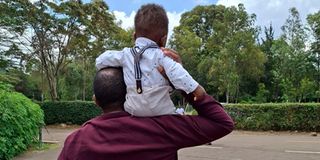
Brian Mburu holding his son.
Mary had three pumps: an electric one, a manual one, and a semi electric one. None worked properly in those first days. She learned to hand-express instead, with nurses guiding her, showing her how to apply pressure, coaxing her body into something it was not yet ready to do.
For about a week, hand expression was all she had. The first time she managed to collect anything, it was only drops. Eventually she reached 5ml. That was the beginning.
Mary was expressing every three hours. Each session took 15 to 45 minutes, enough time to express, clean the equipment, eat something and prepare for the next cycle. She was at the hospital from 8am to 8pm, because the facility required kangaroo care sessions and Gabriel’s feeds were timed to a schedule she had to be present for.
“There was a lactation room,” she says. “The nurses and carers also would let you pump or express next to your baby.”
The lactation room offered privacy and structure. Not every woman in Kenya’s neonatal units has access to a pump, and every mother in this story had to buy her own.
The third mother, a government employee, asked to remain anonymous. We shall call her Amina*. She started bleeding at 30 weeks. She went to hospital, was told the baby was coming, and was taken into emergency surgery. Her son was born at 1.37kg with mild respiratory distress syndrome. He was placed on a mechanical ventilator and fed through a nasogastric tube.
Three days after delivery, Amina was discharged, though she was still unable to breastfeed her baby.
“I left without my baby,” she says. “I would come every day to see the baby.”
Seven days
Amina’s milk did not come for seven days. She tried in vain. Then it started, a drop at a time. She pumped at home, overnight, freezing what she could and bringing it to the hospital every morning in labelled bags. Between day 10 and 14, she had reached an adequate supply, around 200ml a day of expressed milk. The formula her son had been receiving since birth became a supplement rather than his primary feed.
All three mothers describe the same moment of reckoning: when they understood, fully, what they were being asked to do. They were producing milk for babies they could not hold, waking in the night to sit alone with a pump, filling small containers with something that would travel to a hospital and be fed to a child they had not yet breastfed directly.
The physical act of producing milk is governed by proximity, contact, and the sight, smell and weight of a new-born. Strip all of that away, put the baby in an incubator in a hospital you have to drive to, and the body has no natural signal to respond to. The mother has to create that signal herself, every two hours, through sheer determination.
Asked what it was like to produce milk for a baby she could not hold, Lucy goes quiet for a moment. “Very stressful,” she says. “I was crying every time, but the fact that I wanted the good for my child kept me going.” Mary describes it differently. She did not allow herself to think about it too directly, she says. She focused on what she could control. “You just accept your reality,” she says. “If your baby is happy, growing and healthy, you do what you need to do. You pump from your heart. That is all they need.”
Amina puts it simply: “It was difficult.”
In a neonatal unit, the difference between a mother who gives up and one who keeps going is often a single nurse.
Lucy bonded with one nurse in particular.
“When I knew she was on duty, I was certain that my baby was in safe hands,” she says. “But not with everyone else. I had to feel it. If I felt safe, I would go home and do certain things I needed to do, prepare the house for when she was coming. I needed that.”
Mary had the support of Dr Ochieng, whom she describes as the anchor of the neonatal unit at Aga Khan University Hospital. The medic has devoted her career to the smallest and most fragile patients, and sees her role as the go-between for mother and baby. Asked what she tells exhausted mothers who are wondering whether to keep going, she says:
“Exhaustion is normal. A lot of it is mental, because she is worried about her baby. But one thing she needs to know is that everybody there is working for the good of her baby. And when she is tired, she should accept that she is a human being. Just rest. And when she gets up from her rest, rejuvenate herself and try again.”
On what matters most in the early hours after a preterm delivery, she says: “Ideally, if at all possible, the mother should have contact with the baby immediately after birth or after recovery. That is really, really important. If for one reason or another they are not able to have contact at that time, we try to facilitate that contact as soon as is humanly possible.”
She says milk can fail to come, but the reason is not physical, not the body.
“Any emotional disturbance will affect her flow. If it was there, it can suddenly go down. She needs to be in a relaxed environment. Sometimes fathers know better than medical personnel. They will tell you: don’t talk to her, I will talk to her myself, I know her. Listening to that gives you an idea of which mother you are dealing with.”
On what milk production ultimately means for a premature baby, she is clear.
“The ultimate for any new-born, and also a premature new-born, is the mother’s milk. Everything else we do is just to support that. But the ultimate is the mother’s milk.”
Breast milk produced by a mother who has delivered prematurely is different in composition from that produced at term, Dr Ochieng tells Healthy Nation. It contains higher levels of protein, immunoglobulins and other protective factors calibrated specifically for a preterm infant’s needs. It coats the gut with a protective layer that formula cannot replicate, and reduces the risk of necrotising enterocolitis, a devastating bowel condition and one of the leading causes of death in preterm infants. It also provides antibodies that the baby cannot yet produce for itself. When a mother pumps 5ml, then 10ml, then 15ml, gradually building to a full supply, she is not simply providing nutrition; she is providing medicine. She just does not always know it, because in many facilities, nobody tells her.
Lucy’s daughter’s journey in the neonatal unit was not a straight line. It rarely is.
Some days the baby forgot to breathe altogether, not unusual for a baby born this early, since her nervous system was still not fully developed, and she would be given
caffeine to keep her lungs working. Other days, Lucy’s phone would ring with the hospital’s number and her heart would stop before she even picked up. There were days the weight refused to go up, when a few grams on a scale became the difference between hope and fear.
“Any time I would get a call, I was really worried,” she says.
She counted the milestones they call graduations, the stages of a neonatal journey that mark progress. Off the ventilator, off supplemental oxygen, out of the incubator, into the high-dependency unit and into the coat. Each stage is its own small homecoming, a signal that the journey is moving in the right direction.
Her daughter stayed for 25 days, five days short of the projected 30.
Mary’s son Gabriel stayed for 62 days, over two months. She came every day. She saw other mothers come and go, saw babies improve and sometimes not improve, and sat through the particular grief of a neonatal unit where not every story ends the way hers did.
“Every morning that you come into the hospital and find your baby well, you feel like: this is it,” she says. “My baby kept me going. For some moments you need to give it, even if you feel like giving up. Just take some time out, come back, and appreciate the progress. You may not find the progress to be massive. Sometimes you find your baby has added some grams, and you are grateful.” Amina’s son stayed for 32 days. She discharged him at 2.1kg, when the doctors wanted to keep him longer. She had assessed the situation and made her decision. “My baby is okay,” she told them. “If it is concerning, I will come back.”
She left with her son, a pump, some formula as a supplement, and the hard-won knowledge of a mother who had spent a month learning to read a baby that had arrived before she was ready.
When Lucy’s daughter was finally strong enough to try direct breastfeeding, Lucy did not know what to expect. The baby had been fed through a tube, with controlled, measured amounts delivered by a machine. Now there was a full nipple, a baby who had never learned to latch, and a mother who had been expressing milk for nearly four weeks without ever holding her daughter as she had imagined she would. It took time. Lucy bought nipple shields to help while the latch developed.
Mary’s son Gabriel, the size of her palm and the weight of a small paperback, born at 26 weeks, eventually latched too. She watched him on the monitors, his breathing, his heart rate, and saw the child who had spent two months in a hospital bed learn to do the most natural thing in the world. “It was beautiful,” she says. “He was so tiny, trying to suckle, trying to grab on. We were making progress. Look how far we have come.”
Amina’s son found the breast as well, though it took time and supplementation, and the stubborn patience of a mother who had decided, early, that every challenge that came would not break her. It would shape her. Their stories sit inside a national picture that is both encouraging and worrying.
Kenya has achieved a 60 per cent exclusive breastfeeding rate in the first six months of life, exceeding the WHO’s 2025 target of 50 per cent and the global average of 48 per cent, according to the Kenya Demographic and Health Survey 2022. This is a genuine achievement, and one the Ministry of Health marks during World Breastfeeding Week, observed from 1 to 7 August every year. The country has good policies including the Maternal, Infant and Young Child Nutrition Strategy, the Breast Milk Substitutes Act, and the Baby-Friendly Hospital Initiative, and the frameworks exist too.
But behind the good news, the full picture is more complicated. The real problem is not the policies but what happens in hospitals, workplaces and homes. Bottle-feeding among infants aged 0 to 23 months has risen from 26 per cent in 2014 to 34 per cent in 2022, a trend the Ministry of Health now warns is threatening Kenya’s hard-won gains. Urban mothers initiate breastfeeding within one hour at only 55 per cent, against 63 per cent for rural mothers. Among caesarean section deliveries, the most common mode of delivery for preterm births, more than 63 per cent of mothers experience delayed breastfeeding initiation.
County-level data from Unicef’s Kisumu Zonal Office shows significant variation, according to Dr Janet Ntwiga, a nutrition specialist at the UN organisation. Busia has an exclusive breastfeeding rate of 96.5 per cent, Homa Bay 81.6 per cent, Kisumu 86.6 per cent, and Migori 88.4 per cent. These figures reflect the work of county nutrition programmes and community health promoters, the ground-level infrastructure that reaches mothers before and after delivery and makes the difference between a mother who continues and one who does not. Under-nutrition is estimated to cost Kenya over $38.8 billion in GDP losses between 2010 and 2030. Stunting in children under five stands at 18 per cent, down from 40 per cent in 1993, and wasting stands at five per cent. These gains are directly connected to breastfeeding. But they can easily be lost because they depend on mothers getting support that is not always there.