Forget fillings: Scientists just found a way to regrow your tooth enamel
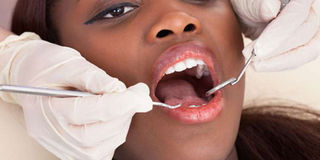
Even with improved dental care, many people lose their teeth to gum disease, tooth decay, or injury. PHOTO | FILE

What you need to know:
- Over 50 per cent of Kenyans suffer from untreated tooth decay, and more than 90 per cent show signs of gum disease.
Imagine a world where damaged tooth enamel could be fully restored, rather than just patched with temporary fixes.
This vision is moving closer to reality, thanks to scientists at the University of Nottingham who have developed a breakthrough protein-based gel designed to repair and rebuild tooth enamel.
This innovative gel, whose first product is expected to be rolled out next year, mimics the body's natural process of building enamel. It offers a potential solution to protect against future decay while reinforcing existing enamel structure.
Unlike traditional fluoride treatments that merely slow down decay, this gel actively promotes the growth of new enamel. It contains no fluoride and can be applied as easily as a standard varnish in a dental clinic. The gel works by imitating the natural proteins that guide enamel formation in early life, forming a thin, durable coating that seeps into the tooth to fill micro-cracks and imperfections.
How it works
The application process harnesses the body's own minerals. Once applied, the gel acts as a structural framework, drawing calcium and phosphate ions from saliva to stimulate new mineral growth through a process known as epitaxial mineralisation. This allows the regenerated enamel to fuse seamlessly with the natural tooth, restoring its original structure and strength.
The gel can also be applied to exposed dentin, the sensitive layer beneath the enamel. There, it creates a protective, enamel-like layer that can reduce tooth sensitivity and improve the bonding of dental restorations.
"When our material is applied to demineralised or eroded enamel, or exposed dentine, it promotes the growth of crystals in an integrated and organised manner, recovering the architecture of our natural, healthy enamel," said Dr Abshar Hasan, the study's lead author.
"We have tested the mechanical properties of these regenerated tissues under conditions simulating ‘real-life situations’ such as tooth brushing, chewing, and exposure to acidic foods, and found that the regenerated enamel behaves just like healthy enamel.”
Prof Mata highlighted the product's practical advantages: "It is safe, can be easily and rapidly applied, and it is scalable. The technology is versatile, which opens the opportunity for it to be translated into multiple types of products to help patients of all ages suffering from a variety of dental problems associated with loss of enamel and exposed dentine."
Enamel degradation is a significant contributor to tooth decay, affecting nearly half of the world's population.
Current treatments such as fluoride varnishes only manage the symptoms, and they cannot naturally regrow once enamel is lost.
This development holds particular promise for Kenya, which is facing a significant oral health crisis. According to the Ministry of Health, over 50 per cent of Kenyans suffer from untreated tooth decay, and more than 90 per cent show signs of gum disease.
Also read: Toothache causes and how to treat the pain
The problem starts early; over 46 per cent of five-year-olds have dental caries. Furthermore, dental fluorosis—a condition caused by excessive fluoride that damages enamel—affects more than 41 per cent of school children in regions with high fluoride in the water supply.
Compounding the problem is a severe shortage of dental care providers. Kenya has a dentist-to-population ratio of approximately 1:42,000, a stark contrast to the World Health Organization's recommended ratio of 1:7,000.
For dental practitioners on the front lines, this technology represents a paradigm shift.
"Every week, I see patients whose enamel is so worn down that they can't chew comfortably or even drink cold water without pain," said Dr Mercy Wanjiku, a dentist based in Kasarani. "It's heartbreaking because many of them come when the damage is already advanced, and all we can do is manage the symptoms. A gel that can naturally regrow enamel would transform the lives of these patients. Clinically, it would mean less drilling and fewer extractions, and more preservation of natural teeth."
By moving beyond temporary fixes to true biological restoration, this dental gel could herald a new era in preventive and restorative dentistry, offering hope for millions affected by enamel degradation worldwide.