From European bans to East African plates: Inside a regional pesticide dumping crisis
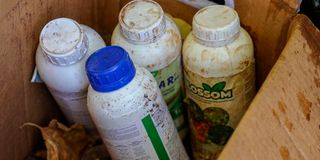
Some of the pesticides smuggled into Kenya through the Tarakea border point in Tanzania.

What you need to know:
As the East African Community manoeuvres to harmonise pesticide regulations, a troubling reality is taking shape: the region has become a dumping ground for chemicals the developed world refuses to use.
This article is the second of a two-part investigative series examining the use, impact and regulation of hazardous pesticides in Kenya and the wider East African region.
In Uganda, 60 per cent of registered pesticides are too hazardous to be used in their countries of origin. In Tanzania, a promised ban on 44 highly dangerous chemicals was quietly reversed after "negotiations" with the very industry profiting from them. Across porous East African borders, toxic molecules banned in Europe and the Americas flow freely — into fields, water sources, and eventually, human bodies.
As the East African Community manoeuvres to harmonise pesticide regulations, a troubling reality is taking shape: the region has become a dumping ground for chemicals the developed world refuses to use.
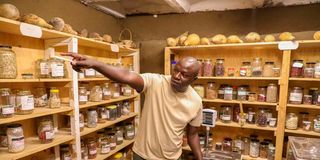
Daniel Wanjama, Seed Savers Network coordinator, during an interview at the institution in Gilgil, Nakuru County. He works with 130,000 farmers to preserve traditional seeds naturally adapted to pests.
The EAC Treaty mandates the harmonisation of pesticide regulations to boost trade and food security, aiming for unified systems and standardised labelling. However, experts from Uganda and Tanzania warn that this harmonisation has become a one-way street of toxicity.
Ben Bwambale of the Food Safety Coalition of Uganda describes his country's pesticide market as a graveyard of dangerous molecules.
"Currently, we have 115 active ingredients registered in 669 brands. Around 40 per cent are counterfeit, and over 60 per cent are so hazardous they cannot be used in their countries of origin," Bwambale explains.
These chemicals are carcinogenic, mutagenic, endocrine-disrupting, and reproductively toxic — capable of causing cancer, altering DNA, wreaking havoc on hormonal systems, and destroying fertility.
Like Kenya, Uganda has policy frameworks and international conventions to protect its people, yet these provisions are not utilised to the maximum. Porous borders allow products banned in one country to slip into another.
"You can find 2,4-D in our food, our water, and our air. We think there's connivance between people bringing them and these corporations. If you cannot sell your molecule in Europe, why do you bring it here?" he asks.
He also reveals that the disposal of pesticide containers is a critical concern. Empty containers are being used in households to store food products like salt and sugar, and as water containers for children.
A Ugandan study investigating the persistence of these toxins in tomatoes provided a wake-up call. When researchers peeled tomatoes, there was only a 69 per cent reduction in chemicals, meaning 31 per cent remained within the fruit. Cold water washing reduced chemicals by just 30 per cent, while warm water left 61 per cent of the toxins present.
"If we go to hotels and consume tomatoes as salads, the consumer is directly taking in chemicals," Bwambale warns.
The contamination extends to the air we breathe and the water we drink. In April, at the start of the planting season, Ugandan water sources contained an average of seven chemicals. By June, at the season's peak, that number had tripled to 25 chemicals in community water sources used for drinking and cooking.
A six-month study trapping air found highly hazardous molecules like Atrazine present. When researchers took blood and urine samples from farmers, they found these same molecules.
"These molecules keep accumulating in our bodies. You shouldn't be surprised when cancers increase, yet our governments do not have the capacity to deal with the health implications," Bwambale says.
In Tanzania, Dr Vera Ngowi of Muhimbili University of Health and Allied Sciences laments the "killing" of the Tropical Pesticides Research Institute (TPRI). Its mandate shifted from regulation to merely ensuring "judicious use," working closely with industry.
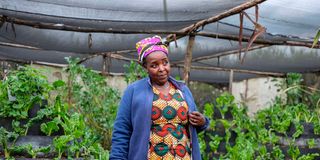
Beatrice Wangui Mwangi at her organic farm in Gilgil, Nakuru County.
"In 2022, they announced a ban on 44 highly hazardous pesticides. But they backtracked. They are 'negotiating' with the stakeholders to find alternatives, but the stakeholders are the industry itself," Dr Ngowi says.
She reveals that pesticides cross into Tanzania from Kenya, Uganda, South Africa, Zambia, Zimbabwe, and Mozambique. These chemicals are used on crops like tomatoes, onions, and maize, which are then exported back into Kenya.
"Agriculture was among the most hazardous industries in Tanzania, with the highest cancer rates," she notes.
Frederick Muchiri, CEO of Kenya's Pest Control Products Board (PCPB), confirms a massive regional disparity. Kenya has domesticated EAC guidelines, but other member states have not.
"Their regulatory mechanisms are weak. While Kenya has banned certain molecules, they remain legal across the border, leading to constant smuggling through panya routes," Muchiri states.
Farmers fight back
In the meantime, Kenyan farmers are taking matters into their own hands. Daniel Wanjama, Director of the Seed Savers Network, works with 130,000 farmers to preserve traditional seeds naturally adapted to pests.
"Regulations dictate you must dress seeds with chemicals to sell them, but traditionally, we used skins, gourds, and pots. We found that seeds preserved traditionally do much better after a year than those frozen in modern labs," Wanjama says.
"Our seed preservation relies on time-tested, localised technologies. Whether it's a Turkana leather bag, a clay pot, or a traditional gourd, these methods are proven. When a skin bag is sewn shut, it creates an impenetrable barrier against pests and moisture. Rather than imposing imported plastic or glass, we should champion these indigenous solutions. They are sustainable, appropriate, and already woven into the fabric of the community."
In Gilgil, Beatrice Wangui acts as a seed ambassador, training farmers to make chemical-free inputs: Fermented Plant Extract, a 14-day soak of Aloe Vera, Tithonia, and chilli; rabbit urine, which acts as a foliar fertiliser and pest repellent; and Ash Brew, made from wood ash and soap boiled to clear pests.
In the same area, John Ngugi Nganga, an organic farmer, recalls potato farmers using heavy chemicals to produce big potatoes while keeping a separate, chemical-free portion for themselves.
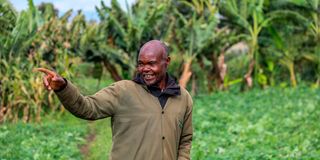
John Ngugi, an organic farmer from Eburu, Gilgil, during the interview in Gilgil, Nakuru County.
"They would say the sprayed ones are 'for the people of Nairobi,'" Nganga reveals. Like Beatrice, he produces his own biopesticides.
In Nyandarua, Betty Guchu has turned advocacy into a business, selling organic fertiliser for Sh1,500 per 50kg bag — drastically cheaper than the Sh6,000 cost of synthetic fertiliser. Her shop has become a sanctuary for farmers weary of fake fertiliser scandals and toxic residues.
Betty's resolve is fuelled by the tragic stories that walk through her door. Recently, a farmer arrived in a state of fury and despair. He had invested in a lorry-full of potatoes, only for the entire harvest to be rejected at the market.
He would later realise that the grower had used Roundup, a potent weed killer, to artificially dry the potato vines just before harvesting to speed up the process. This misuse of herbicides as desiccants not only ruins livelihoods through market rejections but leaves toxic residues on food destined for dinner tables.
"His potatoes were rejected at the market and he incurred a great loss. He is now going completely organic. It took a loss like that for him to be convinced," Betty recalls.
Not all stories in Betty's shop are of loss. She recalls an elderly man who visited with a beaming smile to share his success. After switching to her organic fertiliser, he
harvested five 90-kilo bags of grain.
"He said, 'When I go to bed, I can touch it like that, and I know at least this year, my family will have food.'" For Betty, this encounter underscores the difference between nutrient-empty, chemically-dependent farming and the dignity of a clean, sustainable harvest.
Despite these successes, Betty points to a glaring contradiction in Kenya's agricultural leadership. While the Ministry of Agriculture officially claims to promote agroecology, the market remains flooded with inputs detrimental to soil, environment, and human health.
"The government needs to stop talking from both sides of its mouth. We cannot promote agroecology while still using inputs that are eventually detrimental to us as consumers. There is a disconnect that must be addressed," Betty asserts.
Legal push
In response to this systemic failure, James Mwangi, founder of the Africa Centre for Corrective and Preventive Action (ACCPA), has filed a landmark petition at the National Assembly.
At the heart of the petition is a call for an immediate retraction of all agrochemicals already banned by international bodies such as the WHO, the European Union, or the United States — ensuring that chemicals deemed too dangerous for global markets are not used on Kenyan soil.
To modernise oversight and protect consumers from illicit products, the petition advocates for digital traceability. By implementing a mandatory QR code system on all agricultural inputs, the government could effectively eliminate the circulation of counterfeit pesticides that often bypass safety regulations.
The ACCPA is also pushing for enhanced market surveillance, proposing that the Kenya Plant Health Inspectorate Service (KEPHIS) be empowered to conduct random residue testing within local supermarkets and domestic markets, rather than focusing primarily on export goods. To support this effort, the petition calls for decentralised labs, ensuring each of the 47 counties is equipped with its own toxicological laboratory for localised testing and rapid response to safety concerns.
The scientific community is also demanding a radical shift in how Kenya views food. Prof Zakayo Thaimuta, a toxicologist at the University of Nairobi, argues that the goal of legal action must be two-fold: cessation of toxic use and detoxification of the national diet.
"We need national standards that treat food as medicine. A curated national diet should include natural detoxifiers and supplements to counter the chronic exposure we've already faced," Prof Thaimuta explains.
Legal experts like Advocate Gilbert Njoroge are advocating for a clear distinction between household-safe pesticides and commercial-grade chemicals. He suggests that any product requiring heavy protective equipment or complex disposal protocols should be restricted to licensed professionals. He points to India's QR-code tracking system as a gold standard for holding suppliers accountable for the entire lifecycle of a chemical container.
While waiting for high-level policy changes, some experts are looking to the grassroots. Dr Ngowi in Tanzania has pioneered community self-surveillance. By teaching farmers to record their symptoms within 24 hours of spraying — documenting headaches, nausea, or skin irritations — farmers become acutely aware of the immediate harm pesticides cause.
"Once they see the link between the product and their own sickness, they become much more cautious," she notes.
In Uganda, Bwambale highlights a promising innovation: a mobile gadget developed by students that can detect chemical residues in vegetables with a simple click, displaying red alerts for high toxicity.