Funding squeeze threatens Kenya’s family planning gains as donor money shrinks
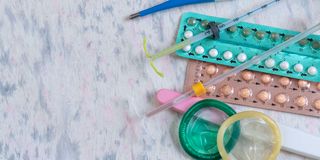
As of May 7, 2026, Kemsa central warehouse reported a complete stockouts of DMPA IM injectable, Kenya’s most commonly used contraceptive.

What you need to know:
- Demand remains high: 76 of every 100 married women want to avoid or delay pregnancy, and 48 per cent of non-users intend to start.
- About one in seven married women want to avoid pregnancy but use no contraception. National unmet need stands at 14 per cent, with the ministry targeting 10 per cent by 2030 while raising modern contraceptive prevalence from 57 to 64 per cent.
Six months ago, Elena stared at a pre-filled injectable contraceptive on her kitchen table, wondering how to restock her shop. Her four-year-old twins raced toy cars in the living room while the two-year-old twins banged spoons against their high chairs. Between nappies and her husband's struggling electronics business, money was stretched to breaking point.
A shifting market and slow store traffic meant they were barely staying afloat. “I absolutely cannot get pregnant again. Another baby would drown us,” she said.
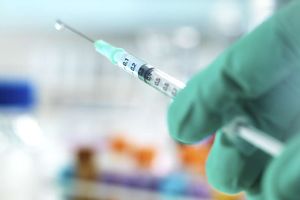
She had tried pills but knew she would forget them amid work, school and motherhood. Her gynaecologist suggested a self-administered injectable lasting three months, meaning no clinic visits were needed. That Saturday, she pinched a fold of skin on her abdomen, pressed the device until it clicked, and felt relief wash over her. The shop was still in trouble, but her future was back in her hands.
Also read: Why Kenya faces 1.2m unwanted pregnancies
“When I pulled the device away, a wave of relief washed over me. The electronics shop was still in trouble, and my hands would still be full with two sets of twins, but my future was officially back in my own hands. No more pregnancy scares and overthinking worst-case scenarios.”
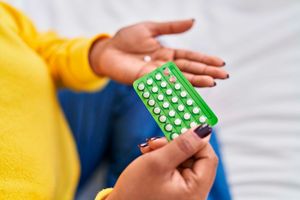
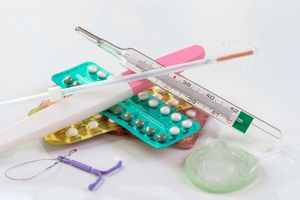
Kenya marked World Contraception Day on Friday, with Health Cabinet Secretary Aden Duale noting that the country has made gains. He said nearly six in 10 married Kenyan women used contraceptives in 2022, up from three in 10 in 2003, and 99 per cent of Kenyans have heard of at least one modern method. Among married women, injectables (20 per cent), implants (19 per cent) and pills (8 per cent) are most popular; while condoms lead among unmarried women.
Demand remains high: 76 of every 100 married women want to avoid or delay pregnancy, and 48 per cent of non-users intend to start. About one in seven married women want to avoid pregnancy but use no contraception. National unmet need stands at 14 per cent, with the ministry targeting 10 per cent by 2030 while raising modern contraceptive prevalence from 57 to 64 per cent.
“Family planning improves maternal and child health, cuts unintended pregnancies and maternal deaths, and supports household savings and women's workforce participation. Let us firmly commit to maintaining a health system wherein reproductive agency is protected by sound policy, resilient supply chains, and fiscal accountability," said CS Duale.
However, the CS warned that funding is tightening. Donor reductions and shifting international priorities have created a global deficit of about USD 185 million (Sh23 billion) for contraceptive commodities in 2026. A day earlier, Senator Hamida Kibwana put figures on the problem at home. He said only Sh500 million was earmarked for family planning commodities in 2026-2027 against a Sh3.8 billion requirement, with outstanding obligations exceeding Sh600 million worsening the gap.
Kibwana spoke during the Senate Mashinani initiative in Kilifi County, where she asked the Senate Standing Committee on Health to investigate what she called an acute shortage of contraceptive and family planning commodities. She said nine of the 13 essential commodities are currently unavailable at the Kenya Medical Supplies Authority. They include the combined oral contraceptive pill and the progestin-only pill, the three-year levonorgestrel implant, the emergency contraceptive pill, condoms, and the DMPA injectable. Lactating mothers are particularly affected by the shortage of progestin-only pills.
For those in stock, including the levonorgestrel IUD, supplies are below the required 16-month buffer, in stockout, or edging toward one. The single-rod implant favoured by young women had less than half a month's supply left against demand. The five-year implant had less than a month.
The 2026 Kenya Economic Survey shows the retreat is already visible in the numbers. Combined oral contraceptive pill uptake dropped 29.9 per cent among new clients, the steepest decline of any method tracked. Injections fell 10.9 per cent. Progestin-only pills fell 15 per cent. Female sterilisation dropped 13.9 per cent. The projected toll of the stockout: 1.2 million unintended pregnancies, 290,000 unsafe abortions, 4,000 maternal deaths, and an additional Sh11.2 billion in healthcare costs. Kenya now lags behind Uganda, Rwanda, and Zimbabwe.
The CS said the ministry would keep strengthening domestic financing and resource mobilisation by incrementally increasing allocations for reproductive health commodities and programmes at national and county levels, "thereby reducing reliance on external assistance, widening public health communication to all 47 counties, scaling self-care approaches such as self-administered DMPA-SC injectables with clinical supervision and reporting, and using the network of more than 88,000 Community Health Promoters for referral, commodity access, and continuity of care."
One of the partners involved in supplying self-administered DMPA-SC injectables is inSupply Health. The organisation's Country Director, Rose Nzyoka, said the sector is operating in a changing financing environment, with governments taking greater ownership of health resources and donor funding becoming more constrained. She said this makes it more urgent to move beyond individual projects and to institutionalise what works. She called for stronger public-private collaboration, sustainable market and financing models, reliable commodities, better data and referral systems, and continued investment in provider capacity and policy implementation.
"We cannot have sustainable access without both demand and supply," she said.
Nzyoka said pharmacies can complement public facilities without replacing them. Through inSupply's Market Test project, 650 pharmacy providers in 12 counties were trained, 490 accredited, and 40 trained as trainers of trainers. She said participating pharmacies served 390,474 family planning clients between 2022 and 2026. In 2025, 180 scale-up pharmacies reported serving an average of 16,768 clients a month, and 60 per cent of them were new family planning users. She said the public sector "remains critical for equitable access."
"355 youth champions across Nairobi, Nakuru, and Kakamega have been equipped to create awareness, provide information, and connect young people to services. We have also supported a greater understanding of self-care options, such as self-injectable DMPA-SC, by addressing concerns such as needle anxiety, building self-efficacy, and ensuring women have accurate information to make informed decisions. Through our private-sector work, we are also equipping pharmacy providers to counsel clients, offer appropriate methods, and create trusted access points," said Nzyoka.
"We will continue investing in capacity development for FP providers, including community pharmacy providers, and practical tools and training. Ultimately, our goal is not simply to reach more people. It is to strengthen the systems that ensure women and girls can access trusted information, quality services, and a range of contraceptive options, wherever they choose to seek care. Because when a woman can make an informed choice about her contraceptive, she is also choosing her future," said Nzyoka.