Global cancer cases set to hit 30 million a year by 2050, poor countries hardest hit
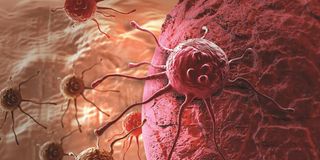
Cancer cells. Cancer has, for many years, been widely viewed as a rich man’s disease prevalent in high-income countries.

What you need to know:
- A new global study reveals a dramatic rise in cancer cases and deaths, with low-income countries like Kenya facing the heaviest burden.
- By 2050, annual cancer cases could reach 30.5 million, with deaths climbing to 18.6 million, highlighting urgent gaps in prevention, screening, and treatment.
- Researchers warn that without early diagnosis, better screening, and targeted interventions, millions of lives could be lost to preventable cancers over the next 25 years.
Cancer has, for many years, been widely viewed as a rich man’s disease prevalent in high-income countries, with antimicrobial resistance and infectious diseases long considered the world’s top health crises.
However, in a drastic twist, a new study has revealed a concerning trajectory: a steady rise in cancer cases across nations worldwide, with poor countries—already strained for resources—now bearing the brunt of the burden.
By 2050, new cancer cases globally could soar to 30.5 million annually, with deaths rising to nearly double current figures, reaching 18.6 million, according to the latest analysis published in October. So grim is the situation that researchers warn that, without radical interventions, millions of people in the next 25 years will be living with—and losing their lives to—cancers that could have been treated or prevented earlier.
The extensive analysis, which tracked cancer trends over the past 33 years (1990–2023), presents a stark reality, particularly for African and Asian countries. A team of scientists noted that, for decades, the cancer burden has been quietly rising across every region, with low-income countries such as Kenya—already operating with minimal resources—now experiencing the worst of the crisis.
While most poorer nations are witnessing ageing populations and rapid environmental and lifestyle changes, they lack corresponding development in treatment and screening capacity, experts say, fuelling the rapid shift in the global cancer landscape.
The study, titled The global, regional, and national burden of cancer, 1990–2023, with forecasts to 2050: a systematic analysis for the Global Burden of Disease Study 2023, modelled future cancer trends using data dating back more than three decades. “Cancer is a major contributor to global disease burden, with increasing numbers of cases and deaths forecast up to 2050 and a disproportionate growth in burden in countries with scarce resources,” the study states.
Published in The Lancet, the study estimated 10.4 million deaths and 18.5 million new cancer cases across 204 countries in 2023. Cancer caused about one in six deaths globally, with low- and middle-income countries accounting for more than two-thirds of these fatalities.
The results showed that controllable risks—such as environmental exposures, unsafe workplaces, air pollution, alcohol, tobacco, excess body weight and unhealthy diets—accounted for 41.7 per cent of cancer deaths in 2023.
“Risk-attributable cancer deaths increased by 72.3 per cent from 1990 to 2023, whereas overall global cancer deaths increased by 74.3 per cent over the same period. The reference forecasts estimate that in 2050, there will be 30.5 million cases and 18.6 million deaths from cancer globally—60.7 per cent and 74.5 per cent increases from 2024, respectively,” the report reads.
The study further showed that young people are increasingly being diagnosed with cancers that are often detected much later, contrary to previous decades when the disease was largely associated with older populations. “Between 2015 and 2030, the probability of dying from cancer between the ages of 30 and 70 years was forecast to have a relative decrease of 6.5 per cent.”
For young people, researchers say, the impact of a cancer diagnosis extends far beyond physical health, disrupting education, relationships, financial stability and employment. They caution that the ongoing trend is insufficient to meet the 2030 Sustainable Development Goals, despite encouraging declines in age-standardised cancer mortality. “These statistics reflect the magnitude of the challenge in areas still grappling with limited treatment, pathology and screening,” the study notes.
“Effectively and sustainably addressing the global cancer burden will require comprehensive national and international efforts that consider health systems and local context in developing and implementing cancer-control strategies across prevention, diagnosis and treatment.”
While factors such as ageing and population growth play a significant role, exposure to cancer risks has been heightened by major shifts in economic development, declining air quality, urbanisation and changing lifestyles—trends likely to accelerate without stringent interventions.
To address the escalating crisis and save lives, researchers are urging world leaders to prioritise prevention, recommending that governments invest in early diagnosis and cancer screening.