For many men, the idea that something as ordinary as ejaculation could help prevent prostate cancer sounds almost too simple to be true.
After all, most health advice tends to focus on eating vegetables, exercising more, and cutting down on alcohol. But a growing body of research suggests that sexual activity, or more precisely, the frequency of ejaculation, could play a surprising role in keeping the prostate healthy.
A study by researchers at Harvard Medical School, which followed more than 31,000 men over 18 years, found that those who ejaculated at least 21 times a month had a 20 percent lower risk of developing prostate cancer compared to men who did so less often.
Similar findings from an Australian study reinforced this association, suggesting that men who ejaculated several times a week appeared to have a lower risk, particularly after the age of 50.
Still, experts caution that while the numbers are compelling, they don’t tell the full story. According to Dr Ahmed Ali Yousef, a consultant urologist and Head of the Urology Department at Aga Khan University Hospital, the evidence, though encouraging, should be interpreted with nuance.
“Several large studies have shown an association between frequent ejaculation and reduced risk of prostate cancer,” he says. “The theory is that regular ejaculation helps flush out potential carcinogens and reduces inflammation within the prostate ducts. It may also help regulate hormonal balance, particularly testosterone and DHT, both of which influence prostate cell growth.”
He adds that while the mechanism sounds plausible, ejaculation alone should not be viewed as a silver bullet. “It’s part of a bigger picture that includes diet, exercise, maintaining a healthy weight, and regular screening; these are far more critical in reducing one’s overall risk.”
In Kenya, prostate cancer remains one of the leading causes of cancer-related deaths among men, accounting for nearly 20 percent of male cancer cases, according to data from the World Health Organisation.
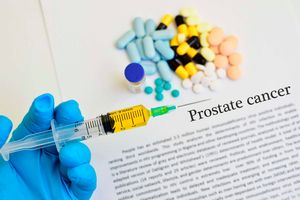
An illustration showing prostate cancer.
Most cases are detected late, often at stages three or four when treatment options are limited and outcomes are poorer. The average age of diagnosis is around 66, but doctors are increasingly seeing younger men being affected.
Oversimplification dangers
Dr Muigai Mararo, a consultant urologist, says the interest in ejaculation and prostate cancer reflects men’s growing curiosity about sexual health but warns against oversimplifying scientific data.
“There was a lot of excitement after the Harvard study, but subsequent research hasn’t fully reproduced those results,” he notes. “In fact, some studies have found no strong link at all. The danger is that in pursuit of frequent ejaculation, some men might engage in risky sexual behaviours, which expose them to infections like HIV or prostatitis.”
Prostate cancer, he explains, is influenced by well-established risk factors, age, family history, ethnicity, and genetics being the strongest.
“Men of African descent, particularly those with a father or brother who had prostate cancer, are at a higher risk,” he says. “Lifestyle factors such as obesity, poor diet, diabetes, and smoking are also associated with more aggressive forms of the disease.”
One of the biggest challenges remains awareness and early detection. Unlike other cancers, prostate cancer rarely announces itself early. Symptoms such as weak urine flow, frequent nighttime urination, or difficulty emptying the bladder may seem harmless but could signal underlying issues.
“Most men come to us when the disease is already advanced,” Dr Mararo says. “By then, it’s not just about urinary symptoms, they may have back pain, leg swelling, blood in urine or semen, or even fatigue from advanced cancer. Screening is the only way to catch it early.”
Screening involves a blood test known as PSA (Prostate-Specific Antigen) and a digital rectal examination (DRE). Men with a family history of prostate cancer are advised to start screening at age 40, while others should begin at 45. “It’s not a painful or embarrassing process,” says Dr Yousef. “Early detection saves not just lives, but quality of life, including sexual health.”
Beyond screening, doctors stress lifestyle choices as a foundation for prostate health. A diet rich in fruits, vegetables, whole grains, fish, and omega-3 fatty acids — while cutting back on processed meats and high-fat dairy- can reduce inflammation and support overall hormonal balance. Regular exercise, maintaining a healthy weight, and avoiding smoking and excessive alcohol are also protective.
For older men, benign prostate enlargement (BPE), a non-cancerous condition that causes the prostate to grow, can mimic some of the same urinary symptoms. “BPE affects about half of men in their 60s and up to 90 percent by age 85,” Dr Mararo explains. “It’s not cancer, but if untreated, it can lead to urinary retention, infections, or kidney complications.”
Still, the stigma around men’s sexual and reproductive health persists.
“It’s almost taboo for men to discuss sexual health, yet this silence can cost them their lives,” Dr Mararo says. “There’s a lot of misconception that prostate cancer is a disease of old men, or that it’s caused by lack of sex. None of that is true. What’s true is that early diagnosis saves both life and sex life.”
At its core, the science linking ejaculation to prostate health is still evolving. But what experts agree on is simple: regular sexual activity, whether alone or with a partner, is part of a healthy, functioning body.
“We tell men not to obsess over the numbers, whether it’s 21 times a month or not,” says Dr Yousef. “The takeaway is to live a balanced life, keep your body active, maintain healthy habits, and get screened. That’s how you protect your prostate, and your peace of mind.”