Health Budget: Referral hospitals emerge biggest winners
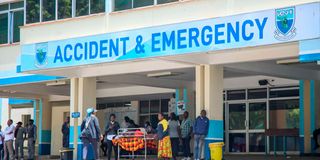
The Accident and Emergency unit at Kenyatta National Hospital on April 14, 2026.

Referral hospitals emerged as the biggest winners in the 2026/2027 Health budget, with the National Treasury allocating them Sh45.3 billion, even as the overall ministry allocation rose from Sh138.1 billion to Sh177.2 billion.
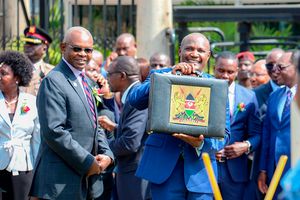
Treasury Cabinet Secretary John Mbadi, while presenting the budget on Thursday, said the increased allocation was designed to advance Universal Health Coverage (UHC) and strengthen essential services.
Within the referral hospitals allocation, Kenyatta National Hospital got Sh470 million for a burns and paediatric centre, up from Sh163 million the previous year, plus Sh300 million for renovation and replacement of obsolete equipment, up from Sh250 million. Moi Teaching and Referral Hospital got Sh2 billion for the construction of a new 2,000-bed multispecialty facility.
The long-delayed KNH burns and paediatric centre remains a cautionary tale. The project was awarded in August 2018 with an expected completion date of August 2020 at a contract price of Sh2.96 billion, financed through a consortium of three development partners and the government.
As of December 2025, more than five years beyond its original deadline, it remained incomplete. The contractor vacated the site, citing non-payment of certified claims amounting to Sh103 million, with accrued interest of Sh69.4 million and consultant interest of Sh11.9 million.
The loan agreement with external financiers expired on April 30, 2025, with no evidence of continued commitment to fund the project provided to auditors.
The Auditor-General, in a report covering the financial year ending June 30, 2025, concluded that value for money for the construction could not be confirmed. The government has now allocated additional funds, yet the monies that had earlier been paid out could not be accounted for.
The medical workforce also gained. Funding for interns more than doubled to Sh9.3 billion from Sh4.3 billion, and Sh8.6 billion was set aside for salaries of UHC staff to be absorbed into permanent and pensionable positions. The Kenya Medical Training College got Sh10.9 billion, and Sh3.2 billion was allocated for stipends and medical insurance for Community Health Promoters.
Other notable allocations include Sh19.1 billion for the Primary Healthcare Fund, up from Sh13.1 billion; Sh18.5 billion for Global Fund programmes, up from Sh17.3 billion; and Sh6.4 billion for vaccines and immunisation, up from Sh4.6 billion.
On cancer, Sh3 billion has been allocated for the Emergency, Chronic and Critical Illness Fund (ECCIF) and Sh1 billion for a new cancer centre at Kisii Level 5 Hospital. There is also Sh300 million to strengthen cancer management at KNH (up from Sh141.5 million), and Sh150 million for expansion of the comprehensive cancer centre at Kenyatta University Teaching, Referral and Research Hospital.
Supply chain allocations include Sh20.9 billion for Kenya Medical Supplies Authority, Sh3.1 billion for Kenya Medical Research Institute , Sh1.3 billion for the integrated reproductive health programme, Sh500 million for family planning and reproductive health commodities, and Sh600 million for equipment at the National Blood Transfusion Services.
Dr Brian Lishenga, the chairperson of the Rural and Urban Private Hospital Association of Kenya said that despite the increase in allocation, healthcare is still not treated as a national priority.
He said, only about 4.7 per cent of the budget goes to health, ranking it 18th out of 24 sectors, far below the 10 to 15 per cent of GDP Kenya committed to under global agreements. Of the Sh177.2 billion, approximately 81 per cent, around Sh143 billion, will go to recurrent expenditure, leaving roughly Sh34 billion, or 19 percent, for actually building and strengthening the health system.
The clearest losers are primary healthcare and emergency care. Even though the Primary Healthcare Fund was allocated more money, Dr Lishenga said Kenya’s population of over 50 million needs about Sh45 billion to adequately fund primary care, and the struggles facing rural facilities are likely to continue.
The ECCIF was slashed from Sh8 billion to Sh3 billion. Mr Peterson Wachira, national chair of the Kenya Union of Clinical Officers, said this directly hurts patients: when admitted to the ICU, the fund often only covers bed charges, which have risen to as much as Sh28,000 in some facilities, leaving families to cover the rest.
He told the Nation that an ICU bed represents only a fraction of the actual cost of critical care, which is driven primarily by specialised staffing and expensive medications, and that since patients requiring critical and chronic care are a small fraction of the population, the State should fully budget for these bills.
Hospitals owed money under the defunct National Hospital Insurance Fund were also left out. The government owes facilities a total of Sh33 billion dating back to 2017, including nearly Sh1.5 billion to KNH, Sh1.2 billion to Moi Teaching and Referral Hospital, and Sh1.65 million to Kakamega County Hospital.
Dr Lishenga said the budget was silent on this debt, calling it more lip service than actual movement toward settling it. He said that last year’s supplementary budget to address arrears was delayed and only passed in February this year, and warned that with another election cycle approaching, similar delays are likely.
“For hospitals owed Sh10 million or less, the best-case scenario is receiving only about 70 per cent of what they are owed through the supplementary budget, money that, as of the budget reading, had still not been wired. For hospitals owed larger amounts, including KNH, MTRH and Kakamega County Hospital, there will likely be total silence,” he said.
Dr Lishenga warned that unpaid suppliers and underfunded hospitals unable to pay workers will result in a drop in quality of care, even as Parliament has just passed the Quality of Care and Patient Safety Bill.
“Patients will ultimately bear the brunt of this back-and-forth between hospitals and government,” he said.
On staffing reforms, Mr Wachira welcomed the Sh8.6 billion allocation for absorbing UHC staff, noting that while it was not secured under the Division of Revenue Act for the long-term as desired, its placement under the County Allocation of Revenue Act as a conditional grant is a step in the right direction.
“The next advocacy priority will be securing positions for recent graduates.” Mr Wachira said.
He also welcomed progress for Global Fund health staff, some of whom have served since 2009 and faced a two-year salary backlog despite a prior agreement for the state to assume budgetary responsibility upon partner exit.
“The new allocation to clear arrears and absorb them is a welcome development. On medical internships, the more than 100 per cent increase in the internship budget should eliminate the typical one-to-two-year delays graduates face due to strikes and demonstrations over postings and remuneration, enabling a seamless transition for waiting graduates and preventing future backlogs,” he said.
Mr Wachira added that the budget failed to account for workforce expansion promises made during the recent launch of the Empowering Women in the Care Economy initiative and associated national plans.
Follow our WhatsApp channel for breaking news updates and more stories like this.