HIV time bomb: Virus prevention at risk as US-backed condoms, circumcision programmes stall on funding cuts
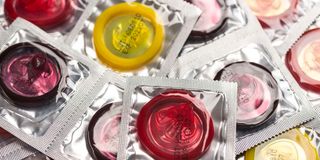
Kenya has an annual condom demand of 400 million pieces, while the government distributes about 200 million.

Kenya’s HIV prevention programme is facing growing uncertainty following sweeping US funding cuts, with experts warning that gains made over nearly two decades could be reversed.
The country, which ranks among the top five in Eastern and Southern Africa in the implementation of voluntary medical male circumcision (VMMC), is now grappling with a slowdown in the programme after the exit of key donor support and broader shifts in US global health financing.
Health officials say the withdrawal of support from the US President’s Emergency Plan for AIDS Relief (PEPFAR) in September 2025, coupled with a proposed halt in US funding for condoms and contraception in Kenya, has left critical prevention interventions under strain.
According to a US Department of Health and Human Services 2027 budget proposal currently before Congress, Washington plans to cut $4.3 billion in global health spending and discontinue funding for contraceptives in Kenya, arguing that such support should no longer fall on US taxpayers.
The policy shift also includes a restructuring of PEPFAR, replacing thousands of small grants to non-governmental organisations with direct government-to-government agreements, amid concerns that a significant portion of funding was previously absorbed by administrative costs rather than frontline service delivery.
These changes come at a time when Kenya’s VMMC programme, long considered a cornerstone of HIV prevention, with over 2.6 million men circumcised since 2007 in 17 countries in Africa, is already experiencing a steady decline since 2020, raising fears of a potential surge in new infections.
Kenya has an annual condom demand of 400 million pieces, while the government distributes about 200 million. The remaining 200 million has been filled by donors, with USAid as the main funder. Kenya’s condom programme requires Sh1.118 billion annually, yet there is a shortfall of Sh803 million, about 71.9 per cent of the total need. That gap is now unfilled.
There are 17,854 condom distribution points across Kenya, and 84 per cent are located in bars. These outlets serve millions of Kenyans, including sex workers, young people and low-income earners.
Globally, this week, the world's biggest condom maker, Karex, says the firm will raise its prices by up to 30 per cent or possibly more if the Iran war continues to disrupt supplies of the raw materials used in its products.
The Malaysia-based firm produces more than five billion condoms a year and supplies leading global brands like Durex and Trojan.
The global rise in prices and the surge in condom sales prices portend further risks for Kenyans.
On the voluntary male circumcision, the latest data by PEPFAR shows that Kenya ranks fifth in the programme implementation after Tanzania, Uganda, South Africa and Zambia.
As of 2024, a total of 29,158,174 men and boys had undergone the procedure under PEPFAR’s effort to reduce HIV transmission in 17 countries.
Tanzania tops the list, having conducted 7.5 million male circumcision procedures as of 2024, translating to 26 per cent of total procedures.
Uganda, South Africa and Zambia rank second, third and fourth with 7.1 million, 4.18 million and 4.16 million, respectively.
Kenya ranks fifth, having conducted 2,601,132 procedures, translating to 8.9 per cent of the total.
Other countries participating in the programme include Mozambique (2.3 million), Zimbabwe (2.09 million), Malawi (1.2 million) and Rwanda (1.02 million).
The least-performing countries are Namibia (251,927), Eswatini (173,675) and Botswana (158,455).
The report also shows that Tanzania, Uganda and South Africa account for 65 per cent of all VMMC procedures.
Between 2007 and 2019, Tanzania and Uganda dominated, recording steady growth from 2012 onwards.
Kenya, meanwhile, recorded a steady increase in procedures from 45,000 between 2007 and 2009 to a peak of 304,576 in 2018.
However, the Covid-19 pandemic disrupted the programme between 2020 and 2021.
“After 2020, Tanzania, Uganda, Zambia and Ethiopia were able to recover, while Kenya, South Africa, Mozambique, Zimbabwe, Namibia, Eswatini, Lesotho and Botswana have continued to report a persistent decline,” the report states.
National AIDS and STI Control Programme (NASCOP) Programmes Manager for Adolescents and Young People, Mr Ambrose Juma, said the programme is currently facing challenges after PEPFAR officially exited on September 15, 2025.
All implementing partners, he said, handed over their tools to county governments with the expectation that trained personnel would continue the programme.
“The sad reality is that the programme has slowed down even in high HIV burden counties. Some counties have even redeployed VMMC experts to facilities that do not offer the service,” said Mr Juma.
He added: “We are, however, still determined to see the programme succeed. We recently placed an order for 15,000 devices at the Kenya Medical Supplies Authority, and we hope they will be used by VMMC clients.”
Mr Juma also revealed worrying trends, noting that some counties have yet to utilise existing male circumcision supplies and therefore do not require new commodities.
He said that until 2019, the programme had been performing well, following the reduction of the minimum voluntary male circumcision age from 15 to 10 years in 2013.
This led to an increase in beneficiaries to over 300,000 annually.
However, during the Covid-19 pandemic, PEPFAR issued an advisory to partners to stop offering the service to boys under 15 years.
Since then, the number of clients accessing the service has continued to decline up to September 2025.
“The major challenge is the lack of prioritization of male circumcision by counties. Partners supported the programme from 2007 to 2025, and counties were expected to take over, but many do not see it as a priority,” said Mr Juma.
“The second challenge is the reduction in external funding. This should not have been a major issue because the Global Fund and the National Treasury continue to procure commodities, but in some counties, supplies are expiring on the shelves,” he added.
Apart from reducing HIV transmission, the procedure also lowers the risk of contracting other sexually transmitted infections such as syphilis, human papillomavirus and genital herpes.
It also improves hygiene and reduces the risk of penile cancer and cervical cancer in female partners.
A previous report indicated that the 14.5 million circumcisions performed by the end of 2016 would result in 500,000 fewer HIV infections by 2030.
According to the latest data from PEPFAR, Kenya ranked third among all their supported countries in total procurement commodity budget after Uganda and Nigeria between 2019 and 2025.
During the period, approximately $58.5 million (Sh7.6 billion) was used to procure HIV related commodities, with antiretroviral purchases leading at $49.3 million (Sh6.4 billion), equivalent to 84.3 percent of the budget.
Laboratory commodities followed at $ 5 million (Sh 647 million) while $2 million (Sh258 million) was allocated to the rapid test kits.
Essential medicines received a $1.2 million budget while VMMC and other categories received $1 million (Sh129 million).
The VMMC data, however, revealed that voluntary male circumcision procedures increased steadily from 45,657 between 2007 and 2009 to 112,574 in 2010.
The number rose to 182,788 in 2011 before slightly declining to 158,278 in 2012.
Between 2013 and 2019, the numbers ranged between 200,000 and 300,000, peaking at 304,576 in 2018.
At the onset of the Covid-19 pandemic in 2020, the numbers dropped by 57 per cent to 120,919, and further declined to 54,524 in 2021.
In 2022, the numbers slightly improved to 55,524, followed by gradual increases to 57,603 and 60,550 in 2023 and 2024, respectively.
Mr Juma said countries with the highest HIV prevalence are currently recording low VMMC uptake, raising concerns about a possible rise in infections.
Latest statistics from the National Syndemic Diseases Control Council show that 54 people are infected with HIV and 57 die from Aids-related illnesses every day in Kenya.
According to the Kenya AIDS Response Progress Report 2025, new infections rose from 16,752 in 2024 to 19,991 in 2025, while Aids-related deaths increased from 20,480 to 21,007 over the same period.
In April 2025, Auditor-General Nancy Gathungu reported that the country had targeted 97,220 male circumcisions in the 2024/2025 financial year but achieved only 65,550, leaving a shortfall of 31,670.
She attributed the shortfall to funding constraints that limited access to medical equipment, trained staff and outreach programmes.
Other challenges include resistance due to cultural and religious beliefs, the impact of the Covid-19 pandemic on health systems, and low awareness and community engagement.
“The demand for circumcision services may have outstripped the number of trained health workers,” said Ms Gathungu.
To address the situation, Mr Juma said NASCOP plans to issue an advisory to counties to take stock and redeploy VMMC workers to facilities offering the service.
He added that they will work with counties to increase awareness and demand for the service.
“We recently held discussions with the Social Health Authority to include circumcision in its service package, and the recommendation has since been adopted,” he said.
Follow our WhatsApp channel for breaking news updates and more stories like this.