Homa Bay's wetlands are burning, and no one is stopping it
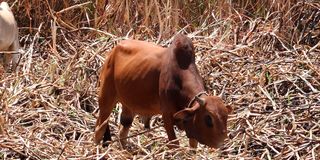
Animals graze in Chuowe delta, Kobala Location, Homa Bay County, on September 11, 2026, as wetland destruction makes it increasingly difficult for them to find food.

What you need to know:
- Environmentalists want the government to act before it's too late
At dawn, before the sun is high over Lake Victoria, Wilfrida Akumu wades into a wetland in Kobala location with a machete in her hand. She is looking for green papyrus reeds, her source of income. She finds none. The reeds are black, burnt down by rogue individuals.
She stands in the middle of the wetland that once fed her family, staring at acres of charred stumps.
"This is where I used to get everything," she says, her machete hanging uselessly by her side. "Now there is nothing to cut. Nothing to take home."
In the past, she would cut enough reeds, bundle them on her head and walk home to make what her community calls par. For many rural families in Homa Bay, par is not decoration but necessity. Laid on earthen floors, it keeps the cold away at night. Nailed to rafters, it insulates against heat. Spread in the compound, it becomes a clean surface to dry maize, millet and sorghum.
"The reeds are laid closely in a straight line on the ground, parallel to each other, then bound tightly using sisal twine on both sides. Then you trim the edges to make it neat," Wilfrida explains.
The craft is passed from mother to daughter. Those who make the mats are also the reeds' protectors.
Lake Victoria and the region's swamps have always supplied papyrus generously. But recently, fire has spread across several wetlands in Rachuonyo North, destroying vegetation in the Chuowe delta, Sondu Miriu delta and Ondago swamp.
Thick smoke rises from these swamps.
Rogue individuals set the vegetation ablaze, some say to drive away wild animals and snakes hiding in the reeds. Others ignite fires to clear land for farming. They succeed in chasing the animals. But they also chase away life itself.
Where papyrus once stood tall, there is now black ash. Where women once harvested reeds for free, there is nothing to cut. Where birds, fish and frogs bred, there is silence.
The damage goes beyond lost livelihoods. Wetlands are critical habitats for fish, birds and amphibians; destroying them breaks food chains and causes sharp drops in wildlife populations. They filter dirt, chemicals and harmful nutrients. When they are gone, pollutants flow freely into lakes and rivers, ruining drinking water. Healthy wetlands also soak up heavy rain like a sponge; without them, water rushes into nearby towns, destroying homes and roads.
Environmentalists say the destruction is double-edged. Beyond lost income, burning papyrus destroys a natural water filter for Lake Victoria, a carbon sink and a breeding ground for fish and birds.
Willis Omullo, an environmentalist in Rachuonyo North, notes increased fire outbreaks in wetlands and hilltops, worsened by the ongoing dry spell. He says the destruction violates the Ramsar Convention, which emphasises protection of wetlands as critical in the fight against climate change.
Kenya is a signatory to the convention, an intergovernmental treaty adopted in 1971 in Ramsar, Iran, focusing on conservation and sustainable "wise use" of wetlands. It protects over 2,500 sites globally as of 2026.
"Wetlands are major carbon sequestrators and also a main source of livelihood to so many communities. Especially in the Nyanza region, wetlands are the cornerstone for our survival," Omullo says.
He says burning them interferes with biodiversity, including birds, especially the endangered grey crowned crane, reptiles, hippos and other mammals.
"So the moment we burn these swamps we increase wildlife-human conflict. We have witnessed a lot of hippo invasion within the community because their grazing lands have been burned down," he says.
During dry seasons, wetlands are the only place animals find pasture. When they are burnt, animals invade farms and homes.
"The moment we burn down the wetlands, we are really interfering with the ecosystem. And when we interfere with the ecosystem, we are also interfering with our livelihood," he adds. "When the environment is okay, we are also financially stable. But when the environment is destroyed, even economically, people are really marginaliSed."
He calls on national and county governments to gazette key wetlands under the Ramsar Convention and ensure their full protection, with demarcation marks where human activity should stop. He recommends a consolidated effort involving beach management units, national government administrators, environmental groups and county governments.
Omullo, who leads an environmental CBO called Aluora Makare, says protecting wetlands is critical for disaster risk reduction because they act as buffers against floods, especially with El Nino rains predicted.
"We need to protect them more so that we can really build the resilience of the communities in such areas," he says.
Homa Bay County Kenya Wildlife Service warden Jackson Kibor says wetlands play a critical role in promoting tourism and need protection since they attract visitors who support grassroots economies. He says when people burn wetlands, they tend to reclaim the damaged areas before settling there, displacing wildlife.
"Wetlands are home to many wildlife species which need to be protected from harm. Protecting the wildlife means their habitat must also be safeguarded from harm," Kibor says.
International Crane Foundation Senior Field Officer in charge of Homa Bay and Kisumu, Damaris Kisha, says there is need to conserve wildlife habitat with communities engaging in collaborative conservation. The organisation works to protect grey crowned cranes, which she describes as a keystone species.
"Presence of grey crown cranes indicates wetland health. Whenever we see them, it indicates that the wetland is good," she says.
According to the organisation, the crane population has declined over the past four decades, with wetland degradation blamed. Kisha notes an 80 per cent decline over the period. Censuses in Homa Bay in 2019 and 2023 identified 809 and 364 cranes respectively—a decline attributed to migration and environmental threats. Kisha says food availability can influence population distribution.
"This calls for all of us to reduce the threats that face the bird so that we can realise its importance and as well as of other wildlife," she says.
Officials from the organisation are creating awareness on protecting the bird and its habitat, and discouraging removal of eggs and chicks from nests. The bird is protected under the Wildlife Conservation and Management Act, and no one is allowed to keep them for domestication or consumption.
"The birds use reeds to establish their nests and raise their chicks as well as providing areas where they can feed. These reeds should be protected so that the bird multiplies," Kisha says.
Efforts to get comment from the National Environment Management Authority on the destruction of wetlands in the region were unsuccessful.
Omullo says he is not aware of any arrests made so far. He says concerned groups are holding public engagement meetings to sensitise residents on the effects of wetland destruction.
"We meet members of the public in barazas organised by chiefs. We have also asked beach management unit officials to sensitise fishermen about the effects of destruction of wetlands.”