How a portable AI machine is battling drug-resistant TB in remote areas
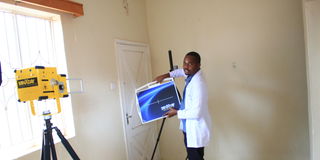
Imbirikani Sub-county Hospital Head of Radiology Department William Korir displays the portable Artificial Intelligence-enabled X-ray machine on November 2, 2025

What you need to know:
- Over the years, TB patients from far-flung areas in four out of the five sub-counties in Kajiado were forced to be referred to Kajiado Referral Hospital or neighbouring counties for X-ray services.
- In recognition of the perennial health care challenge, the first Portable AI-Enabled X-ray has been introduced at Imbirikani Health Centre in Kajiado South.
In Mbirikani village, Kajiado County, a new Artificial Intelligence (AI)-powered X-ray machine is giving doctors an edge in the fight against a hard-to-treat form of tuberculosis.
The technology is targeting Rifampicin-resistant tuberculosis (RR-TB), a dangerous strain that no longer responds to rifampicin, one of the most effective drugs used to treat the disease.
This resistance makes the disease harder to cure and easier to spread, underscoring the critical need for early and accurate detection. The portable AI-enabled X-ray is now helping health workers identify such cases with unprecedented speed and precision, improving chances of timely treatment and recovery.
Findings from a 2023 survey by the Ministry of Health show that TB prevalence in Kajiado County was estimated to be higher than the national average, with an annual pulmonary TB (PTB) incidence of 521 cases per 100,000 adults and a rifampicin-resistant TB prevalence that was four times higher.
In addition, the National Institute of Health (NLM) 2024 survey indicated that males were a minority among the presumptive cases. Still, they were the majority (59.3 per cent) among the confirmed TB cases. At least 70 per cent of the confirmed cases were aged between 15 and 44, with those aged between 25 and 34 being the majority (30 per cent of the cases). The majority of the confirmed cases within the project were from rural areas.
Key catalysts for the spread of TB cases in Kajiado County include socio-economic factors such as crowded living conditions and malnutrition that remains high, as well as individual health factors like a weakened immune system.
Over the years, TB patients from far-flung areas in four out of the five sub-counties in Kajiado were forced to be referred to Kajiado Referral Hospital or neighbouring counties for X-ray services.
In recognition of the perennial health care challenge, the first Portable AI-Enabled X-ray has been introduced at Imbirikani Health Centre in Kajiado South.
The recently renovated health facility serves individuals in rural areas around Kyulu Hills National Park at the borderline of Kajiado and Makueni counties.
The facility superintendent, Dr AbdulAziz Samperu, said the portable X-ray machine applies the latest technology in diagnostics by incorporating AI software to help in timely and accurate diagnosis of tuberculosis and other chest complications. Unlimited X-ray images can be developed in a day. It’s expected to reduce cases of TB misdiagnosis common in public health facilities. Patients are being charged normal rates for X-ray services.
"The machine has a unique connectivity and powering which makes it possible to use in hard to reach areas with poor connectivity and even in remote areas without power connectivity,” said Dr Samperu, "The software is also linked to doctors and clinicians, enabling them to see the X-ray real time on their phone or computer without having to move or requiring X-ray film.”
Dr Samperu attributed the variance in TB prevalence in different counties across Kenya to poverty and low socio-economic status.
“Apart from socioeconomic status, in some communities, especially in pastoral communities, living in overcrowded environments is linked to high rates of TB infection,” offered Dr Samperu. “HIV and diabetes mellitus remain the strongest risk factors for developing active TB disease.”
He added: “Lack of proper nutrition significantly contributes to TB incidence. Tobacco use and excessive alcohol consumption are also major risks to TB prevalence.”
Further, Dr Samperu said exposure to known TB cases that include frequent contact with individuals who have active TB is a significant risk factor.
Also read: Treasury cuts HIV, tuberculosis and malaria allocation even after Sh31bn USAID withdrawal gap
Kajiado Medical Services Chief Officer Stephen Pelo attributed the milestone to the National Equipment Support Program (Nesp), terming it a beacon of hope in offering enhanced health services, especially in rural areas.
"TB disease remains a public concern in our county as well as globally. Through Nesp, medical facilities have been empowered to procure equipment instrumental in boosting health care on time. The portable AI-enabled X-ray machine will be a game changer in the fight against TB in rural areas,” said Pelo. “For the first time, we will be able to take X-ray services into the far-flung areas.”