How a SHA bureaucratic gap has left engineering student fighting rare disease without cover
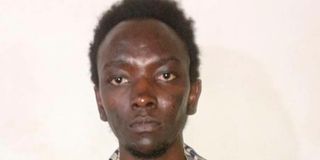
Elvis Gathuo, a mechanical engineering student battling Behçet's disease.

What you need to know:
- Doctors still do not fully understand what causes Behçet's disease.
- It is classified as a form of vasculitis, a group of autoimmune disorders in which the body's immune system turns on its own healthy tissue.
Two weeks ago, 23-year-old mechanical engineering student Elvis Gathuo was due back at the hospital for a life-sustaining treatment his body could no longer wait to receive.
It had been 14 days since his last dose, already beyond the safety window recommended by his doctors, while his father spent those crucial weeks pleading with friends and taking on fresh debts, desperately trying to raise enough money to pay for the next procedure.
For Gathuo, a final-year student whose academic journey has been repeatedly disrupted by illness, life has long been dictated by Behçet's disease, a rare autoimmune condition he has battled since childhood. The disorder causes widespread blood vessel inflammation, cutting off vital blood flow to major organs and threatening permanent damage to his brain, joints, and vision. Without uninterrupted medical intervention to control the severe flare-ups, Gathuo remains at constant risk of life-altering complications, including irreversible vision loss and strokes.
Also read: Nine years, three tumours, two transplants: One family's fight against a cancer that keeps returning
The disorder has, in Gathuo's life, announced itself through mouth ulcers, skin lesions and, in his more painful flares, genital lesions. For years, a strict regimen of twice-monthly adalimumab injections and weekly methotrexate kept the disease mostly in check. That regimen has now become erratic,not because the medicine stopped working, but because the insurance that paid for it has fallen away.
"I beg you today, and then I beg for the next few days or week. Some people have already gotten tired of my borrowing," said Gathuo's father, James Gathenya, of the calls he now has to make to keep his son's treatment going.
"Gathuo first fell ill in lower primary school. It took years of check-ups at Kenyatta National Hospital and continued deterioration through his time in Standard Seven before doctors settled on Behçet's disease. By then his body had begun resisting conventional medication, and specialists moved him onto biologic therapy,first the branded Adalimumab, sold as Humira, then generic versions we sourced through a trip to New Delhi arranged with help from friends, at a fraction of the cost," said Gathenya.
Armed with those medical records, Gathenya successfully petitioned the then chief executive officer of the National Hospital Insurance Fund (NHIF) to have his son placed under the National Cancer Scheme, a mechanism the insurer used to cover catastrophic, high-cost illnesses even when they fell outside a strict cancer diagnosis.
For the whole of his secondary school life, that arrangement held. NHIF covered his twice-monthly adalimumab injections, his weekly methotrexate and his other prescribed medication in full through the MP Shah Chemotherapy Centre in Nairobi, where he had become a regular patient.
The trouble began, according to Gathenya, when MP Shah Hospital was recently removed from the panel of facilities approved to treat patients under the scheme now run by the Social Health Authority (SHA), NHIF's successor. Told to find another centre, the family approached Texas Cancer Centre, which tried to take up the case.
The response, Gathenya said, was that because his son is a non-cancerous patient, the National Cancer Scheme would not cover him there either, and there was no alternative pathway offered when he asked what else the family could do. No hospital, he said, is now able even to lodge a request to SHA on his son's behalf.
"For roughly three months, my family has been left to fund Gathuo's treatment out of pocket. I wrote a letter to SHA chief executive Mercy Mwangangi's office and its helpdesk but did not get a response," Gathenya said.
In his letter, Gathenya asked the authority to review his son’s case and reinstate authorisation for his prescribed treatment, to direct the family to an SHA-accredited facility that can consistently provide the specialised care Behçet's disease requires, and to help secure sustainable access to the biologic therapy his son depends on. He said he was ready to submit further documentation, including medical reports, prescriptions, laboratory results and specialist recommendations, to support the review.
Gathuo's monthly treatment at MP Shah Chemotherapy Centre now runs to approximately Sh79,100 per month, comprising Sh67,496 for medication, Sh4,800 for a rheumatologist's consultation, and Sh6,800 for essential blood tests. That works out to roughly Sh950,000 a year, or about Sh36,500 every two weeks.
"The gaps in payment and treatment have shown up on his body. The lesions that had largely stayed under control have returned during the periods when treatment lapsed. It is by God's mercy that so far, the disease has not reached his joints," Gathenya said.
"Through it all, my son has found a way to carry on. At least he has accepted his illness," said Gathenya, struggling to describe the resilience he has watched his son build over the years.
When this reporter shared the family's plight with Dr Mwangangi, SHA CEO, and questioned what SHA is doing to help people battling rare diseases, the response was a link to submit proposals for interventions to be included in health benefit packages. The question went unanswered. Meanwhile, Gathenya continues to fundraise for his son's treatment.
Doctors still do not fully understand what causes Behçet's disease. It is classified as a form of vasculitis, a group of autoimmune disorders in which the body's immune system turns on its own healthy tissue, according to a study from the National Library of Medicine The study, titled ‘Behçet’s Disease, Pathogenesis, Clinical Features, and Treatment Approaches: A Comprehensive Review', was published in 2024. Behçet's is unusual among these conditions in having a known genetic link,a gene called HLA-B51, though carrying the gene is no guarantee of developing the disease, since many people who have it never fall ill. That has led researchers to suspect that infection or environmental triggers combine with genetic susceptibility to bring on the condition.
The disease most often emerges in a person's twenties or thirties, though it can appear at any age, and tends to run a harsher course in men than in women. Its hallmark symptoms include painful mouth ulcers similar to canker sores, genital sores, acne-like skin lesions that can appear anywhere on the body, eye inflammation that can cause blurred vision or blindness, and swelling, pain and stiffness in the joints, particularly the knees, ankles, elbows and wrists. Less commonly, patients develop blood clots, intestinal complications, or inflammation of the brain and spinal cord that brings on severe headaches, neck stiffness and fever.
Complications from this syndrome can be serious if left untreated. Eye inflammation can cause permanent vision loss, which is why specialists recommend a full ophthalmological exam for anyone showing eye symptoms. Blood clots in the limbs and inflammation of blood vessels in the lungs can also become dangerous.
Rarest of all, but most lethal, is an aneurysm in the pulmonary artery, an abnormal bulge that can rupture and is the leading cause of death among Behçet's patients. Left untreated, inflammation around the brain and spinal cord can also cause lasting disability.