How cervical cancer radiotherapy left Migori grandmother with a devastating fistula
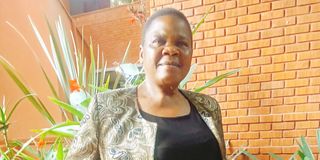
Pamela Adhiambo Asingo, cervical cancer survivor who currently lives with a stoma bag as a result of effects of radiotherapy.

What you need to know:
- After surviving cervical cancer, Pamela Adhiambo Asingo developed a devastating rectovaginal fistula linked to radiation damage, leaving her dependent on a colostomy bag.
- Years after radiotherapy cleared her cervical cancer, she is battling with its devastating complications, mounting medical bills and a life transformed by chronic pain.
These days, Pamela Adhiambo Asingo measures her life in small, agonisingly careful acts. She survives exclusively on blended and mashed foods because her gastrointestinal tract moves with agonising slowness following her last major operation. She cannot lift any item weighing more than two kilogrammes. As a grandmother, all she can do is hug and kiss her grandbabies.
She also cannot bend forward. A colostomy bag sits strapped across her abdomen. It is a constant, plastic reminder of a body rearranged and a life lost. She has worn it every day since February 2026. Home is now a modest room in Njiru, Nairobi, chosen by her daughters for its proximity to the specialised clinics in Nairobi that keep her alive. It is a world away from her expansive rural home in Migori, where she was once known to everyone simply as the farmer.
“I have lived with pain, my child,” she says, her voice quiet but unyielding.
Her current self is a devastating departure from the woman she was. For decades, Pamela was the economic engine of her family. When her husband, a former employee of a sugar company, lost his sight in a 2005 workplace accident and received no compensation, she stepped in to fill the void. She leased vast tracts of land across South Nyanza, grew sugarcane for factories, harvested maize that supplied markets as far away as Kisumu, cultivated beans for local schools, and farmed groundnuts for wholesale.
In Kilgoris, she grew watermelons, driving her own commercial vehicle to transport the harvest. Guided over the phone by one of her sons who had studied agriculture, she built a farming empire from the dirt up. “I was a big farmer. People knew me,” she says of her past life.
On the back of that manual labour, she educated all her children, putting them through university and putting several on paths to postgraduate degrees, including PhDs. And then the first tragedy struck. Her son was diagnosed with a brain tumour and was treated for about a year before he succumbed in 2019.
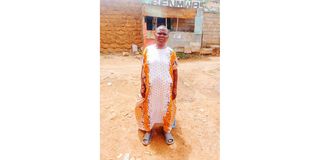
Pamela Adhiambo Asingo, cervical cancer survivor who currently lives with a stoma bag as a result of effects of radiotherapy.
Just a month after laying him to rest, her body started turning against her. She developed excruciating stomach pains. And bowel movements and urination turned into unbearable agony. She found herself screaming inside latrines. Yet, accustomed to enduring hardship for her family's sake, she suffered in silence for months, assuming it was grief or physical strain. Her weight began to drop rapidly, month after month, until she was down to 60kg, from 89kg within a few months.
When the pain finally immobilised her, Pamela sought help at Migori District Hospital in late 2019. Screening revealed she had advanced stage 2B cervical cancer.
She was immediately referred to a hospital in Kisii for an MRI scan, which confirmed the aggressive malignancy. From Kisii, her family rushed her to another hospital in Nairobi. Doctors there conducted a secondary MRI scan, arriving at the same conclusion of stage 2b cervical cancer. Following the second opinion, her daughter moved to Nairobi to serve as her full-time caregiver.
Her treatment protocol began with intense pelvic radiotherapy, including six pelvic radiation sessions, followed immediately by four weekly rounds of chemotherapy that stretched into 2020.
In late 2020, Pamela returned to Migori to recover. By 2021, follow-up evaluations suggested the cancer was in remission. Yet the pain never abated. Whenever she tried to pass stool, she voided fresh blood. Doctors prescribed stool softeners, explaining casually that the radiation had scarred and narrowed her rectum, and sent her home with palliative pills.
Visiting relatives would find her weeping in bed. Heavy household tasks, walking short distances, or riding on the back of a motorcycle triggered pain, so she stopped going anywhere.
As her health plummeted, financial ruin set in. Pamela began selling her assets that she had spent a lifetime building, using the proceeds to fund recurring consultations, medical supplies, and travel. She sold the lorry she used to haul maize across the region, sold the Probox car she used for farm logistics, and sold off her agricultural land parcel by parcel.
Now, the only thing remaining is the family home she built during her peak farming years. When relatives suggested selling the house, her children put their feet down. “It is because I built early. If I had not built a permanent house years ago, we would have nowhere left to live,” Pamela recalls.
“By 2025, my health was collapsing again. I lost control of my bladder and experienced persistent vaginal dampness. Soon after, I started passing gas and stool through the vaginal opening. I then lost the ability to walk entirely and had to be carried into health facilities. It was traumatising going through that as an adult, and I cried often,” she says.
Pamela maintains that no healthcare provider warned her of the catastrophic, long-term risks associated with pelvic radiation.
“They didn’t tell me anything. No one explained the side effects of radiotherapy to me. I only discovered them as my internal organs began to disintegrate. The surgeons told me that the high-dose radiotherapy had permanently destroyed healthy pelvic tissue,” she says.
Desperate to find Pamela a lasting solution, her daughter sold her possessions and brought her to a Nairobi hospital for comprehensive screening. She was declared completely free of cancer. “I pressed the specialists to explain to me why I was always in pain if the cancer was gone, but they could not,” Pamela says.
In February 2026, as Pamela’s body neared total collapse, her daughter sold her household belongings, terrified that she was about to lose her mother. The family airlifted her to Nairobi and rushed her first to Kenyatta National Hospital. However, crippled by machine breakdowns and protracted waiting lists, the public facility could not offer immediate intervention. Desperate, they redirected her to Coptic Hospital.
It was at Coptic Hospital that doctors uncovered the full extent of the radiation damage. It was there that she was officially diagnosed with rectovaginal fistula, an abnormal tunnel or opening between the rectum and the vagina that allows gas, stool, or mucus to pass from the rectum into the vagina.
Here, she was attended to by a team of specialists, including Dr Khisa Weston, a fistula surgeon at the hospital.
“She was referred to me because stool and urine were leaking freely through her vaginal canal. It is a common result of radiotherapy. Radiation works by destroying cells, and the damage is not evenly spread. The malignant cells are weak, so they are likely to be destroyed more than the normal cells,” Dr Khisa explains. “And the normal cells can recover easily.”
He adds, “The trouble starts when the dose is higher than the body can handle, because healthy tissue is then damaged as well. Where the fistula forms depends on where the radiation was applied. If you have positioned the prop [applicator] on the upper side of the vagina, it’s much more likely to result in a vesicovaginal fistula. If it’s the posterior part of the cervix, then you are likely to come down with a rectovaginal fistula.”
Slow to manifest
Dr Khisa notes that the injury from radiation is slow to show itself, which sets it apart from fistulas caused by childbirth or trauma, because the damage builds up over time. Radiation may not produce a rectovaginal fistula immediately, and for some patients it can take up to 20 years to appear. He describes it as a slow, burning kind of injury that eventually opens into the rectum.
Because cancer itself can also cause a fistula, doctors have to work out which one is responsible by conducting a biopsy of the tissue around the fistula and then taking it for an analysis.
“The pathologist would then revert to us and tell us whether they can see any malignant cells there or inflammation. If they find inflammation, that is when suspicion falls on the radiation, and he says it is what happened in Pamela’s case.
Recognising that she was at risk of infection, surgeons acted immediately to save her life. They performed an emergency faecal diversion (colostomy), bringing a loop of her large intestine through her abdominal wall to vent stool into an external pouch, while catheterising her bladder to divert urine.
Pamela is not alone. Every week, at least one woman comes to Dr Khisa’s clinic with the same problem. “After you have had radiation, the chances of developing rectovaginal fistulas or even vesicovaginal fistulas are very high indeed,” he says.
Warning signs
The warning signs can come long before the fistula itself. Dr Khisa says the tissue heals with scarring, and that this changes how the bowel behaves, including causing blockage or narrowing of the rectum.
“Women can develop constipation and severe difficulty passing stool, sometimes even bleeding, which they should treat as a red flag. If you find you’re bleeding from the rectum after radiation, you need to go to hospital so that they check what is going on,” Dr Khisa says.
The condition reaches into the most private parts of a woman’s life. Dr Khisa says the tissue becomes stuck, fibrotic and scarred, so neither patients nor their partners should expect intimacy to be possible.
“If you try, you’re unlikely to penetrate her because it’s stuck and fibrotic and scarred. If you ever force it, she’s likely to bleed excessively. The same narrowing makes examination difficult. You cannot put a speculum because the area has become narrowed because of the healing with fibrosis. In those cases, doctors rely on an MRI test to see what's going on,” he says.
“Treatment is slow and cannot be hurried. The decision to operate depends on the condition of the tissue. If the cells around the fistula appear healthy, then surgery can be attempted. But if it is septic or inflamed, you have to allow the inflammation to come down. In those cases, surgeons first perform a diversion colostomy, which sends stool out through an opening in the abdomen so the area can settle.
“The timing of the radiation matters as well. If it’s within one year, we will not rush to do a repair. It’s likely to break down because the radiation therapy is still working on the tissues. The damage from the radiotherapy can leave the affected area with little blood supply, which makes healing harder. To improve healing, sometimes we have to involve the reconstructive surgeons or plastic surgeons to move fresh tissue or create new blood supply. How long the operation takes depends on how extensive the damage is.”
For Pamela, the colostomy is not meant to be permanent. Dr Khisa says the stoma can be reversed once the fistula has been closed and has healed. Then there is the cost. In Kenya’s fragmented healthcare system, living with a complex radiation fistula is a luxury few can afford. Pamela pays for every supply out of pocket.
Wholesale colostomy bags cost Sh500 each. To survive, Pamela washes, sterilises, and reuses the single-use plastic bags for as long as structurally possible. Her monthly pharmaceutical regimen, a cocktail of high-potency opioids, gastrointestinal antibiotics, and specialised ulcer therapies, costs Sh20,000 to Sh30,000 every month. To date, her prolonged treatment has drained nearly Sh3 million in total.
Dr Khisa says the repair is expensive, recalling that the surgery at a government hospital used to cost up to Sh80,000. Patients with colostomies, Pamela among them, say insurance does not cover stoma bags. Dr Khisa does not comment on the bags themselves but argues that the government should cover the full treatment of patients with radiation complications under a clear policy.
The emotional toll is heavy too, and Dr Khisa says it is best softened before treatment begins. Patients should be told that, even if radiotherapy clears the cancer, there is a small risk of injury to the bladder or the rectum. This counselling, he says, is meant to be part of any treatment or surgery. “That way it becomes much easier when it happens. It doesn’t strike and bring you down, causing depression or stigma or anxiety,” he says.
His broader message is about detecting cancer early. Women should go for regular screening for cervical and breast cancer, or as their doctor advises, so that it is found before it spreads and before heavy treatment is needed.
“Early detection can mean surgery that avoids the need for radiation altogether. We must always go for screening regularly or as advised by the doctor. There’s no shortcut,” he advises.
Published research specifically isolating radiation-induced rectovaginal fistula in Kenya is limited. Most Kenyan data appears within broader studies on genital fistulas or radiotherapy complications for cervical cancer, including vesicovaginal fistulas, rectal bleeding, vaginal stenosis (narrowing or shortening), skin burns, gastrointestinal problems and anemia.
Today, Pamela remains anchored in Nairobi, trapped in a routine of monthly clinical visits, diagnostic monitoring, and expensive prescriptions. Back in Migori, her blind husband remains under the care of two of their sons, reliant on his daughters-in-law to bring meals to the homestead. Her adult children, many of them highly educated but struggling against Kenya's difficult job market, pool their limited earnings to keep their mother supplied with colostomy appliances and morphine.
“You are our rock Mother, we will always stand by you,” they remind her whenever despair threatens to overtake her.
With the assistance of a full-time caregiver, Pamela takes slow, deliberate walks around her room to encourage gravity to move food through her compromised digestive system. Her weight, which plummeted to 55kg after her stoma surgery, has clawed its way back to 65kg. “God is the one who holds my life. Between me and God, that is all that is left,” she says softly.