How Ebola could turn into a security issue
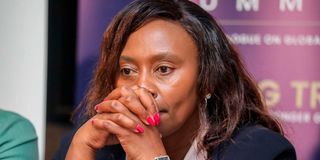
The Principal Secretary for the State Department for Public Health and Professional Standards, Mary Muthoni Muriuki, addresses the Ebola situation in the country on the sidelines of the ongoing Trust Summit 2026 at Glee Hotel, Nairobi, on Thursday, October 22, 2026.


Kenya’s Ebola outbreak is, by the Ministry of Health’s account, contained for now. Public health experts say it would stop being only a health problem once the virus begins to spread within communities. At that point the strain on hospitals, health workers, borders and public trust may make it a matter of national security.
When Kenya confirmed its first Ebola case on October 6, the immediate fears were regarding how many more would follow. Two computer models gave very different answers for the end of October. One said 93 cases, the other 26.
By October 22, the Ministry of Health had confirmed nine. Both models had guessed too high. The analysis tested five models on Kenya’s early case records. Two of them stand out.
The transmission model works like a family tree. It assumes each patient can infect others over roughly the next two weeks, using a 15.3-day serial interval borrowed from West Africa. From eight cases by October 18, it was estimated that each case could cause about 10 more, leading to about 21.5 new cases by October 28 and 93 in total.
Another model, co-developed statistician and researcher Shem Otoi, called the Otoi NARIMA model, asks: what do the recent numbers suggest comes next? In Kenya, it smooths the daily counts with a three-day moving average, rescales them, and fits a time series model. It has no built-in spread, so it carries the day’s level forward, settling at about 1.8 cases a day and predicting about 26 cases in total by October 28.
Reality has been calmer than both. On Thursday, the Health ministry reported nine confirmed cases, all linked to one cluster. There were no new cases in the previous 24 hours, and there was no sign that the virus was spreading in the community. All 135 people who had contact with the first patient had been traced. The total had stayed at nine for three days. For that day, the transmission model had expected 20 cases and NARIMA had projected 15. The analysis says this was more luck than skill.
“The gap is wide, and both are fair readings of thin evidence. Thirteen days of records, seven of them with zero cases, cannot settle the argument. The transmission model sees an outbreak ready to take off. NARIMA sees a plateau,” says Prof Otoi.
“The lesson is not that one model wins. The transmission model remains the better planning tool because it shows what could happen without control and what must be achieved: cutting transmission by about 90 per cent. NARIMA is a useful check when growth stalls. Both need refreshing as numbers arrive, and contacts under quarantine could still fall ill until their 21-day monitoring ends. The final word belongs to the ministry’s surveillance data, not to any single forecast,” he adds.
Prof Otoi explains that if community transmission happens, it could rapidly increase numbers recorded, cause an outbreak, and turn the response from a public health one into a security matter. Containing an outbreak, he said, would take far longer and demand a much larger response.
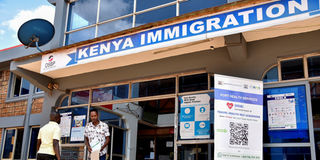
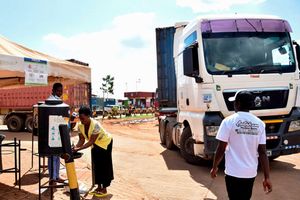
Travellers walk at the Kenya immigration services to access port health services at the Busia One Stop Border Post, a crossing point between Kenya and Uganda. A man who had been living in the Democratic Republic of Congo travelled and died of a new Ebola outbreak involving the Bundibugyo species at the Nairobi Hospital on October 8, 2026.
“Geography is part of the problem. Kenya is too big. So, if there is a case in Mombasa and another case in Turkana, we have to set up several centres, regional centres, for response. It means one toll-free number cannot work. There have to be several other toll-free numbers. Security and rescue services would have to be ready. The chain of command, like security, the response, and the rescue teams, has to be on high alert so that when they are called, they rush to rescue and bring the infected person for care through isolation,” said Prof Otoi.
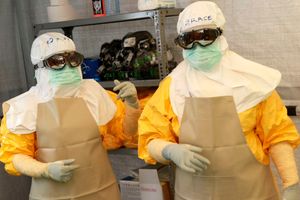
“Ambulances, protective equipment for health workers in each region and makeshift isolation tents, like those seen in the Democratic Republic of Congo (DRC), would also be needed if beds run out. However, the greater danger lies in how people react. There is the possibility of mass panic. When there is mass panic, there is a threat to political stability which calls for more frequent communication from the authorities – and we have not seen enough of it. Frequent messaging is not happening. In such a situation, it’s like a war room. Everything that is needed must be brought near and must be at optimal operation,” he added.
Doubts and conspiracies about the outbreak are already spreading on social media, where some users dismiss it as a government scheme to attract donor money. Prof Otoi reads this as a symptom of a deeper problem.
“That is an indication of mistrust. The public generally does not trust the government. The precedent for this was the case of the government Covid-19 billionaires. Because there was a precedent for such a scam in the middle of a health emergency, the public does not trust the government. The government has to work hard to earn the trust of the public because to defeat any public health emergency, we need community cooperation. But they cannot cooperate without trust,” said Prof Otoi.
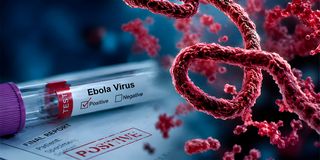
Blood sample drawn from patients suspected to be infected with Ebola should be tested within a short time to avoid further transmission.
The professor also raised concern about risks of burying bodies of Ebola-infected people in public cemeteries and how illegal exhumation can cause public health risks. He also noted that in a worst-case scenario, the government will be forced to consider either a cessation of movement, a curfew or a lockdown in order to contain cases from spreading.
Stigma is the next test. From Sunday, the Ministry says, the first contacts to complete 21 days of monitoring who will be in good health will be released and reunited with their families.
It says they have passed the full monitoring period without falling ill and cannot pass the infection to anybody.
Prof Otoi, who referred to the release of the first patient, asked whether the public is ready: “Is the community prepared to receive the first Ebola patient without any kind of stigma? That is the question you should be asking.”
Dr Dennis Miskellah, the deputy secretary-general of the Kenya Medical Practitioners, Pharmacists and Dentists Union (KMPDU), and also a member of the national Ebola taskforce, said the pressure points are also in the health system.
Kenya’s public health officers have been on strike for more than three months. They are the line of defence against the spread of outbreaks as they trace contacts, screen travellers at points of entry, tests and chlorinate water, and arranges safe burials.
“The public health officers’ strike has reached day 94, yet they are the frontline soldiers in the fight against Ebola. They and the doctors I have spoken to in the counties told me some protective kits lacked basic items such as gloves. Nobody is going to risk their life when you know you have no adequate protection or medical cover. You might think that public health officers don’t matter and that doctors matter. But as a doctor, when I’m seeing them on the street, I’m like, ‘How serious is the government with protecting me as a doctor if the preventive officers who are not doing that work are in the street?’ We are lucky that the first case was handled in a private facility with working systems. Elsewhere, it would have been chaotic,” said Dr Miskellah.
Also Read: Explainer: Why travellers with Ebola can sometimes move through countries undetected

Prof Shem Otoi, an infectious disease modelling expert.
He also raised the regional picture. The Africa Centres for Disease Control and Prevention (Africa CDC) says cases have been reported in Kenya and Nigeria, as well as in the DRC. The Nigerian Ebola patient, confirmed earlier in the week, had travelled from Uganda, and Kenya’s own first case came through Uganda.
Dr Miskellah said that if borders are to stay open, every government must be trusted to do its part.
“Why are we getting Ebola patients from Uganda? Is it that Uganda is not testing properly? Are they under-reporting or what is not happening? If imported cases keep appearing, closing borders becomes the next option,” he explained.
“Then there is the economic impact. If we start having community infections, countries will start restricting entry. People are already struggling to access some countries, and travellers may need an Ebola clearance certificate. Those who don’t have one won’t be allowed to travel, which is a very terrible situation. It is also the festive season, when many Kenyans abroad normally come home for Christmas. The money they bring helps our economy. But many fear they may not be allowed back into the countries they work or stay in once they leave, so they are cancelling or freezing their trips,” explained Dr Miskellah.
The Africa CDC will convene a high-level virtual meeting of African Ministers of Health on October 28. The meeting will provide an opportunity for the ministers to assess the situation, strengthen coordination across borders, accelerate support to affected countries and reinforce preparedness throughout the continent.
According to the institution, the geographic spread across Central, Eastern and Western Africa demands urgent, coordinated action, as it poses an escalating threat to health security across the continent.
“Ebola is crossing borders. Our response must move faster, with stronger coordination, greater solidarity and decisive political leadership. We have the expertise and the capacity on this continent. We must mobilise them together to stop this outbreak and save lives,” said Dr Jean Kaseya, Director General of Africa CDC.
Meanwhile, the ministry says life in Kenya continues as normal, with travel, trade and public gatherings not restricted.
Follow ourWhatsApp channel for breaking news updates and more stories like this.