How one mother’s HIV journey was shaped by a broken system
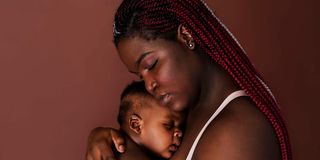
Nearly two-thirds of mother-to-child transmissions occur when a mother is tested late or stops taking her drugs during pregnancy. Other women get infected while breastfeeding, or stop taking their drugs during that period.

What you need to know:
- The latest National HIV Estimates 2026, released by the National Syndemic Disease Control Council show that children continue bearing the brunt of HIV in the country.
- Only 79 per cent of children aged zero to 14 know their HIV status, well below the national target of 95 per cent.
- Of this number, six in 10 are on treatment, and another five in 10 children are virally suppressed.
When Mary* gave birth to her son in 2009, Kenya was marking five years since it began offering free HIV drugs, and the government had just rolled out new policies to fight the transmission of the virus from mother to child. Free antenatal care, however, was still four years away, and Mary missed every clinic visit that could have told her about her status in good time and helped her care for her unborn child.
A week after the birth, she developed complications that would change the course of her life, and her son's.
"I gave birth in hospital, but they forgot to remove some parts of the placenta. I went home and noticed that I was bleeding a lot," she tells Healthy Nation.
Her husband took her back to hospital, where she underwent a minor procedure to remove the remaining part of the placenta. That stopped the bleeding, but she had lost so much blood that she needed a transfusion. Her blood levels were low, and her immunity had waned greatly, yet she had no other tests done at the time.
She went home and continued caring for her new-born as usual.
"Everything was okay until my baby turned one. He became frail, and I also started having rashes on my body. So we decided to go to hospital for a check-up," she says.
Mary says her son weighed less than eight kilogrammes and was told he was underweight. It was during that hospital visit that she had her first HIV test, together with her son.
They both tested positive, and her son was also diagnosed with tuberculosis.
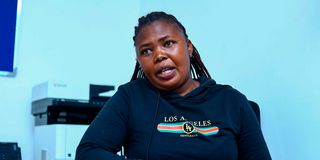
Josephine Mumeu, 35, shares her experience of living with HIV during an interview at LVCT Health along Ngong Road, Nairobi, on August 21, 2026.
"I didn't find it hard to accept my new status. I started taking drugs immediately, together with my son," she says.
Even though it was easy for Mary to accept her condition, her husband insisted he was negative and was not interested in taking a test to confirm it.
"He told me that I got HIV from the blood transfusion I had when I developed post-pregnancy complications," she shares.
Mary and her son took their drugs in tow and lived a normal life, only slightly disrupted by the need to take medication daily. Her son's health deteriorated again when he turned nine, after she discovered a boil in his armpit. He went to hospital and got a second diagnosis of tuberculosis, but recovered after treatment.
"It has not been easy. I remember when he was 12, I could give him drugs and he hid them. When I asked him why, he said he wanted to get a feeling of what it is like not to be on daily medication," she says.
"I just talked to him and also took him to hospital for peer support group talks that have helped him over the years. He is now doing well."
Now working as a community health promoter, Mary says most pregnant young women are hesitant to take HIV tests, and part of her work is encouraging them to know their status so they do not infect their children.
"I tell them that going to the clinics makes a whole difference, because they will know their status in good time and start taking precautions," she says.
"I don't like seeing any other child go through what my child went through. He used to take Kaletra (a prescription drug to treat HIV infection in adults and children), and it was so bitter. I dreaded the times I had to give him the drug; I pitied him a lot."
Mary says her son now fully understands his condition and has never blamed her, since she took the necessary steps and enlightened him as he was growing up.
"I have noticed that some mothers living with HIV are in denial. When they are breastfeeding and they stop taking drugs, their viral load goes down, and this means they are likely to infect their children," she says.
A stubborn gap in the numbers
The latest National HIV Estimates 2026, released by the National Syndemic Disease Control Council (NSDCC), show that children continue bearing the brunt of HIV in the country. Only 79 per cent of children aged zero to 14 know their HIV status, well below the national target of 95 per cent. Of this number, six in 10 are on treatment, and another five in 10 children are virally suppressed.
Douglas Bosire, chief executive officer of the NSDCC, tells Healthy Nation that nearly two-thirds of mother-to-child transmissions occur when a mother is tested late or stops taking her drugs during pregnancy. Other women get infected while breastfeeding, or stop taking their drugs during that period.
"This is of concern to us, because if we keep adding this group of young people and children onto the bracket of the 1.326 million Kenyans living with HIV, then it continues to burden the country in terms of the cost of treatment and the cost of care," he explains. "We need to close that tap of infections."
He says most of these infections are now being recorded in arid and semi-arid counties that were historically left behind in programming, with the focus concentrated mostly on high-burden counties.
"There was no HIV programming at all. There were no implementing partners. As a result, there is very minimal knowledge of HIV prevention. That is one of the areas where we are paying attention," he says.
Bosire says that even though mother-to-child transmission remains a challenge, there has been great improvement over the years, with the rate falling from 35 per cent two decades ago to about 8 per cent, according to the latest data.
How mentor mothers are helping close the gap
Dorcas Mwangi discovered she was living with HIV in 2015, when she had her first child. It was a difficult season, as she was not yet married.
"I was shocked. I had to accept it after talking to people and receiving psychosocial counselling. I started taking my drugs immediately," she says.
When she gave birth, her baby was also put on preventive medication for HIV. A baby born to a mother living with the virus is tested at different intervals: at birth, then at six weeks, six months, one year and two years. If the baby is still negative after two years, they are taken off medication.
Dorcas now has four children, and none of them is living with HIV. All have received antiretroviral medicine used to treat HIV infection in children and prevent mother-to-child transmission.
She now works as a mentor mother, helping other mothers accept their HIV status and adhere to medication so they can achieve a nearly undetectable viral load, making it hard to infect their children after giving birth. Mentor mothers provide health education, telling mothers what to do once they learn their status, and organise psychosocial support so they have a sense of community.
"We do tracing of mothers, because once they are told they have the virus, they go missing and fail to take the drugs that could help them," she says.
She says most mothers live in denial.
"I remember one woman telling me that the government plans to kill people living with HIV. So I asked her if she had heard of anyone who had been killed, but she had no response. This means there is a lot of misinformation going around, and it makes infected people stop taking drugs," she narrates.
Dorcas says most people in remote places still believe having HIV means one is cursed, and associate it with promiscuity, fuelling stigma among mothers.
"The lady I counselled told me she had come to report that she didn't want any drugs. She just wanted to inform me that she was going to commit suicide and kill her children.
Her mental state was not okay. I talked to her, and she is still alive to this day," she explains.
As a mentor mother, she says sharing her own story helps some mothers accept their status faster than when she does not disclose it during peer talks.
"Denial exists even after we talk to some of the mothers. Most take our advice, but a few ignore it and end up infecting their children," she says.
"We need to continue talking about HIV, because some people are infected and don't get tested, so they end up infecting other people."
She says that when the Social Health Authority (SHA) was introduced, some women shunned giving birth in hospital. In most health centres, she says, the only prerequisite was to be registered, and a mother could give birth without worrying about the financial burden.
"We have started seeing more mothers giving birth at home. Some do not even come to clinics, where they could be tested and put on medication early," she says.
Before recent funding cuts, Dorcas says they could get facilitation to trace pregnant mothers and ensure they were adhering to their drugs.
"Right now we can only call. When we do that and fail to reach them, we may not know where to find them. The government should look into that, because most of these mothers may give birth at home," she says.
She has also noticed that when mothers avoid hospitals, they miss out on family planning too.
"They say they don't have SHA, and so they also don't have money for family planning, even from private facilities," she says.
Living with a discordant status
Josephine Mutheu also learnt she was living with HIV in 2015. About two years later, she met a man she thought would be her life partner. When they conceived their first child, Josephine disclosed her status to him, but he was agitated and asked her to get rid of the pregnancy. Josephine did not, and their relationship became strained after he tested negative despite having been sexually involved with her. He did not fully understand that a person living with HIV who religiously takes their drugs and has a suppressed viral load can comfortably live as part of a discordant couple. Eventually, they broke up.
Josephine was jobless and had nowhere to stay, but a cousin took her in.
"I didn't know how to tell my cousin about my condition. I just asked her to accompany me during one of my clinic visits, and I told the psychologist to break the news to her on my behalf. I felt a sense of relief after," she says.
When she gave birth to her first child, her cousin disclosed her status to other family members, and she says she faced a lot of stigma during that time.
"I remember when my mum visited. Someone from home asked her not to forget to carry gloves and her own plate and spoon. My mum's phone was on loudspeaker, and that broke my heart," she says.
She got her first job as a mentor mother when her child was a year old, using her own story to inspire other women to accept themselves and take care of their children. Years later, she got a second partner who she says loved her child, but Josephine struggled to disclose her status to him.
"I was so disturbed. I tried telling him that we should visit the clinics for testing, but he was against it. I shelved that idea. I kept hiding my drugs but continued taking them. He even introduced me to his family, but when I got my second pregnancy, I knew I had to tell him," she says. "We had another conversation; he was still against it, so I downplayed it and postponed disclosing it to a later date."
Even though Josephine was confident about her status, she needed support and did not want to lose her partner. She became irritable at home, and her husband grew concerned.
When they finally sat down, she disclosed her status and explained that since she had been taking her drugs, the chances of him getting infected were nearly zero.
"We finally took tests together, and his results were negative. I was happy that he had not been infected," she says. "He has been very supportive. I am now relaxed and happy that I found such a partner."
When Healthy Nation spoke to her, Josephine was pregnant with her third child, and neither of her two children is infected with the virus.
Like Mary, Josephine now uses her story to give hope to younger mothers and encourage them to take their drugs and suppress the virus.
"I used to think that mothers with HIV can never have healthy babies. When my children turned out negative, it was like a miracle to me, and I wanted to tell other young people," she says.
What drives the numbers
Onesmus Musau, Programme Lead for HIV Prevention, Testing, Adherence and Retention on Treatment at LVCT Health, tells Healthy Nation that mother-to-child transmission is driven by a mix of patient and health system factors.
He explains that poverty can keep mothers away from hospitals because they either lack the money or are preoccupied with finding money to put food on the table. Gender-based violence is another factor, where a male partner who is not supportive of HIV care restricts a woman's access to treatment. Stigma and discrimination also discourage some mothers from taking their drugs, especially soon after diagnosis.
"Some mothers are not psychologically prepared to be seen at a health facility where antiretroviral therapy (ART) medication is provided," he says.
On the health system side, he says healthcare workers' attitudes towards these mothers also keep them away from facilities.
"We still have some healthcare workers who look at clients as someone who has sinned, so they are not kind to them," he says.
The health ministry has now integrated HIV and TB services into mainstream care, meaning healthcare workers who traditionally did not provide HIV services are now being asked to do so. This shift has brought disruptions of its own.
"We have seen facilities where those who traditionally did not provide HIV services show a negative attitude towards these mothers when they come in, and that affects their ability to continue seeking care. We've noted some disruptions in treatment, not just among these mothers, but among patients on ART generally," he says.
He says that instead of running from the integration, the government needs to manage the change, arguing that it will be worth it in the long run, even though it is causing disruptions for now.
"One of the things the government can do is continue to carry out quality assessments in facilities that have integrated, and pick up the gaps and address them. That quality assessment needs to focus not only on what healthcare workers say, but also on what patients say," he says.
LVCT Health has already had to help some facilities re-plan after experiencing major disruptions, so that everyone can prepare to work using an integrated model.
"This integration should not follow one standard model, because there are different models. If one succeeds at a particular facility, it does not mean it will succeed at another. Facilities beginning integration now need to benchmark against those that started earlier, and pick what works for their particular facility," he explains.
Onesmus says the government also needs to step up technical assistance in these facilities.
"There's a need for patient preparation and patient education, so people know that things are changing. A facility should not just start integration before engaging patients.
For instance, they need to know there will be longer queues, and that they will be seen by different healthcare workers," he says.
Part of that education, he says, is preparing patients for services that may not be as smooth as they used to be. Patients may no longer get reminders of when to come to the clinic, and when they miss appointments, their quality of life could suffer.
"At the end of the day, it means more transmission of HIV to the children, but also to their sexual partners, and that becomes a public health crisis right there," he says.
He says not all is lost, and that the government can employ cheaper ways of reaching mothers during pregnancy.
"Instead of providing individual literacy sessions, they could opt for group sessions, so that one healthcare worker can talk to several clients at once," he says.
"There's a need for continuous education among healthcare workers coming into HIV work. They need to be better prepared and talked to about the stigma and discrimination that comes with HIV."