Inside Kenya’s new digital shield against bilharzia and intestinal worms
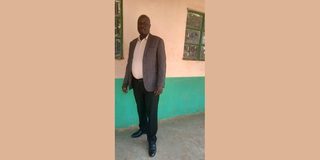
Fred Nyongesa Mbaya, a bilharzia survivor from Bungoma County.

What you need to know:
- Bilharzia manifests as a sexually transmitted infection because of the affected person passing blood‑stained urine or diarrhoea. As a result, patients are often treated for STIs before it is discovered they have urinary bilharzia.
For months, Fred Nyongesa’s life was dictated by persistent lower back pain and a sharp pain in his hips, relentless discomfort that first appeared whenever he sat for long periods.
At a health facility near his residence, Nyongesa underwent a series of tests and was diagnosed with intestinal bilharzia, a chronic parasitic disease caused by Schistosoma worms. The parasites penetrate human skin during swimming, washing, or fishing in contaminated lakes or rivers. The science behind the parasite points to a silent phase that can last for decades, meaning that if exposure occurs during childhood, the infection can persist quietly in the body, only manifesting symptoms much later. This was Nyongesa’s diagnostic puzzle.
“I have not stepped into a river or swum for many years. The last time I swam was when I was young, younger than 14. So the diagnosis shocked me,” he says.
At the hospital, he was handed four pills and a glass of water and sent on his way. The pain subsided slowly, prompting him to seek physiotherapy to improve his mobility.
“I did physiotherapy sessions for two weeks before the pain reduced significantly. Now, when I sit for a long time, I don’t feel pain. All that remains is pain and stiffness that I feel in one of my legs when I wake up in the morning. I have to stretch it for a while before I get on my feet, lest I fall,” he explains.
Many people could be affected by this condition but are unaware of it, cautions Anthony Mpalia, a public health officer.
“From a scientific point of view, somebody can live with bilharzia for 30 years; it could affect them, but they wouldn’t know. When it comes to health care workers, most of them are not aware because they have not been capacity built on bilharzia,” Mpalia explains.
“The snails are mostly in the swampy areas. People come into contact with them when swimming or farming without personal protective equipment like gloves or gumboots. Once the snails hatch in water and you lack personal protective equipment, the larvae penetrate the skin and enter the bloodstream and mature into adults. They then settle in the blood vessels surrounding the intestines, where they lay eggs that burrow through to the gut,” he adds.
Mpalia adds that these worms can also cause infertility in both men and women. This form is called urinary bilharzia. In women, mature worms in the bloodstream lay eggs, which become lodged in the fallopian tubes, ovaries, cervix, and uterus, triggering inflammatory nodules. The subsequent healing process leads to significant scar tissue and adhesions, which can block the fallopian tubes, preventing fertilisation. Eggs in the ovaries can interfere with the maturation and release of eggs. Toxins released by the worms can also cause inflammation in the uterus, hindering the successful implantation of a fertilised egg and leading to infertility or early miscarriages. Due to severe vaginal inflammation, lesions, and pain during intercourse, the frequency of intercourse may be reduced, decreasing the chances of conception.
In men, eggs often lodge in the seminal vesicles and prostate, causing inflammation that results in narrowing or complete blockage, leading to obstruction of sperm release. Infection can lead to testicular damage, which directly impairs sperm production. Inflammation and the presence of eggs in semen result in higher rates of sperm cell death and decreased sperm motility, says Mpalia.
“Bilharzia manifests as a sexually transmitted infection because of the affected person passing blood stained urine or diarrhoea. As a result, patients are often treated for STIs before it is discovered they have urinary bilharzia,” he adds.
Other people may not necessarily have swum or walked through swampy areas to contract bilharzia. In areas such as Western Kenya, pit latrines can sink or collapse during the rainy season due to soil saturation, which reduces their load bearing capacity and leads to structural failure. This environmental event is directly linked to the spread of bilharzia (schistosomiasis), because flooded toilets, or the inability to use them, lead to the contamination of nearby fresh water with human waste.
When toilets sank at the household level, family members resorted to relieving themselves in nearby bushes. School going children did the same when toilet blocks sank or overflowed with water. This pattern was also replicated in markets, where toilets had also sunk, were few, or were completely unavailable.
Most households and institutions would wait until the rains were over to construct new toilets, which meant that open defecation became rampant. In schools, even if a few toilets remained functional, they were often insufficient to accommodate the student population within a 15 minute break, so students still took to the bush. Toilet construction, in many cases, was not considered a priority in rural schools where resources were scarce and competing demands numerous. In some instances, there was no water for students to wash their hands, and when it was available, it was inadequate.
For years, the standard response was Mass Drug Administration (MDA); giving deworming pills to everyone in high risk areas. While millions were treated, transmission never stopped. People took the pills, then walked right back into the contaminated water that made them sick in the first place.
WASH (Water, Sanitation, and Hygiene) interventions, including the provision of clean water, handwashing facilities, and pit latrine use that break disease transmission cycles, manage infections, and prevent recurrence, took a back seat. Data on the diseases was also scarce.
“When we started, there was no data for WASH. It was just sketchy. We wanted to find a way of getting targeted investments to address the gap, so we took the WASH baseline data and the prevalence data of the diseases from four counties: Vihiga, Kakamega, Bungoma, and Trans Nzoia and overlaid them on a dashboard,” explains Aidah Binale, programmes coordinator at WASH Alliance Kenya.
The aim, she says, was to ensure that data actually drives action. With clear evidence, counties or any funder can identify gaps and direct resources accordingly.
“If the dashboard shows an area where endemicity is high but WASH infrastructure is low, it tells us we need more infrastructure. If the overlay shows high prevalence yet adequate WASH infrastructure, we don’t need to build more latrines there; we need to invest in behaviour change, like deploying public health promoters to engage households and raise awareness. Conversely, if infrastructure is low, that’s where we put the money for a borehole,” Binale says.
“In Vihiga County, the dashboard identified a school with toilets but without water and, by extension, lacking handwashing facilities. Students had to fetch water from a river or bring it from home. Using the dashboard’s evidence, the project lobbied a private company to pilot a shallow well. Now, the students don’t have to go to the river anymore. Even the communities around the school are using that water,” she adds.
Currently being piloted in four counties, the initiative is in discussions with the Kenya National Public Health Institute to host the dashboard, with the aim of scaling it nationwide. Lessons from the pilot have demonstrated its potential, and there are plans to expand its use beyond the initial diseases to other neglected tropical diseases such as trachoma and onchocerciasis. By overlaying WASH data with disease patterns, the platform can support a broader, integrated public health response.
“The dashboard provides granular insights from county and sub county levels down to wards, schools, and households. Users can assess WASH conditions across communities or within specific institutions such as schools, making it a powerful decision making tool,” says Binale.
At the ward level, officials like Jane Njomo, programme manager for the Deworming Innovation Fund (DIF), oversee the hands on implementation of the water, sanitation, and hygiene (WASH) component. The DIF is a five year initiative launched in 2020 by the End Fund in partnership with the Children’s Investment Fund Foundation to accelerate the elimination of intestinal worms in Ethiopia, Kenya, Rwanda, and Zimbabwe.
In western region, covering Vihiga, Kakamega, Bungoma, and Trans Nzoia, the initiative is being implemented. In schools, initiatives such as talking walls or murals are used to educate learners about the prevention and treatment of bilharzia (schistosomiasis), intestinal worms, and jigger infestations. School boards have also been trained to manage and maintain sanitation and handwashing facilities, ensuring sustainability beyond the project’s life. Njomo notes that simple practices like handwashing can prevent more than 60 per cent of common illnesses—a lesson reinforced during the Covid 19 pandemic.
With this infrastructure in place, Njomo says the focus is now on interrupting transmission units. These are 40 specific wards where prevalence has fallen below two per cent, showing promise for total elimination.
“In these communities, local administrators, village elders, WASH champions, youth groups, and community health promoters lead sensitisation campaigns, encouraging latrine construction and improved hygiene practices. The programme is already reporting an increase in household sanitation facilities and handwashing stations,” says Njomo.
As the programme transitions toward its final phase in 2027, the focus is shifting from mass drug administration to sustained WASH interventions and behaviour change strategies, particularly in areas where infections persist despite years of treatment. Baseline WASH data collected at the start of the programme will be compared with an endline survey in 2027 to measure impact. Ultimately, the goal is to eliminate bilharzia and intestinal worms in the region by 2030, contributing to broader efforts to control neglected tropical diseases (NTDs) in Kenya.
Nkirote Murugi, a focal person for WASH and advocacy, communication, and social mobilisation at the Ministry of Health’s Public Health Institute, notes that the ministry has been centrally involved in developing the WASH–NTD dashboard, which aims to strengthen disease surveillance and accelerate the elimination of NTDs in Kenya. The dashboard, she says, aligns with national strategies, including the NTD Master Plan and the Breaking Transmission Strategy, pinpointing areas with poor WASH conditions and overlaying disease prevalence to guide coordinated, multi sectoral action.
“This dashboard plays a critical role in guiding the prioritisation of where to act by providing clear evidence on the high risk wards. So while the final budget allocations are based on fiscal years, our intention is to increasingly have direct resource allocation towards these areas by counties based on what we are seeing. We are hoping that this helps the counties to prioritise and use evidence to guide them to make decisions. We are also hoping that it will support a more targeted and efficient use of resources in the long run,” says Murugi.
“Following the validation of this pilot, we’re still hoping that we will scale up to the remaining counties in phases and aligned to our current NTD master plan, but we’re also looking into other areas that we can leverage for other neglected tropical diseases that also have a WASH component, like trachoma and lymphatic filariasis,” she adds.
Murugi emphasises that while reinfection remains a challenge, it is largely driven by gaps in water reliability, sanitation, and hygiene. Addressing these drivers through data informed interventions is expected to improve the effectiveness and sustainability of control measures, accelerating progress toward Kenya’s 2030 elimination targets.
While mobile alerts and direct public health warnings to citizens are not yet integrated, the dashboard represents the first step in a larger journey toward real time identification of high risk areas, prioritisation of interventions, and providing communities with timely, actionable information.



