Inside KNH ward 1E: Where children fight cancer with smiles

Kenyatta National Hospital.

What you need to know:
- As Kenya marks Childhood Cancer Awareness Month, the message from the KNH pediatric oncology team is simple and powerful:
- If the cancer is diagnosed early, it is treatable. That is why we all need to be alive to the early warning signs and the importance of early diagnosis. Parents and caregivers must be vigilant.
In the afternoon light of Ward 1E at Kenyatta National Hospital (KNH), the air carries a paradox. This unit hosts 28 children, each engaged in the fiercest battle of their young lives.
Many had just returned from chemotherapy, a treatment known for its draining intensity.
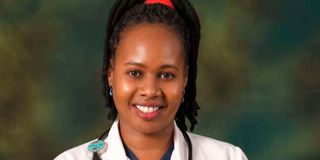
Dr Irene Nzamu, a paediatric haematologist oncologist at Kenyatta National Hospital.
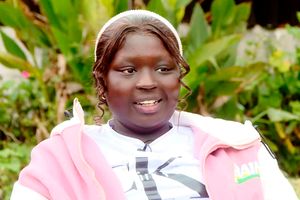
Yet, the room was not defined by sickness, but by an overwhelming spirit of joy. Their faces, though sometimes pale, were beaming with smiles that spoke of pure hope and the unshakeable innocence of childhood. For a precious moment, they seemed oblivious to the giant monster they were all fighting.
They joined together in song, their voices rising in a chorus of resilience. They danced with an energy that defied their diagnoses, and their eyes lit up during a cake-cutting session, savouring a simple, joyful moment. In the face of immense adversity, their happiness was a powerful, tangible force.
As Kenya marks Childhood Cancer Awareness Month, the message from the KNH pediatric oncology team is simple and powerful.
“If the cancer is diagnosed early, it is treatable. That is why we all need to be alive to the early warning signs and the importance of early diagnosis. Parents and caregivers must be vigilant,” says Ward 1E nurse Beatrice Amadi.
The second message is that cancer is not a death sentence; children can beat it, even in the worst of cases.
Spending the better part of her time with these little angels, Dr Irene Nzamu, a paediatric haematologist-oncologist and the head of the Paediatric Haematology & Oncology Unit at KNH, has witnessed how their joy and resilience are their most powerful weapons in the fight.
Dr Nzamu has stood beside these families through it all—the raw, gut-wrenching days, the joyful moments of triumph, and the quiet days when hope seems to flicker.
She confirms that the joy these children possess is not a distraction from the healing process—it is an integral part of it. The resilience radiating from these tiny warriors is not just inspiring; it is medicine, actively contributing to their fight.
Speaking on their resilience and positive energy, Dr Nzamu recalls one story that perfectly captures the incredible resilience she witnesses.
“One story that stays with me is of an eight-year-old girl with Acute Myeloid Leukemia (AML), one of the most aggressive leukemias. When her family received the diagnosis, they cried for weeks. Initially, she cried too. Then one day, she asked me a question that changed everything: “If I cry every day, will the cancer go away?'”
The child reasoned that if she was happy, played, and smiled, she might even forget the cancer was there. From that day, she stopped crying. She began interacting with others, went out to play, and her condition started to improve.
Dr Nzamu says the young warrior taught the whole KNH cancer ward a profound lesson: the attitude with which you face a challenge matters. Her joy and laughter became her medicine. She successfully finished all her treatment cycles and became a source of encouragement for her parents, the staff, and other patients.
Having treated children with cancer for over a decade, Dr Nzamu says the moment a child anywhere rings the "end of treatment" bell is iconic. “It’s a moment of mixed feelings. There are tears of joy, immense relief, and a sense of victory—the end of a long, arduous journey. It is a powerful message of hope for every other child and family still fighting.”
But the KNH team also looks at the children still battling the disease, using the moment to encourage them: "She did it, you can do it too."
The joy is tempered by apprehension, knowing cancer can relapse. Behind the celebration, there’s a silent prayer that the child never relapses. “Ultimately,” she says, “we choose to take the positive message: it’s a joyous, encouraging, motivating sigh of relief.”
Speaking of faith, Dr Nzamu shares that her own Christian belief is a quiet source of strength in her work.
“On several occasions, I have prayed before a difficult treatment procedure,” she says.
“I do quietly pray before I handle patients for the day, and when a family requests it, I pray with them too. We have an active chaplaincy department in KNH that offers our patients spiritual support.”
She is deeply mindful of the diverse faiths she encounters daily. “Because I handle clients from different religious backgrounds,” she adds, “I do not force it on anybody.”
On what parental love looks like in its most raw form, Dr Nzamu is clear: “It looks like a mother not sleeping for weeks, sitting faithfully by her child’s bedside. It looks like parents forgetting to eat their own food just to ensure their child can take a bite. It looks like fathers selling everything they own—their land, all their resources—just to afford treatment.”
The financial and emotional toll on families is devastating and it leads to treatment abandonment. To address this, parental education sessions and support groups are crucial to help families stay the course and not abandon treatment.
Indeed, the fight against childhood cancer is not a solo battle; it is a meticulously coordinated campaign waged by a dedicated multidisciplinary team.
At the core is the medical team led by the paediatric hematologist/oncologist who charts the treatment course. They are supported by paediatric oncology nurses —the unwavering frontline caregivers—and specialists like paediatric surgeons, radiation oncologists, pathologists and radiologists.
Equally vital are the critical support specialists who heal the heart and mind alongside the body. The social worker navigates devastating financial and logistical challenges; the clinical psychologist helps the family process unimaginable trauma. The chaplain provides spiritual comfort and solace, reminding them they are not alone.
The physiotherapist rebuilds young bodies weakened by treatment, the nutritionist fuels the fight against infection and fatigue, and the patient navigator acts as a crucial guide through the overwhelming maze of appointments and paperwork.
Battling this formidable adversary at KNH is a dedicated multidisciplinary team, and Dr Nzamu is quick to celebrate its hidden heroes.
“While we doctors have the medical skills,” Dr Nzamu emphasises, “the compassion team is the unsung heroine of this fight. Their humanity is our patients’ lifeline.”
“I am talking about the nurses, whose day-and-night care is a pillar without which most children would not survive. The counsellors who cry with these families, the social workers who navigate their real-life challenges, and the chaplains who offer spiritual nurture. After we’ve done all the medicine, it is this team that ensures the families feel supported.”
State of childhood cancer in Kenya
This entire ecosystem of care is battling against a daunting statistical reality in Kenya.
KNH sees about 350 to 400 new childhood cancer diagnoses per year, a number that is increasing partly due to greater awareness efforts.
The top three most common childhood cancers in Kenya are: acute leukemia (blood cancers), making up over 35 per cent of cases while lymphomas (cancers of the lymph nodes), account for about 15 per cent. Kidney tumours (like Wilms' tumour), are at about 15 per cent. Retinoblastoma (eye cancer) is also significantly high, says Dr Nzamu.
Alarmingly, the overall survival rate in Kenya is low, ranging between 30-40 per cent, compared to over 80 per cent in the West. This is because over 70 per cent of children arrive with advanced, stage four cancer, according to Dr Nzamu.
This high mortality is directly linked to one grim, statistical reality: Dr Nzamu reveals that KNH has not seen a stage one child in more than five years. The overwhelming majority of cases—a staggering 75 per cent—are Stage Four, where the cancer has already spread widely throughout the body.
However, for specific cancers diagnosed early, Kenya is making progress. The cure rate for Hodgkin’s lymphoma is almost 80 per cent, and for retinoblastoma about 74 per cent. It is against this stark backdrop that the plea for awareness transforms from a simple recommendation into a matter of life and death.
“The fundamental truth is this,” states the paediatric haematologist oncologist with urgency, “…with early diagnosis, childhood cancer is curable. Late diagnosis is our biggest enemy. To cure our children and give them their future back, it has to be everyone's business.”
In the face of rising childhood cancer cases, KNH experts are urging parents and guardians—the first line of defence in a child’s health—to remain relentlessly vigilant.
These caregivers play a crucial role in early detection. They must watch for a constellation of symptoms that, while often mimicking common childhood illnesses, are distinguished by one critical factor: their unusual and persistent nature.
A majority of childhood cancers are caused by genetic factors and the warning signs, according to Dr Nzamu, can be detected by an observant caregiver.
They include a fever that does not subside after a week or two of treatment, including antibiotics, and any unexplained lumps or swelling in the neck, abdomen, or other parts of the body. A persistent headache, which is not typical in children, and unexplained pain in the bones or joints should also prompt concern, says the cancer expert.
Furthermore, a noticeable shift in a child's energy level—marked by prolonged fatigue, lethargy, or a lack of interest in play—warrants medical attention as does any unexplained bruising or bleeding. In the eyes, a whitish reflection in the pupil or the sudden onset of a squint are significant abnormalities that require immediate evaluation.
Dr Nzamu emphasises that the guiding principle for parents is persistence: any symptom that continues for more than two weeks without resolution, despite an initial visit to the clinic, must be investigated further.
Message to Kenyans
This vigilance is the first, most crucial step in a much larger battle—one that requires a nation's support.
“Identifying symptoms early is just the beginning. These families then need immense emotional, physical, financial, and social support to see it through. Everyone can offer
something—from encouragement to advocacy… Help us minimise the stigma. It leads to abandoned treatment and lost lives. Remember, it could be anyone’s child, including yours,”
Dr Nzamu says.