Invisible disabilities: Why senators, Duale clashed over Kenyans left out of ‘biased’ SHA

Health Cabinet Secretary Aden Duale before the National Assembly health committee at Parliament buildings in Nairobi on May 15, 2025.

What you need to know:
- Following a heated session revealing significant policy and access gaps, the Kenyan Senate has urged Health Cabinet Secretary Aden Duale to prioritise affordable healthcare and benefits for persons with 'invisible disabilities', such as fibromyalgia, ADHD and autism, within the Social Health Authority.
- Beatrice Likwop, who lives with an invisible disability, submitted a powerful petition highlighting systemic neglect, budget invisibility and the SHIF's failure to provide her with essential medication, which directly challenged the CS's claims of adequate provisions.
The Senate Standing Committee on Labour and Social Welfare has asked Health Cabinet Aden Duale to ensure inclusion of persons with invisible disabilities such as fibromyalgia, attention deficit hypersensitivity disorder (ADHD) and autism have unlimited access to affordable healthcare. The legislators also asked that such Kenyans be prioritised in the Social Health Authority benefits packages.
This came after a heated senate session on Tuesday laid bare the gaps in the country’s social protection fabric as senators, stakeholders, and top government officials clashed over the government’s commitment to recognising and supporting persons living with invisible disabilities.
The hidden impact
Invisible disabilities, also known as hidden or non-visible disabilitities, are physical, mental or neurological conditions that are not immediately apparent to many people.
These conditions can significantly impact a person's daily life but their effects may not be visible with naked eyes. They include chronic pain, mental health conditions like anxiety and depression, neurological conditions like epilepsy and neurodevelopmental conditions.
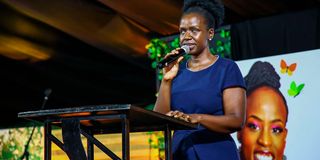
Nominated Senator Crystal Asige during the launch of 'Musings' memoir reflecting Zawadi Nyambura Muraya's journey with celebration palsy at Nairobi Chapel, Ngong Road on December 3, 2024.
According to the committee’s vice chairperson Senator Crystal Asige, this move is in response to a petition by Beatrice Likwop, a Kenyan living with an invisible disability, who paints a grim picture of systemic neglect and policy gaps.
In her petition, Ms Likwop says that invisible disabilities are ignored in Kenya's health budget and are totally forgotten.
“We are tired of being statistics on paper yet nothing reaches us. Invisible disabilities are not only invisible in the body but are also invisible in policy, in the budget and in planning,” the petitioner said before recounting how her Social Health Insurance Fund (SHIF) registration had not guaranteed her access to essential medication.
“You read from your papers, but I live it,” Ms Likwop told Mr Duale, who appeared before the Senate committee on Tuesday. “You say essential drugs are provided but when I go to the hospital, I am told they are out of stock. I’m jobless yet I must pay quarterly to a fund that doesn’t support me in return.”
In an official response, Mr Duale said that the Health ministry acknowledges the concerns raised in the petition regarding the recognition and inclusion of persons with invisible disabilities.
“Invisible disabilities such as epilepsy, fibromyalgia and various mental health conditions-can significantly impair daily functioning yet often remain unrecognised due to their non-apparent nature. As a result, individuals living with these conditions frequently encounter systemic barriers, stigma, and exclusion from services, accommodations, and broader societal acceptance,” Mr Duale started off.
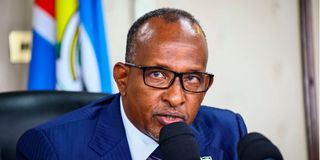
Health Cabinet Secretary Aden Duale addresses the media at the Ministry of Health headquarters in Nairobi, on April 10, 2025.
He added that the health ministry fully recognises the unique challenges faced by persons living with invisible disabilities, and the need for interventions to eliminate systemic barriers, ensure equitable access to care, and uphold their rights and dignity. He explained that the ministry had developed and implemented several key policies and strategies to address to strengthen social protection and legal frameworks for this often-overlooked population.
“These include the Disability Medical Assessment and Categorisation Guidelines (2022) where the ministry has adopted the International Classification of Functioning, Disability, and Health (ICF) model to guide medical assessments and these ensures a holistic and functional approach to categorising disabilities, including those that are not immediately visible such as epilepsy, mental health conditions, and autoimmune disorders,” Mr Duale said,
According to the Cabinet Secretary, financing through SHА includes several targeted funds that directly benefit persons with invisible disabilities.
The Cabinet Secretary gave the example of the Emergency, Chronic and Critical Illness funds; the Social Health Insurance Fund; and the Primary Health Care Fund
He further pointed out that the ministry has developed the Rehabilitation Services Technical Working Group (TWG), a multi-stakeholder platform convened by the health ministry to advance access to rehabilitation services for all persons with disabilities, including those with invisible impairments.
“These measures are yielding progressive outcomes — ensuring that invisible disabilities are acknowledged in policy, enabling equitable access to essential healthcare services, and providing tailored support that respects individual needs,” he said.
He added: “Through sustained collaboration with the National Council for Persons with Disabilities, Organisations of Persons with Disabilities, and other stakeholders, we remain dedicated to ensuring that health services are inclusive, accessible, and responsive to the needs of all Kenyans-visible and invisible alike,” he said.
Sunflower bracelets
Alice Bundia, a caregiver to an autistic young adult agreed with Ms Likwop while observing that children with invisible disabilities often end up in police custody due to lack of identification.
“They-re non-speaking and locked out of homes. We need visible identifiers like sunflower bracelets for such children,” she pleaded with the government.
Joseph Motari, the Principal Secretary for Social Protection, who had also been invited to the session in his response told Bundia Ms that while such identifiers had been discussed, concerns around stigmatisation had slowed their rollout.
However, a consensus emerged around critical areas needing immediate action: institutionalised training for health workers, teachers, and law enforcers on handling invisible disabilities.
The committee agreed on the urgent need for amendments to current legislation and policy frameworks to explicitly address invisible disabilities.
“Home-to-home disability surveys to generate accurate data and inform funding, equitable disbursement of social protection funds including the Cash Transfer Programme and education support, and monitoring and oversight of devolution especially in health to ensure counties align with national objectives,” they recommended.
“This is not just about policies and paperwork. It’s about dignity, about being seen, heard, and supported. We have a duty not just legally, but morally, to protect every Kenyan, especially the most unheard,” Senator Asige, the committee’s vice chairperson said.
Nominated Senator Miraj Abdulrahman asked Mr Duale: “What are the timelines and monitoring mechanisms for these policies? What are the ministry’s strategies to make specialist care affordable for those who cannot afford private facilities?”.
Mr Duale acknowledged the importance of structured timelines and strategies.
“We have monitoring and evaluation mechanisms, our timelines are embedded within the health policy frameworks and guided by our digitisation efforts. We are continuously training our healthcare workers through in-service training to build their capacity to recognise and manage invisible conditions,” Mr Duale said.
But why has government for decades been unable to see Kenyans living with invisible disabilities?
According to Beatrice Kairu, a public policy specialist and health economist, one of the major hindrances to inclusion of the invisible disabilities in Kenya's Universal Health Coverage (UHC) is the limited availability of disaggregated data.
“Even as the World Health Organization (WHO) estimates that mental, neurological, and substance use disorders contribute to more than 13 percent of the disease burden in Kenya, our national registries capture much less than that. Invisible disabilities are not typically in national household surveys, community health assessments, or even facility-based data systems,” she told Nation.
The expert added that the Kenya National Bureau of Statistics (KNBS) still does not conduct a national disability survey that captures the neurodevelopmental, psychosocial, and episodic chronic conditions in a proper manner.
“It follows that these populations are invisible not only in service delivery but also in budgeting and policy planning. Without such data, it is impossible to pay equitably, plan human resource allocation, or design benefit packages that consider the actual needs of this population,” she said.
Ms Kairu said that SHA cannot claim to be rights-based or needs-based until it has a home-to-home registry that includes invisible disabilities.
“While CS Duale said that the 2022 Disability Medical Assessment and Categorization Guidelines inclusive of invisible disabilities, inclusion in guidelines does not constitute inclusion in access or funding. In practice, SHIF has not covered basic services for concealed diseases, medicines for epilepsy and psychiatric illnesses are typically in shortages at state-run hospitals,” the health economist.
She pointed out that State-run health facilities barely offer speech therapy, occupational therapy, or behaviour support which are vital to persons living with autism and other developmental conditions.
Less than 10pc SHIF funding
“A 2024 KIPPRA review found that a mere fraction less than 10 percent of SHIF funding went to chronic or neuropsychiatric illnesses. Consider WHO's projection that such illnesses represent greater than a tenth of Kenya's disease burden, and the disparity leaps into clear view,” she told Nation.
As per Ms Kairu, despite the 2023 Social Health Insurance Act assuring that vulnerable Kenyans would be subsidised with funds from the government, this has not been effectively fulfilled.
“This is asking unemployed individuals with functional impairment due to their disabilities to pay into a system that is not present or responsive to their needs,” the health economist said.
She added: “This is economically irrational and morally reprehensible. If the Constitution guarantees social protection to disabled people under Article 54(1)(c), then the State must make the guarantee in health financing, not merely in rhetoric.”




