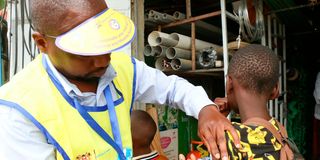
Over the past month, a wave of unease has swept through many Kenyan households. This discomfort is not because parents distrust vaccines. On the contrary, most know their value.
They have brought their children to be immunised as part of routine services, queued at clinics and supported national vaccination campaigns that have kept generations safe from deadly diseases.
Vaccination is one of the most effective public health interventions available to us. It saves lives, prevents illness and suffering, cuts treatment costs and ensures families and communities stay healthy and productive. It is not only a medical solution. It is a public good. When one child is vaccinated, it helps protect many. Vaccines give everyone the same protection, especially children in poor and hard-to-reach communities.
Yet despite this deep public trust, a recent campaign to vaccinate school children against cholera, typhoid and measles was rolled out with little information.
There was no clear communication, no proper consultation, and in many cases, no formal consent. Parents who support vaccines are now left asking basic but important questions.
The Ministry of Health has spectacularly failed at the one thing that matters most — public health communication. Parents from around the country are speaking out on social media, at school meetings, and at community forums. It's not the vaccines themselves that they are concerned about. Many parents are vaccinated and believe in their benefits. Their concern is the lack of transparency. No public forums. No parent letters. No clear explanation of risks or side effects, just a letter of consent for signing.
These concerns are valid. In fact, they are essential. Why were parents not told which vaccines were being given? What are the possible side effects? Why these particular diseases? A press release from the Ministry is not enough, especially when it involves the health and safety of children.
When parents hesitate or delay in giving consent, not because they oppose vaccines but because they feel confused and sidelined, that is not vaccine hesitancy. That is a failure of the system. It is an institutional failure, rooted in poor communication and disregard for families. Let’s be clear: cholera, rubella and measles are not diseases to take lightly. The reason they are being targeted is evident in the data.
Cholera is one example. Up to 22 out of every 100 infected children under five years old may die. The disease can also kill older children, particularly if they are malnourished or from a family that cannot afford healthcare. In settings where clean water is not readily available, and sanitation services are poor and dysfunctional, compounded by flooding and climate change, cholera flourishes. In short, informal settlements and underserved counties are at risk perpetually.
Measles is one of the most infectious diseases in the world. Out of every 100 children who get it, up to 15 can develop pneumonia, brain swelling or long-term disability. In some, it is fatal. Rubella is usually milder, though it can gravely harm the unborn child. Babies can be stillborn or born with severe birth defects if the mother contracts the infection early in pregnancy. These diseases flourish in crowded schools and informal settlements and communities with many unvaccinated children. Low immunity means one case can start an outbreak that is catastrophic to families and the health system.
That is why vaccination for prevention is more important now than ever. We all know that in the long term, water, sanitation and hygiene are key. But in the short term, we can protect children with safe and effective vaccines.
In the current information age, already flooded with misinformation, when the government says little or nothing, they are not being neutral, they are creating a void. And in that void, panic, rumours and speculation will fill the space. Concerns about the vaccines’ short and long-term side effects will snowball and swell if not addressed in an open and timely manner.
A successful vaccine roll out starts with information, not needles. The government must partner with health experts, teachers, scientists and trusted community leaders to share why the vaccines matter, how they work, and what to expect. Public health officials must use both radio and social media. And yes, well-known voices from faith leaders to musicians should speak out, not just at the launch, but through the whole process.
Health workers must also be prepared to answer questions. Not to dismiss them. In a world where a WhatsApp message can instill fear in minutes, our healthcare workers have to be trained to do more than vaccinate. They have to be able to explain the science to all sorts of parents, from a grandmother in Turkana to a father in Kibera.
Building vaccine confidence is a long-term investment. It is a form of national preparedness. As the world becomes more connected and new diseases emerge, the parent who hesitates today could become a powerful advocate tomorrow, if only we take time to build trust now.
No parent wants to see their child suffer. No mother wants to lose a child to a disease we can prevent. But no parent should be asked to make a decision in the dark.