Kenya formally Integrates pharmacies into the family planning frontline
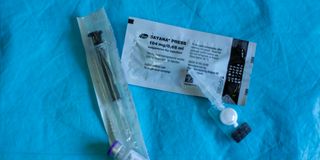
The subcutaneous Depo-Medroxyprogesterone Acetate (DMPA-SC), a self-injectable family planning commodity.

What you need to know:
- The Kenya National Family Planning Guidelines for Healthcare Providers allow trained pharmacists and pharmaceutical technologists to provide services, including injectable contraceptives, that were previously limited to nurses, medical officers, and clinical officers.
For Elizabeth Shikuku, a resident of Kawangware, family planning is not an abstract policy debate but a matter of timing, access, and control over her own body.
For the past two years, she has relied on the Sayana self-injectable contraceptive, administered at a public facility by healthcare workers. But that access has not always been reliable. Frequent strikes and staff shortages have repeatedly disrupted her schedule, forcing her into difficult choices.
“The challenge comes when it’s time for my next injection and the healthcare workers are on strike. You go there and find no one, so you have to go back home and come again later. Meanwhile, you are risking an unplanned pregnancy,” she said.
“At times, the system attempts to manage shortages. Once you have arrived at the facility and registered, they will give us a code to use, then call us when the injectable is available. But delays are common, and for women like me, consistency is critical,” she added. She learned about the method through a referral from a friend.
Before switching to Sayana, she had used an implant, but the side effects proved difficult.
“My periods became irregular, appearing even twice a month. The injectable offered relief and stability. When I started using the self-injectable, my hormones stabilised, and my periods stopped being irregular. That’s why I decided to continue with it,” she explained.
It was during one of the healthcare worker strikes that she first turned to a pharmacy. The experience, she recalls, was both cautious and reassuring, with the pharmacists wanting to confirm that she really knew how to use the injectable.
“The first thing they asked me was whether I knew how to use it. I told them yes, that I usually get it at Gatina Dispensary, but I couldn’t because of the strike. They asked me follow-up questions on how it is used, just to confirm that I knew. However, they were asking with good intentions as they were also willing to teach me. Satisfied, they sold me the injectable,” said Elizabeth.
Since then, pharmacies have become a reliable fallback and sometimes a preferred option. When her injection date falls on a weekend or the facility is closed, she simply walks to the pharmacy and buys it. The cost is Sh500, compared to free provision at the public facility, but she weighs that against the convenience.
“At the facility, there are long queues because many women are going there. Even if they open at 8am, you can spend a lot of time waiting. The pharmacy is more convenient. Still, cost remains a consideration, and my first choice is always the public facility. Only when it’s not available or they are on strike do I go to the pharmacy,” she noted.
But unpredictability in the public system has made that fallback increasingly necessary.
“Strikes are frequent, and you can’t always wait for them to come back. Even last week they were not there; they have only resumed family planning services this week.
Sometimes you go and they tell you the person who administers it is not there,” said Elizabeth.
What has ultimately given her confidence is the control the method offers. Today, she self-injects at home, a routine she has mastered.
“I go, get it, inject myself in the belly, then dispose of the syringe in the pit latrine,” she said.
For many Kenyan women, accessing reproductive health services can mean long travel distances, stock outs, crowded public hospitals, and hours spent waiting in queues, sometimes only to find facilities closed or overwhelmed. Yet within nearly every neighbourhood is a far more accessible option: the community pharmacy.
Pharmacies have quietly become the first point of contact for healthcare for many Kenyans. They offer convenience, privacy, and professional expertise without the long wait times associated with health facilities. Recognising this reality, Kenya is shifting family planning services closer to communities by expanding access through trained community pharmacies.
This transformation is enabled by the updated Kenya National Family Planning Guidelines for Healthcare Providers, released in February, which directly supports Kenya’s FP2030 commitment. The guidelines allow trained pharmacists and pharmaceutical technologists to provide services, including injectable contraceptives, that were previously limited to nurses, medical officers, and clinical officers.
By expanding the family planning self-care basket, the Ministry of Health is advancing task-sharing and strengthening community-level access to reproductive health services.
Training pharmacists
To operationalise the shift, inSupply Health, in collaboration with the Ministry of Health's Reproductive, Maternal, Newborn, Child and Adolescent Health unit, is implementing the Optimizing Pharmacy Channel (OPC) Project, which focuses on training pharmacists.
Key milestones include training more than 500 pharmacists and pharmaceutical technologists across 12 counties on family planning counselling and service delivery, registering over 300 pharmacies with the Pharmacy and Poisons Board of Kenya, and helping them gain accreditation from the Ministry of Health to provide family planning services and information.
James Mburu, inSupply’s regional manager, explains that by optimising the pharmacy channel, the country is reimagining community pharmacies as integral parts of the health system, not just retail outlets, but accredited, trusted providers of family planning services.
“To date, we have reached over 200,000 women through private-sector channels, supported by more than 500 trained pharmacies and over 300 accredited to provide services such as self-injectables. By aligning training, accreditation, and policy, we are building a scalable, government-aligned model that expands access to convenient, high-quality, and discreet care. Ultimately, this is about optimising existing systems to deliver greater choice, equity, and resilience for women,” he explained.
Dr Susan Njogu, a community pharmacist in Kamukunji, explained that the new guidelines are a win for both patients and providers, and for the health sector as a whole. She described pharmacies as one of the first points of contact for patients, often preceding any hospital visit, and sees formal recognition as both validation and responsibility. This shift is already visible in patient patterns.
“When it comes to the most used methods, it depends on the age group. Younger women, particularly Gen Z, tend to prefer oral contraceptives. Their choices reflect lifestyle realities, including intermittent sexual activity, often tied to partners who are away at school or college.”
“Older women, typically between their late twenties and mid-forties, gravitate toward injectables. These come in two main forms: intramuscular (IM) and subcutaneous. While the IM option is more familiar, the self-injectable subcutaneous method is gaining traction. Adoption, however, is gradual. Whenever you’re introducing something new, there’s a little push and pull.”
Still, its advantages are clear, especially in a mobile, commerce-driven area like Kamukunji.
“People are travelling back and forth. So the ones you introduce to self-injectables become very comfortable with it because they can carry it and administer it even when they go upcountry. Convenience, autonomy, and portability make it particularly appealing,” said Dr Njogu.
Dr Njogu also reveals that first-time users are not simply handed the injectable and sent off. They are encouraged to visit the chemist for their second and third doses so that the pharmacists can observe how they are doing it. Only then are they trusted to self-administer independently.
Cost remains a persistent tension. While public facilities offer contraceptives for free, pharmacies charge, albeit modestly. “Why should I pay 200 for something I can get for free?” she said, echoing a common sentiment. As a result, many patients only turn to pharmacies during disruptions like healthcare worker strikes. “Whenever there is a strike… that’s when you see larger numbers.”
To bridge the cost gap where public health facilities offer the product for free, Dr Njogu explained that pharmacies collaborate with nearby public facilities. Patients who cannot afford services are referred with notes and followed up afterward.
“At the end of the day, they get the contraceptive. It’s a win-win.” This hybrid model—part service provider, part referral hub—illustrates how community pharmacies are integrating into the broader health system.
In terms of volume, the impact is modest but meaningful. “In a month, we see about 70 to 100 patients for contraceptive services. While this may not yet significantly reduce hospital burden, it shows that there is growing uptake and trust,” said Dr Njogu.
“There is also a shift in mindset among pharmacists. Before, we were more oriented on money-making. We would sell you the contraceptive and get our money. Now, the guidelines have fostered a more intentional, patient-centered approach. We have conversations around long-term contraception, replacing quick transactions for emergency pills.”
While the country’s reproductive health policy forbids teenagers from accessing contraceptives without parental consent, Dr Njogu noted that the government needs to take a pragmatic stance.
“Truth be told, we are in different times. People are sexually active at a very young age. Denying access does not prevent behaviour; it only increases the risk of unsafe abortions, unplanned pregnancies, and long-term socio-economic consequences.”
She situated this within the realities of her community, where poverty, transactional sex, and early exposure to adult behaviours are common.
According to a Ministry of Health official who asked to remain anonymous, the guidelines were developed to update service delivery approaches in line with emerging evidence, including self-care interventions and expanded provider roles. They were also designed to increase equitable access, strengthen quality of care, and formally integrate private sector providers such as pharmacies into the national family planning programme within a regulated and standardised framework.
“The guidelines explicitly recognise self-care interventions, including self-injection, as a critical approach to improving method uptake, continuation, and client autonomy. Pharmacy-based provision, where providers are trained, certified, and operating within national standards, is part of a broader task-sharing framework that expands access points and contributes significantly toward achieving national modern contraceptive prevalence rates,” the official said.
“The guidelines promote task-sharing across qualified providers and service delivery points, including private-sector actors. By enabling pharmacies to provide approved short-term methods such as self-injectables, routine services can be accessed outside public facilities, allowing those facilities to focus on more complex reproductive health needs, thereby improving overall system efficiency,” they added.
The official also noted that the guidelines prioritise equity, especially for those in arid and semi-arid lands, by integrating public facilities, community health systems, and private pharmacies into a single, cohesive network. This ensures that a woman’s geography no longer dictates her reproductive autonomy.
The guidelines clearly position self-care as complementary to facility-based services, not a replacement.
To ensure this expanded access remains affordable and sustainable, the Ministry of Health is aligning pharmacy-delivered services with the Social Health Insurance Fund and broader Universal Health Coverage mechanisms. By strengthening market coordination and supply chains, the government aims to reduce financial barriers in the private sector.
The ministry will also maintain oversight through standardised protocols, mandatory certification, and supportive supervision to ensure product quality.
“Self-care is a complement to facility-based services, not a replacement. Healthcare workers remain central in training and mentorship, managing complex cases and ensuring adherence to quality standards,” the official explained.
He explained that as Kenya embraces digital innovation, SMS reminders and digital counselling platforms will be used to track continuation and support adherence for self-injection users.
The pharmacy channel is playing a critical role in expanding access to family planning and contraceptive services, particularly in hard-to-reach and arid regions. Self-administered options such as DMPA-SC empower women to take greater control of their reproductive health by allowing them to stock up on doses and plan conveniently, helping to reduce unmet need.
Additionally, in settings where cultural or religious sensitivities may limit open access to family planning and contraception, these methods offer a discreet and dignified alternative. Women of reproductive age can obtain and self-administer contraception privately, supporting informed choice while respecting personal and community context.
[email protected]