Kenya to manufacture HIV-prevention drug
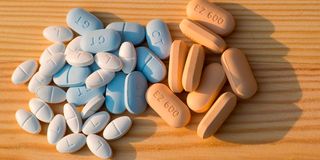
Kenya will be one of three countries in Africa to manufacture a groundbreaking HIV-prevention drug.

IN NEW YORK
Kenya has been granted a licence to manufacture a groundbreaking HIV prevention pill for African markets, making it one of three countries on the continent set to produce the drug.
This marks the first time that African manufacturers are part of the licensing for an HIV medicine from the very start.
On Friday, pharmaceutical company Merck announced that it was going to license seven generic drugmakers to produce a low-cost version of a new monthly HIV-prevention pill. One of the drugmakers is in Kenya.
The decision is intended to make the drug, alimatravir, immediately available in developing countries if clinical trial results next year live up to expectations for the pill.
The study that started last year and is being done by the Kenya Medical Research Institute (Kemri) is in a late-stage trial involving young women in three countries: Uganda, Kenya and South Africa. This means the clinical evidence itself is being generated in the region the drug is meant to serve, not imported as a finished product from elsewhere.
In Kenya, the drug will be manufactured by the Universal Corporation.
The licenses are royalty-free, and the deal covers generic production for 129 low- and middle-income countries. Merck also committed to manufacturing a bridge supply, sold to those countries at a no-profit price, so stockpiles can be ready to move immediately if the trial results due next year confirm the drug’s promise, rather than waiting years for the generic supply chain to catch up.
President William Ruto, in his speech read by Health Cabinet Secretary Aden Duale at a UN General Assembly high-level side event, said: “Africa carries about a quarter of the world’s disease burden. We make less than 6 per cent of our medical supplies. We make about 1 per cent of the vaccines we use. We saw what that means during COVID-19. Africa waited longer. Paid more. Received less. Our people paid the price for a supply chain we did not own. We will not go through that again.”
“Think about what that means. Africa helping to test the innovation. Africa is preparing to make it. Africa is ready to deliver it. Not standing at the end of the line waiting to buy it. For decades, our continent has carried the heaviest share of the HIV burden. Now we have a chance to help produce one of the newest tools to prevent it. That is justice,” President Ruto said at the forum dubbed Roadmap to Self-Reliance: What’s Needed for Sustainable Pharmaceutical Manufacturing in Africa.
The Bill and Melinda Gates Foundation has invested $100 million into the drug’s late-stage trial, and expects to invest a further $80 million to help get it through testing and to market.
Dr Nina Russell, who oversees HIV drug development investment for the foundation, said the science behind alimatravir gives the team unusual confidence.
Unitaid, on the other hand, is investing heavily in infrastructure and supply chain security, providing direct technical support and funding to the three African manufacturing facilities so the manufacturing side of the deal does not stall for lack of capacity.
The US International Development Finance Corporation has also been named among the partnership’s backers, to mobilise private capital in emerging markets.
Gregg Szabo, a senior vice-president at Merck, said trial data show the drug provides protection from HIV starting just one hour after it is taken, with about a week’s grace period if a person forgets their next monthly dose. He indicated that the drug could be sold to national health systems for as little as $5 (Sh650) per person per year.
Dr Priya Agrawal, representing Merck at the UNGA side event, described alimatravir as a product shaped directly by the HIV community’s own demands.
“This is not just about alimatravir. This is about strengthening African research and manufacturing, supporting skilled jobs and local private businesses, expanding regional trade and the journey from innovation to impact,” she said.
Dr Nicholas Muraguri, senior advisor on global health diplomacy for the government of Kenya, said: “This partnership is not just about distributing a drug; it is about rewriting the mechanics of global health equity.
By combining an ultra-low-cost, once-monthly pill with localised African manufacturing, we are equipping communities to protect themselves, secure their own supply chains and systematically halt new HIV infections.”
Follow our WhatsApp channel for breaking news updates and more stories like this.