KNH plunges into ‘technical insolvency’, debt chaos, pension crisis and revenue leakages: Audit report
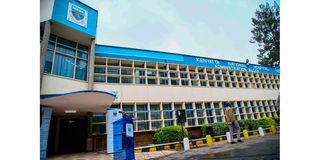
Kenyatta National Hospital. Audit report reveals deep financial strain, revenue discrepancies, and stalled projects threatening healthcare delivery at Kenya’s largest referral hospital.

What you need to know:
- Audit report reveals deep financial strain, revenue discrepancies, and stalled projects threatening healthcare delivery at Kenya’s largest referral hospital.
- Findings highlight insolvency risks, uncollected billions, and critical equipment shortages disrupting services at Kenyatta National Hospital.
Kenyatta National Hospital is facing significant financial and operational hurdles, according to a report by the auditor-general for the financial year ending June 30, 2025. The report covers the hospital’s financial statements, legal compliance, and internal management. It notes that while the financial records are mostly presented correctly, specific, serious errors prevent it from getting a clean bill of health.
The most alarming revelation is the hospital’s descent into what the auditor-general describes as “technical insolvency”. For the fourth year in a row, Kenyatta National Hospital (KNH) has spent more than it earned. In 2024/25, it spent Sh2.6 billion, Sh2.3 billion more than the Sh299,708,000 in the previous financial year.
While the hospital reported earning over Sh9.5 billion from medical services, audit teams discovered Sh188.8 million in revenue that was never officially receipted. This lack of documentation makes it impossible to confirm if the income reported is accurate or complete. Further, there is a major disagreement regarding what the hospital owes its suppliers. KNH records show a debt of only Sh6.7 million to the Kenya Medical Supplies Authority, but medical supplier’s own records claim the hospital owes them over Sh117 million. This unexplained variance of Shs110 million raises serious questions about how KNH tracks its liabilities.
Compounding this crisis is a failure to collect money owed to the hospital. Nearly Sh6.7 billion in debts have remained uncollected for more than three years. Despite having a credit policy in place, its bills pile grew by over Sh1.6 billion in just one year, showing a lack of effective debt recovery.
Beyond day-to-day accounting, the hospital is also struggling with funding shortfalls. In the year closing June 30, 2025, it received 22 per cent less funding than expected from the government. This underfunding meant it could not spend what it needed to, which directly threatens its ability to provide essential healthcare services.
Beyond the immediate deficits, the report describes a facility trapped between unpaid government promises and a massive, unfunded pension crisis. Its ability to serve the public was hampered by a significant shortfall in funding. KNH had a budget of over Sh22.5 billion but actually received only Sh17.5 billion. This 22 per cent underfunding meant it could not spend what it needed to, resulting in a 19 per cent under-absorption of its expenditure budget. The auditor-general noted that this gap “may have affected the hospital’s mandate,” directly threatening the quality and reach of healthcare services.
Adding to KNH’s cash-flow struggles is the government’s failure to settle its own debts. The audit highlighted Sh268 million in grant money owed by the government for over three years. With no payment plan in sight, the auditor-general raised serious doubts about whether this money will ever be recovered.
The hospital is also struggling with a Sh10.2 billion deficit in the staff pension scheme. It does not have enough assets to cover pensions for current and future retirees. While the scheme needs to pay its retirees Sh14.6 billion, it only holds Sh4.3 billion in assets.
Despite KNH repeatedly asking the government for help to bridge this multibillion-shilling hole, the report found “no evidence that any funding has been received” and no alternative plan to manage the growing liability. Without government intervention, this could lead to legal battles, risk of being unable to pay retirees their pensions, and severe financial strain.
The report also reveals a facility struggling with stalled projects, administrative lapses, and critical equipment shortages. It highlights several major infrastructure failures that have cost taxpayers millions without delivering the intended services. They include a project to build an oxygen-generating plant—awarded in May 2022 but remaining incomplete three years past its deadline. Meanwhile, KNH has been forced to spend Sh596 million on oxygen from external suppliers to serve about 700 patients who require oxygen support daily.
A Sh500 million allocation to purchase a linear accelerator machine for cancer treatment also went unused because the actual funds were never released. Consequently, cancer patients face prolonged downtime and treatment interruptions as existing equipment fails.
Healthy Nation reached out to KNH chief executive Richard Lesiyampe to clarify their financial position, specifically what has driven more spending than earnings, details about debt owed, how the debt has hampered their operations, and their plan to handle the deficit in the staff pension scheme. He said the management has taken note of the issues highlighted in the audit report.
Clarifications
“The matters raised are currently before the Public Investments Committee of Parliament. The hospital will provide the necessary clarifications through the established parliamentary oversight process and will be guided by the committee’s direction on the same. The hospital will provide necessary clarifications through an established parliamentary oversight process and will be guided by the committee's direction on the same,” Dr Lesiyampe said.
“As a national referral and teaching hospital, Kenyatta National Hospital remains committed to transparency, accountability, and continuous improvement in the delivery of healthcare services. The hospital continues to work closely with relevant government oversight institutions to address the matters raised and strengthen systems that support quality patient care.”