Lenacapavir: Everything you need to know about the new HIV prevention drug
Lenacapavir has demonstrated enormous potential as a new HIV prevention tool with a 100 per cent efficacy rate and zero infections.

What you need to know:
- Lenacapavir is a longer-acting injectable drug for HIV prevention.
- Named ‘Breakthrough of the Year’ by Science magazine in 2024, Lenacapavir showed 100 per cent efficacy in reducing HIV infections
- Kenya has received 21,000 doses of Lenacapavir with about 15 counties selected to be the first to receive it.
It has taken about two decades, but the world finally has a new, longer-acting injectable drug for HIV prevention. Yesterday, Kenya received 21,000 doses of Lenacapavir, also known as LEN, with about 15 counties selected by the government set to be the first to receive it.
Named ‘Breakthrough of the Year’ by Science magazine in 2024, the drug showed 100 per cent efficacy in reducing HIV infections when study results first came out. Here is what you need to know.
Where did it come from?
The story of Lenacapavir begins with a simple question asked by an American biochemist, Wesley Sundquist, based at the University of Utah, more than two decades ago. He wanted to know how the HIV virus forms a cone-like shape.
What his team discovered was that the virus has a protein that forms a shell around its genetic material, and that this protein was sensitive to change.
Any tiny change in the parts of this protein, called the capsid protein, disrupted its ability to infect cells.
When his university interviewed him after being named Times 100 most influential people, Sundquist said his work was rooted not in a desire for fame and glory, but from interest in the natural world.
His team then asked a bigger question: could a drug that targeted this specific protein stop an HIV infection? Sundquist and his team published their findings in the scientific journal Science on January 1, 1999. Gilead, an American pharmaceutical company, took up the challenge and Sundquist became a consultant.
What happened next?
Progress was not straightforward. After the 1999 discovery, there was a stalemate in the drug development process.
In 2003, Sundquist's team reported that just a few mutations in the capsid protein could make it difficult for HIV to infect a cell, suggesting it was still vulnerable.
Further experiments produced encouraging results from monkeys. Then in 2006, Gilead, which had already manufactured a number of HIV drugs including Truvada, used in the treatment of HIV in adults and as a pre-exposure prophylaxis (PrEP), took up the challenge to manufacture Lenacapavir.
An article published in the journal Science describes the doubts that existed along the way, and how new leads in the discovery process helped defeat them.
Before human clinical trials, the team tested the potency of their discovery using rat skin. They improved the drug and started clinical trials in human beings in 2018, involving both healthy people and those living with HIV.
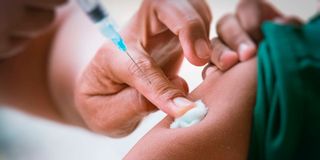
New technologies have resulted in long-acting injectables for HIV prevention and treatment in the last two years.
Does it work?
The results from clinical trials were remarkable. In the PURPOSE 1 study, conducted in South Africa and Uganda and involving about 8,000 women, the drug was found to be 100 per cent effective against HIV.
Researchers also found that cases of HIV infection reduced during the study period. They described it as a discreet choice for PrEP that works well in women. The PURPOSE 2 trial recorded 96 per cent effectiveness against HIV infection.
Is it safe?
Lenacapavir is generally considered safe. Following the clinical trials, the United States Food and Drug Administration approved it for use in June 2025. A month later, the World Health Organisation (WHO) endorsed its approval by releasing guidelines for its use at the 13th International Aids Society Conference held in Kigali, Rwanda.
In January this year, Kenya's Pharmacy and Poisons Board (PPB) recommended the registration of Lenacapavir 300mg tablets and Lenacapavir 464mg solution for injection, following a detailed scientific assessment in line with Kenyan laws and international regulatory standards.
The WHO guidelines noted that the PURPOSE 1 and 2 trials found little to no differences in rates of adverse events, except for injection site reactions, mostly in the arm.
These reactions were common but typically mild and decreased in frequency over time without leading to high discontinuation rates.
The studies found no impact on pregnant and breastfeeding mothers who took the drug, and noted that no dose adjustment is likely to be required during pregnancy. Preliminary findings also show that the drug does not affect hormonal contraception or gender-affirming hormone therapy.
What other PrEP options exist?
Lenacapavir is not the first long-acting HIV prevention option, but it is the first given twice yearly. In 2015, the WHO recommended a daily oral PrEP called Truvada.
In 2021, the dapivirine vaginal ring (DVR) was recommended for women at substantial risk of HIV. In 2022, the long-acting injectable cabotegravir (CAB-LA), administered every two months, was introduced.
Lenacapavir, given every six months, is the longest-acting prevention option available to date.
How will Kenyans access it?
The drug will be available free of charge at public health facilities in 15 selected counties. The cost has been covered by funders including the Global Fund, in partnership with the Government of Kenya.
The counties selected for the first phase of the rollout are Siaya, Homa Bay, Migori, Kisumu, Kisii, Mombasa, Nairobi, Machakos, Kajiado, Busia, Kiambu, Kilifi, Kakamega, Uasin Gishu, and Nakuru.
Another 12,000 continuation doses will arrive in the country by April, which the Ministry of Health says will ensure that those who start the prevention injections can continue without interruption.
After the initial rollout, a second phase will cover another 15 counties, and a final phase will reach the remaining 17 counties.
Follow our WhatsApp channel for breaking news updates and more stories like this.