Let’s transform maternity wards from trauma zones to safe havens
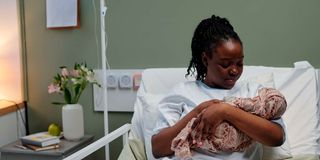
To achieve good maternal and newborn outcomes, we need to recognise the importance of ensuring the woman feels supported through labour and delivery by the system we are striving to strengthen.

What you need to know:
- In 2018, NTV ran a story on Turkana County and the innovative ways the Lodwar Referral Hospital was using to attract women to deliver in hospital.
- The Turkana women find that delivering in a squatting position is more culturally appropriate; hence they struggled with the hospital’s practice of delivering on their backs while lying down.
One of Kenya’s success stories in achieving Sustainable Development Goal (SDG) three - maternal and child health- is increased access to delivery under the care of a skilled health provider. According to the 2022 Kenya Demographic Health Survey, the country boasted an 88 per cent skilled birth attendance rate, with 64 per cent of these occurring in a public health facility.
This has not been an easy feat; with a wide variety of challenges limiting access. Large physical distances to a health facility continue to be a barrier to access, most especially in the remote Northern parts of Kenya where the population density remains very low as compared to the overall land mass.
A key factor that keeps arising even as efforts to keep mothers and newborns safe is the lack of respectful maternity care, stemming from gross understaffing and overworking of healthcare providers in our maternity units; but one of the key factors that keep being overlooked is the incongruence between a woman’s wishes and what the staff have been trained to do in the labour units.
In 2018, NTV ran a story on Turkana County and the innovative ways the Lodwar Referral Hospital was using to attract women to deliver in hospital. The Turkana women find that delivering in a squatting position is more culturally appropriate; hence they struggled with the hospital’s practice of delivering on their backs while lying down.
This was proving to be a major barrier to skilled birth attendance; and instead of fighting the culture, the hospital introduced a modern version of the traditional birthing stool; a concept adopted from Karamojong health facilities across the border. The hospital stool is cushioned, hence more comfortable. It provides space for the healthcare provider to access the baby; and it is easy to disinfect after use, clean and ready for the next mother.
While we imagine the struggles of cultural acceptance are a problem of rural Kenya, the urban mother has her fair share of struggles, even in the private sector that is thought to be highly resourced and hence has few limitations. There is a need for a major attitude shift in the healthcare providers to realise the autonomy of women in the labour units.
Ella’s story is heartbreaking to say the least. Her previous delivery left her with severe mental trauma that it took her several years to gather enough courage to try again. She was convinced that her next delivery had to be by caesarian section to avoid a repeat performance. The thought of ever delivering in the same hospital gives her the shivers!
Through the antenatal clinic period, she opened up to how she felt so helpless and disempowered throughout her labour. Being in labour during the Covid-19 period, with the multiple restrictions making access difficult, Ella and her husband reported to hospital a little too early in labour.
Felt violated
This resulted in a long, drawn-out labour, multiple repeat examinations that left her feeling violated, and medical interventions that she deemed may not have been very necessary, as the doctors felt driven by the urgency to expedite her delivery process, to move her on, from the labour unit.
She felt that she was not deemed a participant in the decision-making process, but rather, decisions were made about her, and she was left to adapt without much explanation.
As we went through her birth preparedness plan, both Ella and her husband were even more surprised at the options they had, the detailed explanations as to why certain medical decisions are taken, and the timelines that are adhered to a medical best practice.
These things made a lot of sense when the concepts behind the decisions was explained to them. They also appreciated the limitations imposed on them by the Covid-19 guidelines to hospitals, acknowledging the fact that most of these rules had now changed. However, they also had a moment to appreciate the simple interventions available to them to help ease the moment and allow them to celebrate the addition to their family, right from the start.
Inclusive practices such as presence of a birth partner throughout the process of labour and delivery; joint decision-making in areas such as the labour and birthing position; full involvement of the father where possible, including allowing him to cut the umbilical cord if he so desires, or to be the first to do skin-to-skin kangaroo care to the newborn after delivery; are interventions that do not involve any additional cost, yet mean so much to the family.
The military precision with which we provide care in labour and delivery sometimes comes across like a state funeral; where the bereaved have little involvement in making decisions regarding the final ceremony, yet they are the most affected. In as much as we adhere to international standards of care, there is room to indulge the woman without compromising the outcomes for both mother and baby.
As healthcare providers, we forget that the woman in labour is at her most vulnerable position. She spends the labour period repeatedly exposed in her most private body of body parts; not just to the care provider, but in most teaching hospitals, to a horde of students that she did not sign up for. We forget to protect her dignity, sometimes even retorting rudely.
We must remember that the birthing process is one of the most natural processes in healthcare. As a result, we do need to allow room for nature to take place with as minimal interventions as necessary, even if this may sometimes mean sending the mum back home, to return in a few hours when further along; as long as both mother and baby are safe. This helps minimise the multiple vaginal examinations done, reducing risk of infections too.
To achieve good maternal and newborn outcomes, we need to recognise the importance of ensuring the woman feels supported through labour and delivery by the system we are striving to strengthen. We need to review pain management protocols in labour in Kenya. There is no standard existing guideline and pain during labour that’s accepted as the norm, with those seeking a more comfortable experience often being ridiculed.
Even more concerning is the poor post-caesarian section management, especially in public hospitals. Healthcare provider personal biases and poor understanding of analgesia protocols leave many mothers in agony, in an era where post-surgical pain management technologies have been greatly advanced.
Our health facilities need to restore the glory of the labour units. This is the one hospital department that specialises in bringing joy to the patient and the family at large. We must take up the challenge, change our culture to serve our clients better for a true patient and family-centered experience!
The writer is a gynaecologist/obstetrician