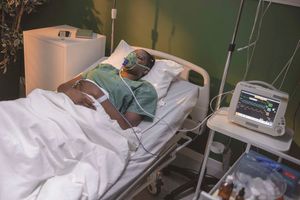
New guidelines aim to stem maternal deaths from postpartum bleeding
Postpartum haemorrhage is the leading cause of maternal mortality worldwide.

What you need to know:
- In Kenya about 2,500 to 3,000 women die annually because of postpartum hemorrhage
Every year, about 260,000 women die because of pregnancy-related complications. Out of this, at least 70 per cent are in Africa, according to the World Health Organization.
“The number one cause of maternal deaths is postpartum haemorrhage, and that’s a huge number that we lose our women to. And in Kenya specifically, about 2,500 to 3,000 women die annually because of postpartum hemorrhage (PPH),” said Prof Obimbo, who chairs the department of human anatomy and medical physiology at the University of Nairobi.
PPH refers to the excessive bleeding after childbirth.
“Postpartum haemorrhage is the most dangerous childbirth complication since it can escalate with such alarming speed. While it is not always predictable, deaths are preventable with the right care,” said Dr Jeremy Farrar, assistant director-general for Health Promotion and Disease Prevention and Care at the World Health Organization (WHO).
Previously, the guidelines dictated that it was an emergency case if a woman bled more than 500 ml, equivalent to a packet of milk for normal delivery, or in excess of two packets of milk after caesarean section.
In new guidelines, WHO, the International Federation of Gynaecology and Obstetrics (FIGO) and the International Confederation of Midwives are calling for a major shift in how the condition is prevented, diagnosed and treated.
Vital signs
Clinicians are advised to act when a woman loses 300 ml of blood and task them to observe any abnormal vital signs.
The use of calibrated drapes by doctors and midwives has also been recommended. A calibrated drape is a piece of plastic sheeting that hangs off the end of the delivery table and collects and measures blood in a clear pouch at its base.
The guidelines also recommend massage of the uterus, use of oxytocic drugs to stimulate contractions, intravenous fluids, tranexamic acid to reduce bleeding and vaginal and genital tract examination. Further escalation of care should bleeding persist.
In cases where bleeding continues even after the above steps, the reproductive agencies recommend interventions such as blood transfusion and surgery.
“These guidelines take a proactive approach of readiness, recognition and response. They are designed to ensure real-world impact – empowering health workers to deliver the right care, at the right time, and in a wide range of contexts,” said Prof Anne Beatrice Kihara, president of FIGO.
The updated guidelines highlight the crucial role of quality antenatal and postnatal care in preventing complications linked to childbirth. One major concern is anaemia, which remains widespread in low- and lower-middle-income countries. The condition heightens the risk of PPH and can worsen outcomes if bleeding occurs. To address this, the recommendations call for daily oral iron and folate supplementation during pregnancy. For mothers who require faster recovery or those who do not respond to oral therapy, intravenous iron transfusions are advised both during pregnancy and after PPH.
Based on a study published in The Lancet, the document also cautions against outdated and unsafe practices such as routine episiotomies, instead encouraging preventive measures like perineal massage in late pregnancy to reduce birth-related trauma and bleeding.
For the third stage of labour, the guidelines recommend administering a quality-assured uterotonic (medication that helps the uterus contract) to ensure effective uterine contraction and minimise the risk of PPH. Oxytocin remains the preferred option, with heat-stable carbetocin suggested as an alternative.