Malaria misdiagnosis crisis fuels drug resistance and deadly treatment delays in western Kenya
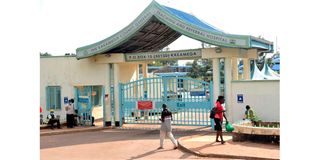
Kakamega County Teaching and Referral Hospital. Chronic test shortages, false positives and weak labs are driving dangerous malaria misdiagnosis across the high-burden region of western Kenya.

What you need to know:
- Chronic test shortages, false positives and weak labs are driving dangerous malaria misdiagnoses across high-burden regions in Kenya.
- Clinicians forced into guesswork risk masking deadly infections, delaying treatment and accelerating antimalarial drug resistance in vulnerable communities.
In the quiet dispensaries of Western Kenya, the fight against malaria is relying on tied hands. While the government pivots towards a test-and-treat policy under the Social Health Authority (SHA), a combination of ill-equipped labs and chronic stock-outs is forcing medics into a dangerous game of guesswork.
For many families, the story follows a predictable, agonising loop. It starts with a child’s shivering fever in a village. The parents, familiar with the ritual, suspect malaria. At the local clinic, if a rapid diagnostic test is available, a positive result triggers the standard three-day dose of antimalarials.
The tragedy begins when symptoms persist. Three days later, the fever is higher, and the child has lost the will to eat. The family returns, only to be told the first dose didn't work or that it was a resistant strain, leading to a second, more expensive round of treatment. By the time they reach a major referral hospital, the child is often severely dehydrated or jaundiced, the family having spent money on wrong cures. The eventual diagnosis turns out to be typhoid, brucellosis, or a viral infection masked by presumptive treatment.
In Kenya, studies show a troubling paradox where the tools meant to save lives often create a masking effect that endangers them. According to the latest surveillance data, facility-level microscopy, the standard for many higher-level hospitals, suffers from a staggering 20 per cent false-positivity rate. This means for every five patients told they have malaria, at least one is being treated for a parasite they do not have.
This diagnostic guesswork is most severe in the Lake endemic zone, which carries over 80 per cent of the national malaria burden, suggesting that the areas receiving the most investment are the ones where test-and-treat policy is failing most acutely.
When a clinician incorrectly identifies a fever as malaria, they are statistically less likely to prescribe life-saving antibiotics. If the patient is suffering from a bacterial infection or a non-malarial pathogen like non-typhoidal Salmonella, the false malaria diagnosis acts as a blindfold, delaying the correct therapy until the patient reaches a state of critical deterioration. This is reflected in a harrowing statistic: Patients who experience fever for more than five days or are shuffled through the referral system face significantly higher odds of mortality.
Even when the diagnosis is correct, the treatment often violates safety protocols. National guidelines mandate a dual-step regimen for severe malaria: IV artesunate followed by a full course of artemether-lumefantrine to ensure total parasite clearance. However, only 15.4 per cent of patients receive this full treatment. The vast majority are given artesunate monotherapy, a practice that directly fuels the emergence of artemisinin resistance in Africa. This, combined with low completion rates for follow-up medication, means the system is unintentionally training the malaria parasite to survive the best drugs.
Ultimately, the surveillance data paints a picture of a healthcare system at an “elastic limit”. While there is high knowledge of malaria, the care continuum is broken by suboptimal equipment, contaminated reagents, and commodity stock-outs that force doctors back to older, less effective treatments like IV quinine.
Dr Edward Okonjo, a scientist at the Technical University of Kenya with a focus on parasitology and research in malaria and infectious diseases, says misdiagnosis of malaria remains a significant challenge in Kenya, particularly in rural and under-resourced areas. “Many cases of misdiagnosis are especially in rural areas or in places where we do not have well-trained personnel to carry out laboratory diagnosis,” he says.
While national standards exist for laboratory personnel, Dr Okonjo notes that these are not always met in remote facilities. “There must be standards set by the Ministry and regulatory bodies, but some of these facilities are in deep rural areas where skilled personnel are not available. So, you find that the people there do it out of experience or a desire to help.”
In contrast, he adds, urban centres with better staffing and infrastructure report fewer cases of misdiagnosis. The consequences of getting a malaria diagnosis wrong can be far-reaching. One major risk is the misuse of medication. “If someone with no malaria is prescribed antimalarial drugs, that increases chances of resistance. Misdiagnosis also distorts national health data, making it harder to track the true burden of disease. It leads to unreliable data because we may record cases that are not actually malaria. That affects how we monitor trends,” Dr Okonjo warns.
As Kenya works towards malaria elimination, strengthening capacity and creating broader public awareness is critical. “It is important that we have a lot of capacity building and continuous education for healthcare workers and all teams working in the malaria space. Information must be continuously cascaded to the people, and there should be continuous education for both the masses and providers who deal with malaria cases all the time,” he says.
Serious public health threat
Malaria continues to pose a serious public health threat in Kenya, with roughly three-quarters of the population at risk. In 2023 alone, the country recorded an estimated 3.3 million cases. Although many parts of Kenya are malaria-free, transmission remains concentrated in 14 counties within the lake basin and coastal endemic zones: Kisumu, Siaya, Homa Bay, Migori, Busia, Vihiga, Bungoma, Kakamega, Lamu, Taita Taveta, Kilifi, Tana River, Mombasa and Kwale.
Data from the 2020 Kenya Malaria Indicator Survey shows that about 70 per cent of the population was at risk of infection, including 13 million people in endemic areas and a further 19 million in regions prone to seasonal or highland epidemics. Encouragingly, malaria incidence declined slightly between 2022 and 2023, dropping by five per cent from 62 to 59 cases per 1,000 people, while mortality remained unchanged at 0.21 deaths per 1,000.
Malaria patterns in Kenya are increasingly shaped by climate-related factors. Rising temperatures, high-altitude shifts, and the presence of stagnant water create favourable breeding conditions for mosquitoes. Transmission typically peaks during the rainy seasons, from March to May and October to December.
Recent research has also raised new concerns. A 2022 study by the National Malaria Control Programme and the Kenya Medical Research Institute identified the presence of Anopheles stephensi in Marsabit and Turkana counties. According to the World Health Organization, this mosquito species thrives in urban and man-made environments, unlike traditional vectors, and has shown resistance to several insecticides, complicating control efforts.
Kenya has made notable progress in reducing malaria infections over the past five years. This decline is largely attributed to sustained control and elimination strategies, including the use of long-lasting insecticidal nets, indoor residual spraying, chemoprevention, and intensified public awareness campaigns promoting behavioural change.