Malaria that hides from tests and silently kills babies in the womb

When a pregnant woman is infected, the malaria parasites sequester in the placenta, impairing the transfer of vital nutrients and oxygen to the foetus, leading to severe maternal anaemia, spontaneous abortion, stillbirth and low birth weight, a primary driver of neonatal mortality.

What you need to know:
- A pregnant woman infected with malaria can appear completely healthy. Her blood tests come back clean.
- Yet deep inside her uterus, parasites are clinging to her placenta, triggering chronic inflammation, starving her baby of oxygen, and dramatically increasing the risk of stillbirth, premature delivery, and low birth weight.
At 36 weeks pregnant with her first child, Jael Nekesa’s life was abruptly disrupted by a sudden wave of severe physical illness. The symptoms began with a headache, persistent joint pains and crushing fatigue that completely prevented her from going about her routine work, then escalated into simultaneous nausea and vomiting, accompanied by intense abdominal pains that rapidly developed. To Nekesa, these pains felt exactly like early labour.

Jael Nekesa, a first-time mother who contracted malaria during her pregnancy.
With her scheduled delivery date fast approaching, she initially believed her body was simply entering labour naturally. She endured these debilitating symptoms at home for a day and a half before deciding to seek professional medical help, going to hospital fully expecting to be admitted to the maternity ward.
She was admitted on a Saturday. Because her symptoms were ambiguous, medical staff placed her under close, continuous monitoring over the weekend. The primary point of confusion for the doctor was whether Nekesa was undergoing true labour or suffering from a severe underlying illness.
While she was sweating heavily, an internal examination revealed she was not dilating — she was not in labour. On Monday, after two days of observation, the doctor ran laboratory tests on her blood sample.
“The lab results revealed that I had malaria. The doctor said that my blood contained an incredibly high density of malaria parasites. That evening, I was put on a treatment regimen that consisted of three distinct medicinal injections administered exactly 12 hours apart. The first dose was injected at 6:30pm on Monday evening, the second one at 6:30am on Tuesday morning, a few hours before I went into actual labour and delivery,” says Nekesa.
“The labour was very intense and lasted only two and a half hours. I delivered my baby boy, then took my third and last dose at 6:30pm that Tuesday evening,” she adds.
Reflecting on how she became ill, Nekesa points to her immediate environment. The region was experiencing a rainy season, which caused a massive influx of mosquitoes. Despite the high risk, she was not sleeping under a mosquito net at home. While she had been given a net during a previous clinic visit, she no longer had it, and was unsure whether the hospital would provide a new one upon discharge — if not, she would have to purchase one herself.
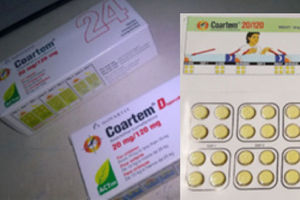
She admits, however, that her antenatal facility had offered her a combination antimalarial medication, Sulfadoxine-pyrimethamine (SP), used to prevent and treat Plasmodium falciparum malaria. In highly endemic areas, it is primarily prescribed as intermittent preventive treatment during pregnancy to protect mothers and infants from malaria-related complications.
“A pregnant woman is ideally expected to attend eight monthly clinic visits from the first month through the eighth month to ensure continuous protection for both herself and the maturing foetus. I got the first and second doses during my first and second trimesters. When I went back for the third dose, the hospital had run out of stock,” she says.
“Hospital staff told me to buy the medication from a chemist. However, I feared they would charge an exorbitant amount of money and chose to forego the medication entirely. I didn’t realise then that an expectant mother’s body is highly vulnerable to the malaria parasite because it is already working under immense strain to grow a baby,” she adds.
Malaria during pregnancy is a critical public health crisis. When a pregnant woman is infected, the parasites sequester in the placenta, impairing the transfer of vital nutrients and oxygen to the foetus, leading to severe maternal anaemia, spontaneous abortion, stillbirth and low birth weight, a primary driver of neonatal mortality.
Transmission rates
According to the Ministry of Health, Kenya’s malaria prevalence stands at 72 to 104 cases per 1,000 population. In Kenya, malaria in the Lake Victoria basin remains highly endemic and is the leading cause of morbidity across the region, driven by optimal temperatures, abundant rainfall and permanent bodies of fresh water. The lake’s shoreline, adjacent wetlands, water hyacinths and small, sunlit pools provide perfect year-round breeding grounds for multiple Anopheles mosquito species.
Rising temperatures and erratic rainfall patterns significantly impact transmission rates, extending mosquito breeding seasons and sometimes driving epidemics into previously unaffected highland areas. Counties bordering the lake including Kisumu, Siaya, Homa Bay and Migori, experience some of the highest transmission and anaemia rates in the region. Islands in the lake, such as Mfangano, suffer disproportionately higher and heterogeneous prevalence due to proximity to shoreline breeding sites. This raises a troubling question about whether health systems and county governments are providing adequate protection to expectant mothers.
Every month at Busia County Referral Hospital, about five women like Nekesa walk in having delayed for days, unknowingly at risk of neonatal complications and stillbirth. As the maternity ward in-charge at the facility, Gertrude Mbunga manages a steady influx of expectant mothers dealing with malaria infections.
“The region’s geography plays a massive role in infection rates. In Port Victoria, malaria is rampant. We see fewer total cases, due to consistent antenatal clinic attendance where mothers are given preventative health education and sleep under treated insecticide mosquito nets,” she explains.
“For pregnant women, the standard prevention method is a preventative tablet protocol known as intermittent preventive treatment, or IPT. It is a tablet given to pregnant women to prevent malaria, especially at 16 weeks and around 28 weeks. To ensure strict compliance, the hospital enforces a rigid administrative protocol; staff administer it directly as observation therapy, meaning the mother takes the drug right there at the clinic, because many patients might otherwise fail to take the medication,” says Gertrude.
“The drug works by creating a protective shield for both the mother and the developing foetus, as the placenta works as a barrier for cross-infection, preventing the parasite from going to the baby while simultaneously protecting the mother’s system,” she adds.
The ward in-charge notes, however, that sometimes systemic safety nets fail, and the consequences can be fatal for the unborn child. Severe complications are strongly linked to financial constraints, which serve as the primary reason expectant mothers delay going to hospital.
“In May, a mother came to the hospital too late and presented with an intrauterine foetal death. By the time the clinical team reviewed the baby, it was already macerated, meaning the baby had died in the womb without the mother knowing. Upon reviewing the patient’s history, we discovered that the mother had been purchasing over-the-counter medications to self-treat her illness, and when the symptoms disappeared, she assumed she was fine and stopped looking for medical help. These complications usually happen when a mother has only attended the clinic once,” she says.
To fight this, the hospital places a major emphasis on structured education. First-time mothers and returning patients are organised into peer groups during antenatal visits, where nurses explicitly teach them the critical danger signs to watch out for. For mothers who have gone for four to eight visits, the hospital rarely sees those severe complications.
Once a baby is delivered from a malaria-positive mother, the hospital immediately tests the new-born for the parasite. If the baby tests positive and receives prompt treatment, the nurse reassures that there is no long-term risk or developmental delay.
Despite these clinical successes, Gertrude identifies several persistent systemic gaps. Even when mothers receive comprehensive education at the clinic, a knowledge deficit remains when they return home, causing some not to adhere to their medication. Expectant mothers frequently struggle with a lack of spousal support, and supply chain disparities persist: while public facilities guarantee a free mosquito net during pregnancy or at a fifth-week postnatal visit, private facilities frequently do not have nets to distribute. Community health promoters have filled a significant gap, leading to fewer cases than before.
Prof Jesse Gitaka, Director for Research and Development at Mt Kenya University (MKU) and Founding Director of the Centre for Placenta Research, explains that the danger of malaria in pregnancy is directly linked to the placenta. When malaria manifests as it would in any regular individual, an infected mosquito bites the woman, injecting malaria parasites into her body. These parasites swiftly migrate to the liver, infiltrate liver cells, multiply rapidly, then rupture back into the bloodstream to invade the host’s red blood cells. The patient experiences traditional systemic symptoms including intense fevers, chills, debilitating joint pains and severe headaches, and laboratory technicians can easily identify the infection through a routine blood sample or fingertip prick to perform microscopy or a Rapid Diagnostic Test (RDT). In a pregnant woman, however, the scenario is different.
“What is interesting is that in pregnant women, there are certain parasites with very special features. Certain malaria parasites possess specialised genetic features that allow them to anchor themselves directly inside the uterine space. They are able to stick onto the placenta. As the mother’s blood flows to the placenta to supply the baby with oxygen and nutrients, these parasites make their way there as well. Once they reach the placental lining, they stick to the placenta and alter its environment. By binding there, they introduce inflammation,” explains the expert.
“Because the parasites are completely hidden and trapped within the placenta, they vanish entirely from the mother’s peripheral blood supply. The mother remains completely asymptomatic, showing no outward signs of infection while her internal organs are quietly compromised. This absolute absence of symptoms creates a catastrophic diagnostic failure at the clinic level. When an asymptomatic mother arrives for her routine antenatal care check-ups, the medical staff will draw blood to screen for parasites, but the test will come back entirely clean because the parasites are hidden in the placenta and cannot be detected. As a result, the mother cannot be treated,” he adds.
Once the parasites lock onto the placental lining, they initiate severe chronic inflammation and oxidative stress, producing toxic molecules that actively degrade placental function. As the placenta becomes structurally compromised, the foetus is starved of vital oxygen and nutrients. Furthermore, because the placenta acts as the primary endocrine organ manufacturing the hormones essential to sustaining pregnancy, this infection causes a hormonal collapse that destabilises the entire pregnancy.
“One day, the mother will realise that the baby is not kicking well, so she goes to the hospital, has an ultrasound, and they find that the baby is dead,” says Prof Gitaka.
To definitively identify this condition, medical researchers must examine physical sections of the placenta under a microscope immediately after delivery to count the percentage of infected red blood cells. The necessity of waiting until birth to make a diagnosis, however, introduces a tragic clinical barrier — pregnancy is an incredibly delicate situation where providers cannot go poking or biopsy-hunting in an active uterus without causing extreme danger. By the time diagnosis is possible, all structural damage has already been done.
When the infection does not cause an immediate stillbirth, the severe inflammatory conditions inside the uterus frequently trigger early delivery, causing severe prematurity.
Even if an infected pregnancy makes it all the way to term at 37 completed weeks, the infant is still born with severe growth restrictions, too small for gestational age and with low birth weight, starting life on a severely disadvantaged footing.
“Being born too early robs a baby of crucial developmental time inside the womb. These premature babies are born with dangerously thin skin, underdeveloped digestive systems, and a hard time absorbing nutrients, which directly leads to higher new-born death rates in these regions. For the babies who do survive, the long-term challenges are severe.
Prematurity can cause brain development issues, and long-term studies show that these babies face a much higher risk of lifelong health problems later in life, including type 2 diabetes and high blood pressure,” says the researcher.
A major study conducted four years ago at Kwale County Hospital revealed that nearly 90 per cent of the evaluated mothers had parasites hidden inside their placentas at birth. Interestingly, decades of tissue data have revealed that the physical density of parasites in the placenta does not cleanly correlate with clinical outcome. A mother can show a high level of parasites in the placenta, 10 per cent, and still carry her pregnancy to full term with a normal-weight child. Conversely, another mother may possess a minute parasitemia level of just one per cent, yet her pregnancy will end in sudden stillbirth.
Even though public health systems are trying to protect pregnant mothers through SP, malaria parasites currently circulating in sub-Saharan Africa have developed resistance to the drug. Because pregnancy is an incredibly delicate medical state, clinicians cannot simply introduce untested alternative drugs without risking severe birth defects or maternal complications. Consequently, despite knowing that circulating parasite strains are resistant to SP, public health guidelines are forced to continue distributing the compromised drug while researchers desperately search for safe alternative compounds.
Block parasites
While a robust international research movement is actively working to develop a maternal-specific vaccine such as the experimental Pamvac-CSA candidates designed to block parasites from adhering to placental tissue; these formulations remain locked in research and development and are not yet cleared for routine public use.
“Placental malaria cannot be addressed as an isolated maternal issue; it is fundamentally tied to the malaria burden carried by the wider community. If public health systems fail to suppress malaria in the rest of the population, including adult males and young children, the reservoir of infection grows. Every time a mosquito bites an infected individual, it carries the potential to transmit those same parasites to a vulnerable pregnant woman. Suppressing malaria in the general population is the only way to prevent the burden from rising among mothers,” says Prof Gitaka.
“Furthermore, while a malaria infection in a man or a non-pregnant woman affects only that single person, malaria in pregnancy threatens multiple lives simultaneously, especially in the case of multiples. By compromising the child from the very beginning, the disease directly damages the next generation, preventing children from achieving their full human potential,” he adds.
To break this cycle, MKU has established the Centre for Placental Research in Thika, Kenya. Backed by a £2 million grant (about Sh346.9 million) from the Wellcome Trust, the centre is turning Thika into an African Centre of Excellence for studying placental biology and malaria elimination.
Researchers are growing placental organoids (miniature, lab-grown models of the human placenta) and collecting fresh, healthy placental tissue immediately after deliveries.
By infecting these lab models with live, local malaria parasites, scientists can watch exactly how the tissue reacts, what warning signals it sends out and how the environment becomes toxic.
MKU scientists hypothesise that even though the parasites remain physically trapped within the placenta, they release tiny, distinct molecular signals or distress proteins that enter the mother’s general bloodstream. Current technology is not advanced enough to detect these minute signals, but by mapping them in the laboratory, the centre aims to design next-generation diagnostic tests capable of catching placental malaria through a standard blood draw long before it causes irreversible harm.
The World Health Organization has highlighted in recent briefings that malaria remains a major public health challenge, particularly in the sub-Saharan African region, which accounts for the vast majority of cases and deaths globally. According to the latest World Malaria Report, there were 282 million cases of malaria in 2024, an increase of about nine million cases (three per cent) compared with 2023. The estimated number of malaria deaths stood at 610,000 in 2024, compared to 598,000 in 2023. In 2024, the region was home to about 95 per cent of all malaria cases and deaths. Children under five years of age accounted for about 76 per cent of all malaria deaths in the region.
Public health experts stress that global malaria funding routinely falls short of the billions required annually to strengthen health delivery systems. To fully protect expectant mothers, health systems must treat preventive maternal antimalarials and bed nets as essential commodities to eliminate local shortages; leverage community health volunteers to track pregnant women early in their first trimester to encourage early antenatal care attendance; and bridge local financing gaps to ensure rural dispensaries have the staff and rapid diagnostic tests needed to treat maternal fevers instantly.
Global malaria burden (2024)
• 282 million cases worldwide
• 610,000 deaths
• Up from 598,000 deaths in 2023
• Increase of nine million cases (three per cent) year on year
• Sub-Saharan Africa: 95%t of all cases and deaths
• Children under five: 76% of all malaria deaths in the region
Kenya-specific
• National malaria prevalence: 72 to 104 cases per 1,000 population
• Lake Victoria basin is the highest-burden zone
• High-burden counties: Kisumu, Siaya, Homa Bay, Migori
• Mfangano Island carries disproportionately higher prevalence
Placental malaria research
• Kwale County Hospital study: nearly 90% of evaluated mothers had parasites hidden in the placenta at birth
• A mother with 10% placental parasitemia can deliver a healthy full-term baby
• A mother with just 1% parasitemia can lose the baby suddenly
• MKU Centre for Placental Research: £2 million (Sh346.9 million) Wellcome Trust grant
At facility level
• Busia County Referral Hospital sees about five malaria-positive pregnant women every month
[email protected]