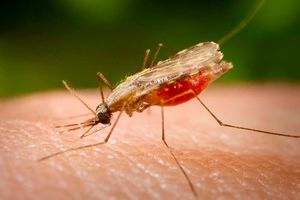
Mosquitoes outsmarting sprays, WHO report shows
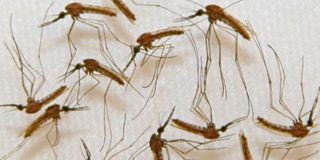
Malaria-infected mosquitoes in a lab.

What you need to know:
- Kenya is facing a growing malaria threat as mosquitoes develop resistance to commonly used insecticides, according to the World Malaria Report 2025.
- A new urban-breeding species, Anopheles stephensi, is adding to concerns as global cases and deaths continue to rise.
- For Kisumu mother Quinter Omollo, no insecticide seems to work anymore — and scientists say she is right to worry.
As the sun sets over Lake Victoria, Quinter Omollo knows what is coming. The familiar whine of mosquitoes begins as darkness creeps across Kisumu, one of Kenya's malaria-endemic regions. She has tried everything to keep them away—insecticide sprays, electric plug-ins, treated bed nets. Still, they come buzzing, landing, and sometimes biting.
"I have tried all forms of insecticides, but it seems like they do not work," she says, gesturing at the empty cans she has discarded over the months. "What is wrong with these insecticides these days?"
Quinter has a one-year-old daughter and protecting her from malaria has become an obsession. She even tried the repellent oils that people apply on their skin, but could not stand the smell. The one thing that has worked is the malaria vaccine—her daughter has received two doses under Kenya's infant immunisation rollout and has never had malaria. But the mosquitoes remain, undeterred by the chemicals meant to kill them.
Struggle for survival
Quinter is not imagining things. According to the World Malaria Report 2025 released by the World Health Organisation (WHO) last week, Kenya is among the countries where malaria-causing mosquitoes have developed resistance to commonly used insecticides. Dr Eric Ochomo, an entomologist at the Kenya Medical Research Institute (Kemri), explains that this resistance is evolution in action.
"It is called the struggle for survival through natural selection. Every organism will try to survive, because if they don't, they become extinct," he says. "When we put in measures like insecticide-based vector control, we are inadvertently selecting for survival. Over time, some mosquitoes adapt to the insecticide and become resistant. If they become resistant, they survive. That is a major problem."
Dr Ochomo describes two types of resistance. The first is metabolic—mosquitoes develop the biological ability to break down or tolerate the chemicals designed to kill them. The second is behavioural—and this one is almost cunning. "Mosquitoes learn human behaviour, such as when people are likely to sleep and use insecticides. So, they wait, almost hibernating, until morning when the effectiveness has worn off," he says. "They are all just trying to survive."
New threat moves to the cities
The report also flags a troubling newcomer: a mosquito species called Anopheles stephensi (An. stephensi) first detected in Kenya in December 2022. Unlike traditional malaria vectors that breed in rural puddles and swamps, this species thrives in urban environments. It breeds in human-made water storage containers, adapts quickly to local conditions, and survives the extreme heat of dry seasons when malaria transmission typically drops. "The distinct behavioural characteristics of this vector make its control challenging," the WHO report notes.
In the Horn of Africa, An. stephensi has already shown resistance to three classes of insecticides: carbamates, pyrethroids, and organophosphates. Dr Ochomo cautions that while scientists in Kenya have not yet published evidence on how much this vector contributes to local malaria transmission, it should not be ignored. "It has the potential to be a problem in the future, especially in our urban settings, but it is not yet there," he says. "We should focus on existing vectors like Anopheles gambiae and Anopheles funestus, but keep watching."
Global crisis deepens
The resistance problem is compounding an already dire situation. Last year, the world recorded more than 280 million malaria cases and over 600,000 deaths—a slight increase from the previous year. The vast majority of these deaths occurred in Africa, mostly among children under five. WHO Director-General Tedros Adhanom Ghebreyesus warns that resistance is not limited to insecticides. Some malaria parasites are also becoming resistant to artemisinin-based drugs, the cornerstone of modern treatment.
"There are early signs of declining efficacy of the drugs that are combined with artemisinin. The undetected and unaddressed spread of drug resistance could have devastating consequences, undermining years of progress," he says. "Changes in the genetic make-up of parasites in some locations are undermining the reliability of rapid diagnostic tests."
Fighting back
Kenya is not standing still. The government has introduced next-generation bed nets treated with two insecticides instead of one, forcing mosquitoes to contend with multiple chemicals simultaneously. "That metabolic system for the mosquito is challenged by two insecticides at the same time. For the most part, they are not able to cope," Dr Ochomo explains.
The country has also switched to a different class of chemicals for Indoor Residual Spraying—an organophosphate currently being used in Busia County. This year, Ochomo and colleagues at Kemri published research on spatial repellents, which offer protection to more households. But there is a catch. "The challenge is that they are expensive. That is the tough problem that the national malaria programme has to deal with," he says.