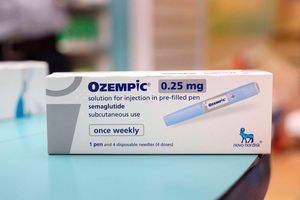
Mounjaro: Why medical experts say Kenyans should be cautious
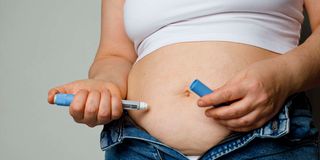
Influencers are ignoring government warnings to continue marketing Ozempic and Mounjaro for weight loss.

It promises quick weight loss with no effort. No gym, no dieting, no stress. But Mounjaro, the weight loss drug being widely advertised on Kenyan social media, carries serious health risks that the people selling it never mention.
And in Kenya, it is being sold illegally.
What Mounjaro is and how it works
Mounjaro's active ingredient is a drug called tirzepatide. It works by tricking the body into thinking it is full, reducing how much you eat and how your body stores sugar. According to PLOS One, a peer-reviewed medical journal, it works better than many older weight loss drugs.
It comes in three doses: 5mg, 10mg, and 15mg. Studies show it outperforms placebos, traditional insulin, and other established weight loss drugs.
Dr Lonary Ng’etich, an industrial pharmacist from Kenyatta University Teaching, Referral and Research Hospital, breaks it down simply.
"The drug increases insulin release from the pancreas while reducing glucagon secretion from the liver and slowing gastric emptying, which leads to prolonged satiety," he says.
In plain language, it makes you feel full for longer, even before you finish eating your usual meal.
Side effects
The most common problems involve the stomach. People using tirzepatide frequently report nausea, vomiting, diarrhoea, constipation, and loss of appetite. These symptoms are usually worst in the first two weeks. At the highest dose of 15mg, there is also a slightly higher risk of bleeding in the gut.
But the risks go much further than stomach problems.
Dr Ng’etich warns of more serious dangers: inflammation of the pancreas, gallbladder problems, kidney damage, and thyroid tumours.
He also warns about what happens when someone without type 2 diabetes takes the drug.
"When you use this drug and you don't have type 2 diabetes, you stimulate insulin release from the pancreas, yet your sugars are normal. Mounjaro prevents the liver from releasing stored sugar into the blood, so you feel full for long even before you eat the usual quantities," he explains.
Without proper medical tests before taking the drug, you may not even know you are putting yourself at risk.
Pregnant women face the greatest danger
For pregnant women, Mounjaro can be fatal to the unborn child.
"The drug is explicitly labelled as unsafe for use during pregnancy, as it is unethical to test such potent medications on pregnant women," says the medic.
The drug's manufacturer, Eli Lilly, and the United States Food and Drug Administration both state that there is not enough data on what tirzepatide does to a developing baby. Studies on animals have shown the drug can cause stunted foetal growth, physical abnormalities, and developmental problems.
"Mounjaro should not be used during pregnancy for weight loss. It should be stopped immediately if a woman becomes pregnant or is planning to. Losing weight during pregnancy is generally not advised, as it offers no benefit and may cause harm," Dr Ng’etich adds.
The full horror of this risk played out in the life of Nancy Muthoni, a Kenyan woman who came across a Facebook advertisement promising she would lose 20kg in a month with no gym, no dietary restrictions, no stress, and no side effects, at a discounted price from the standard Sh120,000.
She reached out through WhatsApp.
"I came across the Facebook page while scrolling through the platform and found the phone number on their site. I reached out through WhatsApp to ask about their beauty products and how I could go about losing weight. She told me she had a drug I could use and that going to the gym is a waste of time," she recalls.
She asked about risks. She was reassured.
"At first, I asked about the repercussions of the drug. She said she had used it and there were no side effects. I asked whether they would conduct any blood tests prior to the injection. She said none would be done, that the procedure was very simple, and that she would send a nurse to administer it," she says.
After two months, she paid for the drug. A nurse arrived at her home and administered an injection directly into her stomach. By that evening, Muthoni was gripped by uncontrollable shivers, body-wide swelling, and fluid-filled rashes. She began vomiting and eventually went into convulsions.
She sent frantic videos and photos to the woman who had sold her the drug.
"She told me she was out of the country, and then she blocked me," she says.
Her husband found her in a critical state and rushed her to the hospital, where doctors worked to flush an unidentified toxin from her system.
The most devastating news came at a follow-up check-up. Muthoni, who was pregnant at the time of the injection and had never been screened for pregnancy before the drug was administered, was told her baby's heart had stopped beating.
"I was truly struggling to conceive," she says. Medical records from the hospital attribute the foetal demise to the physiological trauma and toxicity caused by the unregulated medication.
"I am just a normal person. I didn't know the medication was illegal. I just trusted her words."
Despite her tragedy, the Facebook page remains active, advertising clear skin and zero stress to new potential victims.
Illegal, unregistered, and still on sale
Mounjaro is not legally available in Kenya.
Pharmacy and Poisons Board Chief Executive Officer Dr Ahmed Mohamed has confirmed in writing that Mounjaro, tirzepatide 7.5mg, is not registered in Kenya and has not been granted permission to be sold in the Kenyan market. The board does not have any pending application for the product.
Dr Ng’etich says the branded version is likely not registered in Kenya because of its high cost, with sellers advertising it at a standard price of Sh120,000.
The board has also confirms that the two people who injected Muthoni with the drug are not registered pharmacists, nor qualified pharmaceutical technologists under the Pharmacy and Poisons Act, Cap 244. The clinic they operate from is not registered and does not hold a valid licence. Selling an unregistered health product and operating an unlicensed pharmacy are both violations of the Pharmacy and Poisons Act.
Despite all of this, Mounjaro continues to be advertised and sold openly on social media in Kenya.
What you can safely use
The Pharmacy and Poisons Board has confirmed that two registered alternatives exist in Kenya: TIZA-Q 7.5mg/0.5ml injection and Ovizep 7.5mg solution for injection. Both contain the same active ingredient, tirzepatide, and are legally approved. However, both are prescription-only medicines, meaning they can only be dispensed by a registered pharmacist when a licensed doctor has prescribed them.
Dr Ng’etich's puts it plainly. Before taking any weight loss injection, insist on a full medical check-up. Confirm that the person administering it is a licensed professional. And check that the product is registered with the Pharmacy and Poisons Board.