Mt Kulal’s journey from desert oasis to Kenya’s newest conservation success story
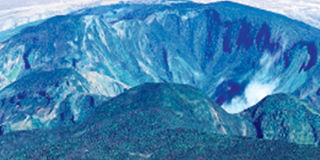
Mt Kulal, which overlooks Lake Turkana. From it spring rivers that are the lifeline of the Samburu, Rendille, Gabbra, Turkana and El Molo pastoralists living in the desert below.

In the arid landscape of Marsabit County, where the harsh desert meets the life-sustaining slopes of an ancient volcanic mountain, a conservation milestone has been achieved.
Mt Kulal has been officially designated as Kenya's 70th Important Bird and Biodiversity Area (IBA), marking the culmination of nearly five decades of conservation efforts in one of the country's most ecologically unique environments.
"Mt Kulal's recognition as an IBA is a win for both people and nature," said Ann Mukaindo, the East African WildLife Society Project officer. "This achievement underscores the mountain's global ecological importance while giving local communities a stronger voice to champion sustainable forest management and nature-based livelihoods," she added.
The designation follows an ornithological survey that confirmed the presence of globally significant species, including the critically endangered White-headed Vulture and Hooded Vulture, 26 biome-restricted species, and the Kulal White-eye—a bird species found nowhere else on Earth.
Mt Kulal's journey to IBA status has deep historical roots. The mountain has been recognised as a Unesco Man and Biosphere (MAB) Reserve since 1978-1979, with the Integrated Project in Arid Lands (IPAL), a collaborative effort of the United Nations Environment Programme (Unep) and Unesco's MAB Programme, conducting crucial research from the mid-1970s to mid-1980s that deepened understanding of the biotic systems supported by the mountain.
However, the conservation journey has not been without its challenges. In the 1970s, Mt Kulal's large mammals, including African bush elephants and Cape buffaloes, were poached to extinction, highlighting the urgent need for comprehensive protection measures to protect the ecosystem.
The local Rendille community has played a pivotal role throughout this conservation timeline. Traditional conservation practices have been fundamental, with residents treating nature and environmental conservation as a God-given duty, with elders and opinion leaders at the forefront of conservation efforts.
The establishment of the Mt Kulal Biosphere Reserve Community Forest Association (KBCFA) in 2019 formalised community involvement in sustainable resource management.
The latest designation was achieved through a Global Environment Facility-funded project titled "Strengthening the Conservation and Management of Mukogodo and Mt. Kulal Forests through Agroforestry and IBA Listing," which ran from February to December 2024. Led by the Food and Agriculture Organization of the United Nations (FAO-Kenya) and implemented by EAWLS, the project emphasised community participation alongside scientists. Mt Kulal's designation brings Kenya's IBA total to 70, placing it among Africa's leaders in bird habitat protection.
The mountain serves as a refuge in an otherwise arid landscape, supporting over 900 plant species and providing critical habitat for migratory bird species during their seasonal movements.
For local communities, the IBA designation strengthens the case for mobilising resources to tackle deforestation, overgrazing, and climate change, while opening opportunities for eco-tourism, sustainable livelihoods, and long-term biodiversity research.