Nakuru, Kakamega, Nairobi top counties with highest maternal deaths
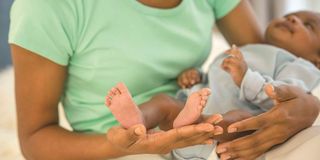
Ministry data shows that August recorded a rise in the number of newborn deaths in public health facilities.

What you need to know:
- Ministry data shows August recorded a rise in the number of newborn deaths in public health facilities.
- Kenya has lost 868 babies aged zero to 28 days since the start of the year, with 74 deaths in August 2026.
- By August 31, the country had lost 566 women since January. Of these, 73 deaths were recorded in August.
A video shared on social media, lasting under two minutes, showed new mothers, mostly teenagers, who had been detained at a hospital in Siaya County for failing to pay their bills.
All the mothers in the video had their babies with them, except one. She told Lawrence Omondi, founder of the Machozi ya Mwisho initiative who filmed the video, that she had lost her child. The girl was 17, and her hospital bill was Sh10,000.
Nation reached out to Lawrence on Sunday evening. He said all the detained mothers were released after the video went viral. They had been held at Siaya County Referral Hospital.
While the other mothers walked out with their babies, the 17-year-old went home to her mother empty-handed. Her dead child became part of a statistic, but the pain behind that number is known only to those who live it.
"Every time we visit a family that has lost a newborn or a mother, we are reminded why we cannot accept preventable deaths as normal. Their pain is not a statistic. It is a lifetime of missing someone," Lawrence told Nation.
Data from the Ministry of Health shows August recorded a rise in the number of newborn deaths in public health facilities across the country.
Also Read: Bill proposes fines and jail terms for hospitals, medics over preventable maternal deaths
Kenya has lost 868 babies aged zero to 28 days, known as neonates, since the start of the year. In August alone, 74 newborns in this age group died.
By August 31, the country had lost 566 women since January. Of these, 73 deaths were recorded in August alone.
Perinatal deaths, among children aged zero to 20 weeks, were the highest, at 3,854 this year.
Nakuru, Kakamega, Nairobi, Kisumu, Trans Nzoia, Kwale, Migori, Kiambu, Garissa and Bungoma were the ten counties with the highest cumulative number of maternal, neonatal and perinatal deaths.
Counties with the fewest cumulative deaths included Tharaka Nithi, Siaya, Bomet, Machakos, Samburu, Busia, Mandera, Isiolo, Nyamira and Marsabit.
In May, the Ministry of Health launched the Rapid Results Initiative in 26 counties, targeting a 15 per cent reduction in facility maternal deaths, neonatal deaths and fresh stillbirths by July 2026 in high-burden counties, over 100 days.
That same month, President William Ruto launched the ‘Every Woman, Every New-born, Everywhere (Ewene) Acceleration Plan ', also aimed at reducing maternal and new-born deaths.

Kenya has lost 868 babies aged zero to 28 days since the start of the year with 74 deaths in August 2026.
This month, the government secured Sh10 billion in funding to help finance health systems that can reduce preventable maternal deaths. It had earlier invested about Sh7.5 billion to strengthen maternal, new-born and family planning services.
Also Read: 16 lives lost daily - Kenya hosts historic conference to stop preventable maternal deaths
At the Health Summit last month, Dr Patrick Amoth, the Director General for Health in the Ministry of Health, said the country had taken steps to ensure mothers and new-borns do not die of preventable causes, which is why the government joined the global EWENE initiative.
"There was slowness in terms of accelerating reduction in preventable maternal and new-born deaths," he said.
He attributed the stalling to several factors, including the pandemic, conflict, the climate crisis, aid cuts and complacency.
"What we now need to commit to is to optimise the resources that we have, and also shine the spotlight on counties that are off track," he said.
Dr Kireki Omanwa, president of the Kenya Obstetrical and Gynaecological Society, said the sharp rise in maternal and new-born deaths could be linked to several factors, including the nationwide nurses' strike.
He noted the actual numbers could be higher, since the data available is drawn from only about 200 hospitals in the country.
"It gives a small percentage of public hospitals. Faith-based and private hospitals are not reporting. The numbers could be worse because when nurses and midwives are not in hospitals, then more mothers are likely to die," he said.
"There are also a lot of unreported maternal deaths, especially in North Eastern, where burial rites take place almost immediately after someone dies. We are not doing well," he added.
He said that even with political goodwill to support such programmes, other gaps need to be addressed to prevent mothers and newborns from dying of preventable causes.
"We need human resources, starting from the obstetricians, consultants, midwives, because we don't have enough. We also need better infrastructure, upskilling, salaries and other things that help sustain the workers," he explained.
He added that commodities such as blood and drugs are essential to ensuring mothers and babies survive childbirth and go on to live healthy lives. Overlooking anaemia, he said, is a ticking time bomb; mothers need to be screened and treated for it early, so that by the time they reach hospital to give birth, they have enough blood to sustain them during and after delivery.
He also advised the government to set up dedicated maternal intensive care units to cater for the specific needs of mothers in critical condition.
"Unless we have all the required pillars, we can have all the initiatives, but we may still lose the mothers," he said.
The five leading causes of newborn deaths were respiratory issues, unspecified disorders arising after birth, complications related to length of gestation, and infectious diseases of the newborn.
For mothers, the leading causes of death were excessive bleeding, unknown causes, hypertensive disorders, labour complications, and complications arising after childbirth.
Follow ourWhatsApp channel for breaking news updates and more stories like this.