New renal centre brings life-saving dialysis to Mandera
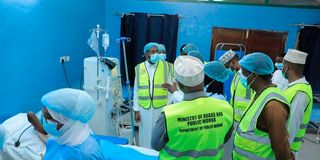
Mandera Governor Mohamed Adan Khalif and other officials when the renal dialysis unit was officially opened at Mandera County Referral and Teaching Hospital on August 29, 2025. The facility has reduced costs of kidney treatment in Mandera.

What you need to know:
- The unit, equipped with seven hemodialysis machines, is a beacon of hope for a region long neglected.
- Patients come from across Mandera County, Ethiopia and Somalia.
For four years, Ali Mohamed Hassan’s life revolved around a grueling and expensive journey. To stay alive, he shuttled between his home in Mandera and Nairobi for kidney dialysis, a treatment unavailable in his county. The trips were an economic disaster, forcing his family to sell goats to cover travel, accommodation, and medical costs.
“Sometimes, I missed dialysis for lack of money. I have been branded a burden,” he admits, recalling his constant appeals to friends and politicians for financial help. Now, a sense of relief washes over him as he is admitted to the newly equipped renal dialysis center at Mandera County and Referral Hospital. He is not alone. At the facility, six other patients receive the same life-sustaining treatment.
“I come here twice a week, unlike in Nairobi where I used to go once a month because of the travel expenses. I feel excited that what used to take me that far can now be found locally,” Mr Hassan shares.
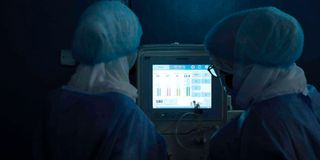
Equipment at the newly established Renal Dialysis unit at Mandera County Referral Hospital on September 10, 2025.
The sentiment is echoed by Ali Ahmed, another patient who previously traveled to Hawasa, Ethiopia, for treatment. “Since the same opened here, I feel at home treated by my own people.”
The unit, equipped with seven hemodialysis machines, is a beacon of hope for a region long neglected. Patients come from across Mandera County, Ethiopia and Somalia.
Ms Halima Issack, a nephrology nurse at the referral facility, reports a sharp rise in kidney failure cases among locals. She attributes this increase to late-stage diagnoses, which leave many patients requiring dialysis or facing the prospect of transplants. The lack of a dedicated dialysis facility in Mandera, she notes, has turned manageable conditions into chronic, lifelong struggles for those currently undergoing treatment. “Most of our patients have chronic kidney condition and this is due to their failure to seek medication in the early stages. Most people fail to go for screening, leading to chronic situations,” she adds.
Diabetes and hypertension
Ms Issack also identifies the primary drivers of kidney failure in the region as untreated diabetes and hypertension. “We have patients who have had diabetes for a long period without seeking medication, and that led to kidney failure.”
She also cites untreated anaemia and chronic dehydration. “All these conditions need to be attended to early enough to avoid cases of kidney failure.”
For the female patients, Ms Issack noted that the condition was often triggered by childbirth complications such as postpartum hemorrhage and eclampsia, which occurred because they delivered at home and did not seek early medical attention.
Ms Halima Abdiwahab, who started experiencing kidney problems after the birth of her sixth child, says: “I used to feel abdominal pains only to be told by a doctor that my kidneys were not okay. I have been undergoing dialysis here for three weeks now,” she notes, expressing hope for the future.
The economic relief is tangible. A session costs Sh6,500, significantly less than the Sh10,000 charged by private facilities, and the Mandera centre accepts insurance, including the Social Health Authority.
“I find it cheap here where I paid Sh6,500 per session unlike at the private facility where I used to pay Sh10,000 for the service. I am now insured and the burden has been eased,” Mr Abdullahi Abdi says.
Ms Issack stresses that patients with chronic conditions must remain on the machines for life, as the kidneys—which must function at no less than 15 per cent of their capacity—have completely shut down. Those with acute conditions get weaned off after about five sessions.
Ms Rukia Sheikh, head of Nursing, affirms the facility's commitment: “The facility has eased the burden of medical care for locals who have been travelling all the way to places as far as Garissa and Nairobi to get treated.”
However, the underlying crisis remains. Physicians report that many patients are only diagnosed after their kidneys have already failed, leaving dialysis as the only option.
“Most patients don’t know that they are sick until their kidneys have already shut down,” says Ms Issack. “By the time they get to us, the kidneys have stopped working. We’re left with no choice but to begin dialysis.”
She warns that kidney failure often begins silently, fueled by undiagnosed high blood pressure and the excessive use of over-the-counter painkillers. “It creeps up quietly until suddenly, the kidneys stop,” she adds, urging locals, especially those with diabetes or hypertension to undergo regular kidney function tests.
Kidney failure occurs when the kidneys can no longer filter waste and excess fluids from the blood. Medical professionals say the kidneys must function at no less than 15 per cent of their capacity to keep the body in balance.
Once its function falls below this threshold, patients require dialysis—a process that mimics the kidneys’ role by filtering the blood using a machine—or, in rare cases, a transplant.
For Mandera Governor Mohamed Adan Khalif, the new unit is a crucial step in restoring dignity and hope. “For decades, our people have endured long, costly and often painful journeys to Nairobi, Moyale or even across the border in search of specialised health services such as dialysis and advanced imaging. Many families have been forced to make impossible choices between treatment and livelihood. But we declare that those days are coming to an end.”
He adds: “Healthcare is coming closer to the people, dignity is being restored and lives will be saved.”
The governor also notes that Mandera is embracing the One-Health Approach, which connects human, animal, and environmental health, a concept critical for a predominantly pastoralist county. “For Mandera, where pastoralism, livestock trade and cross-border interactions shape daily life, this approach will strengthen our ability to prevent and respond to health challenges holistically.”
While the dialysis unit is a lifeline, it is not a cure. As Ms Issack poignantly notes, the machines help people stay alive, but for those with chronic conditions, the treatment is for life. In Mandera, kidney transplants remain out of the question, underscoring the critical need for early detection and prevention in a region where specialised healthcare is finally coming within reach.