Four senior staff at Mediheal Hospital should be investigated for criminal involvement in organ trafficking after an independent team uncovered evidence of exploitation that spans multiple countries and involves vulnerable populations.
A government investigation has uncovered possible organ trafficking at Mediheal, citing forged patient records, cash payments to donors and exploitation of poor people to supply kidneys for wealthy recipients.
The 18-member committee appointed by Health Cabinet Secretary Aden Duale three months ago delivered a damning verdict.
It says Dr Swarup Mishra, the chairman and director of Mediheal Group of Hospitals, Dr A.S. Murthy the nephrologist, Dr Sananda Bag, the urologist/transplant surgeon, and Dr Vijay Kumar, the anaesthesiologist – all involved in kidney transplants – should be investigated for involvement in organ trafficking and possible violations of the law and ethical standards.
Mediheal Group of Hospitals' Founding Chairman, Dr. Swarup Mishra.
Photo credit: Jared Nyataya | Nation Media Group
The report, compiled after an investigation that visited 33 hospitals offering transplant services across the country, shows a complex web of irregularities, suspicious payment patterns and exploitation that appears to target economically desperate populations whilst serving foreign patients willing to pay premium prices for organs.
Of the hospitals investigated, 23 – including Mediheal – offered transplant services during the period under review from January 1, 2020, to March 31, 2025, primarily involving cornea, kidney and bone marrow.
However, the operations of Mediheal dwarfed the others in scale and concerning practices.
The report says Mediheal performed 476 kidney transplants between 2018 and March 2025, with the hospital accounting for approximately 81 per cent of donors and 76 per cent of recipients across the institutions reviewed.
The patient numbers grew fast: some 82 patients between 2018 and February 2020, 70 from September 2020 to 2021 and 324 from 2021 to March 2025.
The patients ranged from an eight-year-old to the oldest aged 80. The report says 150 to 170 patients were aged 65 and above, raising questions about medical ethics and patient suitability for such high-risk procedures.
It adds that Mediheal charges significantly higher, with a mean bill of Sh2,313,324 compared to Sh990,743 at other hospitals.
“Such extreme fees suggest potential billing irregularities or outlier cases that warrant investigations,” the report says.
During the introductory meeting between Mediheal and the team, the hospital management revealed a three-tier pricing structure that investigators found troubling.
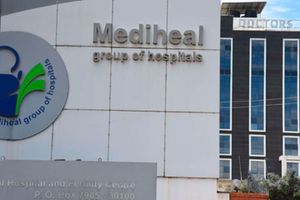
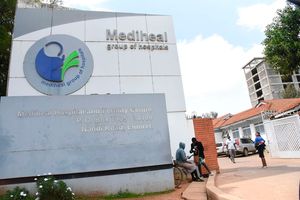
Mediheal Group of Hospitals in Eldoret City, Uasin Gishu County.
Photo credit: Jared Nyataya | Nation Media Group
Kenyans were charged Sh2 million, Africans Sh3.2 million and patients from outside Africa faced bills of Sh4.4 million.
“The analysis reveals alarming disparities in payment patterns that raise ethical concerns about potential organ commercialisation,” the committee says in the report, adding that the pattern suggests Mediheal operates as a transplant tourism destination.
The investigation uncovered payment patterns that suggest systematic organ commercialisation. A total of 347 patients paid for procedures via cash and out-of-pocket at Mediheal, with most being Kenyans and foreigners. Only 77 nationalities paid through private insurance.
The committee found that 25.1 per cent of donors at Mediheal were classified as “highly likely” to have received cash payments, as evidenced by the unrelated donors, compared to only 3.6 per cent at other hospitals.
The most disturbing finding, according to the team, involves what appears to be a systematic pipeline of organs from Azerbaijan to Israel. The committee expresses grave concern that 25 donors specifically for recipients from Israel were from Azerbaijan.
“This raised suspicion about the possibility of misidentification of patients and possible forgery of identification, or targeted recruitment from a region with a common name. This will need to be investigated by security agencies,” the committee recommends.
Records submitted by Mediheal show 452 donors and 447 recipients across multiple institutions, with Mediheal Hospital Eldoret accounting for the majority.
“The analysis uncovers concerning patterns in consent procedures, cash payment, follow-up care and documentation standards that warrant immediate attention,” the report says.
The investigation shows stark gender imbalances that appear to indicate systematic targeting of vulnerable males for organ harvesting. There is a marked predominance of male kidney donors at 77.21 per cent, with females constituting 18.36 per cent and a small proportion (4.43 per cent) identified as “other”.
“The Mediheal Hospital donor pool is heavily male-dominant and almost evenly split between Kenyans and non-Kenyans. More than 38 per cent of donors and recipients have unknown residence status, highlighting a serious documentation weakness,” the findings state.
The Azeri donor population shows the most extreme gender imbalance, with 43 male donors versus seven female donors. This pattern, combined with the absence of significant Azerbaijan recipients in the dataset, indicates that Azeri men are being systematically recruited as organ donors for transplantation elsewhere.
Among Israeli recipients, the male bias is more pronounced, with 50 male recipients compared to just eight female recipients. This extreme gender skew, combined with the minimal Israeli donor presence, suggests that Israeli men are disproportionately benefiting from organs obtained through this system while contributing virtually nothing to the donor pool.
Of concern too are the 101 unknown donors, with total cases standing at 60, unknown Kenyans at 33 and unknown foreigners being eight.
“Out of the total 101 cases, eighty four of these donor nephrectomies were at Mediheal. The dominant donor is Kenya, with 204 cases across all hospitals and 148 cases done at Mediheal. This suggests Kenya is primarily a kidney-source country in this profile,” the report says.
The Kenya Medical Practitioners and Dentists Council should be investigated for regulatory failure and possible collusion due to repeated inaction on reports of wrongdoing at Mediheal, the report says.
“Investigation is recommended into individuals at regulatory agencies who failed to adequately supervise and regulate highly specialised services despite documented complaints,” it says.
Lab arrangements raise more red flags. The labs used to test Kenyan samples in India are not registered with the Kenya Medical Laboratory Technicians and Technologists Board.
“These laboratories did not undergo quality assurance and accreditation by Kenyan regulators. Kenyan samples were in unauthorised hands. It was also unclear if these samples were being used for any unethical practices. Mediheal Hospital had a signed MoU with SRL Limited, Gurugram, Haryana in India on July 27, 2022 with no expiry date of the MoU,” the report says.
Marketing transplant services
Mediheal Hospital did not have key staff for kidney transplants, including an anaesthesiologist, a pharmacist, a pathologist, a surgeon, a psychiatrist, a psychologist and a nutritionist.
“Staff licences and appointment letters for different cadres were found to have expired. Documentation on staff roles and travel details for transplant-related activities were incomplete. Staff were not receiving certified training for their current job roles. A nurse aide, for example, was employed as a theatre technician,” the findings highlight.
Dr Murthy, the nephrologist responsible for following up with patients receiving pre- and post-transplant care, has practised in Kenya for eight years but is not a member of the Kenya Renal Association.
The report says Mediheal does not have a formal kidney transplant programme policy. Dr Murthy highlighted the absence of multi-disciplinary team meetings, hospital ethics committee teams, quality management teams or meetings and formal audit meetings with documented minutes, repeatedly describing himself as running a “one-man show”.
“It is essential to recognise that transplants are a ‘team sport’ and require many specialties for good outcomes. This raises concerns about his solo practice on high-risk patients,” the committee says in the report.
Dr Murthy also told the committee that he conducts counselling for donors and recipients of transplants, exposing conflict of interest, potential for bias and patient coercion. He added that video recordings have been used for donor consent since 2023.
“The videos sent to the committee were similar to those on a website showing satisfied post-transplant patients, giving the impression that it was a marketing video to international potential kidney recipients,” the report adds.
Patient files revealed comorbidities in kidney recipients, including coronary artery bypass graft done in other countries, amputations, people on wheelchairs, diabetes, hypertension, prostate cancer, pulmonary TB, chronic obstructive pulmonary disease and obesity, raising questions about Mediheal’s practices and the high risks to fragile patients.
Mediheal’s urologist told the committee that approximately 10 patients died, with complications such as renal artery thrombosis, wound infections and one case of donor pulmonary embolism.
No donor deaths had been reported, while recipient fatalities were mainly due to cardiac complications, the hospital said.
Mediheal did not conduct post-transplant audits for morbidity and mortality on its kidney transplant services.
The investigation uncovered a sophisticated marketing and logistics operation that uses social media to recruit donors and arrange accommodation through commercial platforms.
A former Mediheal employee said she worked as a marketing coordinator from 2018 to 2023. She was initially tasked with promoting the Mediheal kidney transplant programme to increase awareness and attract more patients.
She claimed to have played a key role in marketing transplant services in Western, North Rift and Nyanza, targeting nephrologists and renal nurses for patient referrals.
Coordinating foreign patients, especially from Israel, became part of her duties too.
She worked closely with a transplant coordinator based in Nairobi and managed patients in liaison with a freelancer, who facilitated the arrival of the Israelis.
The investigation was led by Prof Elizabeth Bukusi, alongside Prof Ahmed Sokwala, Dr Anne Barasa, Dr Charles Kandie, Dr Jonathan Wala, Dr Noella Orata, Dr Patrick Mburugu, Dr Praxades Okutoyi, Dr Wendy Kimbui, Dr Lydia Okutoyi, Dr Bwamwel Wekesa, Dr Stella Kanja, Ms Diviner Nyarera, Mr Joseph Ndirangu, Ms Larica Onam, Ms Sara Bonaya, Ms Jedidah Oduor and Mr Reuben Tulel.