New SHA tariffs bring relief to families facing cancer

The oncology Ward 1E at Kenyatta National Hospital on September 18, 2025.

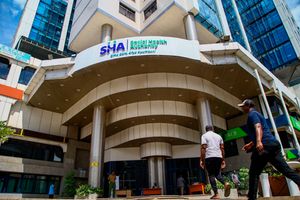
The government has significantly expanded the health benefits Kenyans can access under the Social Health Authority (SHA). The gazetted changes raise the cancer benefit package, formalise free maternity care at public facilities, and, for the first time, bring sickle cell disease into SHA's covered conditions.
Cabinet Secretary for Health Aden Duale signed Legal Notice No. 78 on April 30, 2026. It was published in the Kenya Gazette on May 8. SHA's Chief Executive Officer, Dr Mercy Mwangangi, followed with a public notice on May 11, confirming the changes are live.
For cancer patients who were running out of coverage midway through treatment, the increase matters.
For the first time, SHA has published a complete, procedure-by-procedure tariff schedule for oncology services. Previously, vague benefit descriptions were one of the primary reasons cancer claims were rejected. Facilities did not know what to bill.
The annual cancer benefit package has been raised from Sh550,000 to Sh800,000, supported by an increase in the Emergency, Chronic and Critical Illness Fund allocation for chronic illnesses from Sh150,000 to Sh400,000.
Under the new schedule, SHA will cover holistic oncology consultations at Sh2,500 per visit for up to four sessions, including care from an oncologist, nutritionist, pharmacist, social worker, palliative care team, spiritual care provider and mental health specialist. Chemotherapy administration is covered at Sh5,500 per session as per the treatment plan. Radiotherapy is covered at Sh3,600 per session for up to 30 sessions. A chemo port insertion is covered at Sh15,000.
The diagnostics schedule is equally significant. CT scans are covered at Sh6,900, MRI at Sh11,000 and a bone scan at Sh15,000. Critically, PET scans, the advanced imaging technology that shows whether cancer has spread and whether treatment is working, are now explicitly included at Sh53,500. PSMA PET scans, used in prostate cancer staging, are covered at Sh64,200.
These scans were not in the previous tariff schedule. Their absence meant that when oncologists requested them, hospitals had no basis to bill SHA, and patients had to pay out of pocket or go without. A PET scan ordered today at an SHA-empanelled facility now has a defined SHA tariff.
Specialised treatment is also now priced and included. Brachytherapy, an internal radiation technique used in cervical and prostate cancer, is covered at Sh40,000 for three sessions. Precision radiotherapy that targets large tumours with high accuracy while minimising damage to surrounding tissue is covered up to Sh70,000 for five sessions. Supportive care medication is covered up to Sh10,000, and remission follow-up care is aligned to the Kenya Cancer National Treatment Protocols.
Routine laboratory investigations are covered, including full blood count at Sh500, urea, electrolytes and creatinine at Sh1,000, and liver function tests at Sh1,000 for up to four rounds. Specialised lab tests are covered as per the National Cancer Control Programme, including histology, cytology, flow cytometry for leukaemia patients, bone marrow tests, and PCR analysis for gene detection at Sh8,000 per marker profile. Tumour markers, including CA125, CA19-9, PSA and others, are covered at Sh8,000.
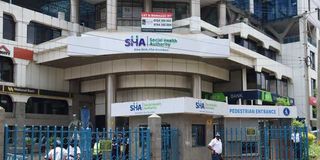
The Social Health Authority headquarters in Nairobi on March 18. The authority is demanding upfront payment of full annual premiums.
When Margaret Akinyi was diagnosed with breast cancer in October last year, her oncologist mapped out a treatment plan that included a PET scan, six cycles of chemotherapy, radiotherapy and follow-up care. The total cost projection ran well past Sh700,000. Margaret had her SHA card. She also had a calculator, and the numbers did not add up.
"I kept asking the hospital what SHA would cover and what I would pay myself. Nobody could give me a clear answer. I ended up using my savings for the PET scan because the hospital said it was not on the approved list. That was Sh53,000 I paid alone," she says.
She is now in her fourth chemotherapy cycle at Kenyatta National Hospital. When she heard about the gazette notice last week, her reaction was quiet and direct. "If this had existed when I started, I would not have touched my savings. That money was for my children's school fees."
James Mwangi, a 58-year-old retired teacher from Murang'a, was diagnosed with prostate cancer in January. His oncologist recommended a PSMA PET scan to determine whether the cancer had spread beyond the prostate before deciding on a treatment pathway. The scan cost Sh64,000. SHA did not cover it. His family pooled money to pay.
"My children contributed. My wife sold some of our property. We got the scan done. The results showed the cancer had not spread, which meant I could have had targeted radiotherapy instead of full surgery. That scan saved my prostate and probably my life. Today, I am a happy man," he says.
"What I want every cancer patient to know," Margaret says, "is that you should now be able to walk into a public hospital, show your SHA card and ask for the PET scan, the chemo, the radiotherapy, all of it, and the tariff exists. Fight for it. It is yours now."
Of the changes, the sickle cell provisions carry particular weight, especially in western Kenya, where disease prevalence is among the highest in the country.
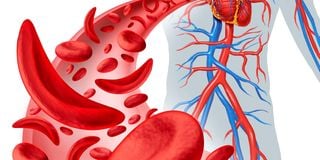
A depiction of sickle-cells. A new form of treatment for sickle cell disease has been approved by a US-based drug’s regulator.
Sickle cell disease is a genetic blood disorder that causes abnormal haemoglobin, leading to episodes of severe pain, organ damage, stroke and, in many cases, early death. In its severe forms, management requires regular specialist care and, for some patients, blood transfusions and intensive interventional procedures that are expensive, recurring and, until now, uncovered by any public health insurance in Kenya.
SHA has gazetted coverage for two critical sickle cell interventions. Apheresis platelets are now covered at Sh20,000 per procedure. Red cell exchange, a more intensive procedure in which a patient's abnormal sickled red blood cells are removed and replaced with healthy donor cells, reducing the frequency and severity of crises, is covered at Sh70,000 per procedure. Both are covered for up to three procedures per policy period.
A sickle cell patient who requires three red cell exchanges in a policy year now has up to Sh210,000 of coverage for that intervention alone, on top of their other SHA benefits.
The sickle cell community has been vocal about the omission of their condition from SHA's covered benefits since the scheme launched.
Under the gazetted tariffs, all registered SHA beneficiaries also have access to free delivery services at Level 2 and Level 3 primary healthcare facilities on a walk-in, walk-out basis.
"SHA will reimburse the facility directly: Sh10,000 for a normal delivery and essential newborn care, Sh30,000 for a caesarean section and essential newborn care," the gazette notice states.
Legal Notice No. 78 was made under section 32(2) of the Social Health Insurance Act No. 16 of 2023, which empowers the Cabinet Secretary to amend the tariff schedule in consultation with the SHA Board. The amendments took effect on May 8, 2026.
The Kenyan Network of Cancer Organisations (Kenco) has welcomed the public notice on the enhancement of selected health benefit packages, including the expanded oncology benefits package.
"This development marks a major milestone in Kenya's journey towards equitable, accessible and patient-centred cancer care under the Universal Health Coverage (UHC) agenda. The revised oncology package demonstrates a growing national commitment to reducing the financial burden faced by cancer patients and their families," Phoebe Ongadi, Kenco executive director, said.
She added: "Kenco particularly commends the Government of Kenya, through the Ministry of Health and SHA, for responding to sustained patient advocacy and stakeholder engagement by increasing the annual cancer benefits package from Sh550,000 to Sh800,000. The enhancement of the Emergency, Chronic and Critical Illness Fund allocation from Sh150,000 to Sh400,000 further reflects recognition of the realities faced by patients requiring long-term and complex cancer treatment."
She said the announcement provides renewed hope to thousands of patients and families across Kenya. "It demonstrates that meaningful progress is possible when government institutions, healthcare providers, civil society organisations, patient advocates and development partners work collaboratively towards a shared vision of equitable cancer care."
Follow our WhatsApp channel for breaking news updates and more stories like this.