The highs, lows and hard truths of Kenya's new health cover
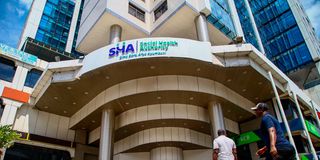
The Social Health Authority building in Nairobi.

What you need to know:
- SHA’s leadership has outlined a set of planned expansions that, if implemented, would significantly broaden the scheme’s reach.
- Free deliveries at Level 2 and Level 3 PHC facilities are set to launch in May 2026, funded by a dedicated Sh2 billion government allocation. This will extend maternity cover to women who are not registered or whose contributions have lapsed.
Mary Wanjiru did not know her baby was in trouble until the bleeding started. She was 37 weeks pregnant, at home in Kayole, when the cramps came fast and hard. Her husband flagged down a boda boda at midnight, and at Mama Lucy Kibaki Hospital, the doctor on duty made the call: emergency caesarean section, no time to wait.
Fear set in when they were asked whether they had registered for the Social Health Authority (SHA) cover. Luckily, the husband had registered her as a dependent, and they were up to date with payments.
“When we heard emergency caesarean section, I was worried about whether we would manage to pay, and I was not sure whether SHA would cover the hospital bill. We handed over the SHA card, my husband did the registration as I was being wheeled to the theatre,” says Wanjiru.
On the discharge day, after spending three days in hospital, they were told they would not pay anything because SHA had covered the bill.
“I can’t remember the total cost of the hospital bill, but I did not have the money. I cried. I didn’t know it could work, especially with all the complaints I had heard about the cover,” notes Wanjiru, who gave birth in January this year.
She is one of more than one million Kenyan mothers whose deliveries have been supported by SHA since the scheme launched in October 2024. So far, 1,080,052 women have delivered through the cover.
For Kenyan women, the maternity benefit has been the most visible and most felt change under SHA, and the numbers reflect it. In the first nine months of the scheme’s operation, from October 2024 to June 2025, 627,155 women accessed maternity services at Sh9.8 billion. In the following nine months, from July 2025 to March 2026, about 546,417 women used the same benefit at Sh8.7 billion.
The total of more than 1.08 million supported deliveries represents a significant shift in how Kenyan women are accessing maternity care, particularly those who could not previously afford the fees that even public facilities charged.
The benefit extends beyond normal deliveries. Complications, caesarean sections, new-born care and the management of postpartum emergencies are all covered under the Social
Health Insurance Fund (SHIF) maternity package.
For a country where maternal mortality remains a persistent concern, this matters. Facility-based deliveries have been climbing, and the SHA maternity cover is one reason women who previously delivered at home are now choosing hospitals.
Under the cover, SHA reimburses Sh10,000 for normal delivery and Sh30,000 for caesarean section. An additional Sh2 billion has been allocated specifically for free delivery services at Level 2 and Level 3 primary health care facilities, targeting mothers who cannot afford their SHIF contributions.
Health CS Aden Duale is set to formally launch the programme this month. This means even unregistered or lapsed mothers will be able to deliver at a public facility without paying.
Teen mothers are already accessing free delivery services under a separate arrangement. They obtain a temporary identification at their nearest facility and receive maternity care at no cost.
“Teen mothers can access delivery services for free. They access SHIF benefits for a period of one year, especially for the mother, the child and their family,” says Golda Larissa, Director of Benefits and Claims Management at SHA.
The surgical cover
James Otieno, 34, is a boda boda rider from Eldoret who was hit by a lorry on the highway in January. He was rushed to Moi Teaching and Referral Hospital with a fractured femur and internal bleeding, and he was in theatre within three hours.
“I was unconscious. My wife did not even know if I was alive. When she got to the hospital, they asked for my SHA card. She found it in my wallet,” he says. The surgery cost over Sh180,000, and the SHA card covered it. James spent 11 days in hospital, including two in the ICU. He walked out on crutches, and is now back on his motorbike, slowly.
Surgical services are the second largest paid claim on SHIF after inpatient care, consuming 30 per cent of total pay-outs. Since inception, 226,431 patients accessed surgical services in the first period for Sh25.4 billion, and 220,097 patients in the second period at Sh25.9 billion. The volumes have held remarkably consistent, suggesting that surgical demand is real, sustained and not a registration-period spike.
The most common surgeries under SHA are orthopaedic procedures, accounting for seven per cent of all surgeries. Eye surgeries, including cataract operations, account for 4.7
per cent. General and obstetric surgeries make up the bulk of the remainder. Level 4 hospitals see the highest absolute value of claims, at Sh77 billion.
Not all patients, however, think SHA has served them well. Grace Mwangi had been paying her SHA contributions faithfully for 14 months when her doctor told her she needed a mammogram.
She walked into one of the leading private hospitals in Nairobi with her card and her registration, having done everything right. But she was told that a mammogram would be only partially covered, and she would need to co-pay the difference. The cancer screening she had specifically come for, the kind that catches breast cancer before it becomes a death sentence, was not on the SHA benefits list at all.
“I thought I was covered,” she says. “Nobody told me there were things the card does not do. I just assumed.”
This is the picture many Kenyans, including Grace, were never told: depending on the hospital, you will either co-share the bill or, in some facilities, the card will pay it in full.
There are also conditions and services SHA is yet to include in its benefit package, including cancer screening, leaving many Kenyans navigating a system of gaps, co-payments, rejected claims and benefits that exist on paper but not yet in practice.
Not all SHA hospitals are created equal. The scheme operates across 10,646 transacting facilities, ranging from Level 2 dispensaries in rural counties to national referral hospitals and private tertiary facilities in Nairobi. What the card covers depends significantly on where you present it.
At a government Level 3 hospital, your Primary Health Care (PHC) benefits move relatively smoothly. The PHC Fund covers outpatient consultations, basic drugs, laboratory tests and antenatal care at these facilities, and the utilisation rate of 98 per cent suggests that patients are reaching these services.
The PHC Fund covers the most basic level of care. It pays for outpatient consultations, laboratory tests, drugs dispensed at the facility, basic radiology, antenatal and postnatal care, immunisation, circumcision and optical services for children under 18.
“Cancer screening and end-of-life services are yet to be introduced as benefits under PHC. This fund is financed directly from the government exchequer, meaning it does not depend on whether you have been contributing. If you are registered and have completed your enrolment, you can walk into a Level 2 or Level 3 facility and receive these services for free,” Larissa says.
But walk into a higher-tier private facility, and the calculation changes. At hospitals such as Aga Khan, Nairobi Hospital or Karen Hospital, SHA covers a defined set of services, but many treatments, specialist consultations and investigations fall outside the approved benefit tariffs.
The result is a co-payment arrangement where the patient covers the gap between what SHA reimburses and what the facility charges. For middle-class Kenyans who registered with SHA expecting comprehensive cover at their hospital of choice, this has been a rude awakening.
The system is designed this way deliberately. SHA’s benefit package is calibrated against the tariffs of public and faith-based facilities. Private hospitals that charge above those tariffs can choose to accept SHA patients, but the difference in pricing becomes the patient’s burden. The scheme does not prohibit this, and it also does not explain it clearly enough to Kenyans while they are registering.
Cancer screening is yet to be covered under SHA.
“This is not a small omission. Kenya has a growing cancer burden, and early detection is the difference between a manageable diagnosis and a terminal one. The SHA benefit package lists cancer screening as a coming benefit under the Primary Health Care Fund, but it is not active. There is no implementation date,” says Dr Brian Lishenga, chairperson of the Rural Private Hospitals Association (RUPHA).
According to the benefits package, SHA does cover cancer treatment and oncology services up to Sh550,000 per patient, with a potential expansion to Sh800,000 pending the Cabinet Secretary’s gazettement of new tariffs. An additional Sh150,000 top-up is available under the Emergency, Chronic and Critical Illness Fund (ECCIF) for patients accessing haematology and oncology services, bringing the effective maximum to Sh700,000 at present.
“The logic of that benefit is undermined by the absence of the screening that would catch cancers early enough for treatment to matter. A patient who cannot afford private screening, discovers cancer late, presents at a public hospital at Stage 3 or Stage 4, and then tries to access SHA’s oncology cover is a patient whose outcome has already been shaped by the gap in the benefit package. It is time we considered introducing screening benefits as fast as possible,” Lishenga explains.
Since its inception, 43,661 cancer patients have been accessing treatment under SHA, up from 33,021 in the earlier period, a 32 per cent increase. The claims value jumped from Sh2.75 billion to Sh6.8 billion over the same stretch.
The SHIF is the contributory layer. It covers the heavier, more expensive interventions: hospital admissions, all categories of surgery, maternity care including caesarean sections and complications, specialised imaging including MRI and CT scans, oncology and haematology treatment, dialysis and kidney transplants, mental health admissions, rehabilitation for drug and substance abuse, and overseas treatment for conditions that cannot be managed locally.
To access SHIF, you must be paid up. A registered member who has not been contributing will find the card works for primary care, but stops there.
The Emergency, Chronic and Critical Illness Fund covers accident and emergency services at Level 5 and Level 6 hospitals, ICU care, and an additional Sh150,000 top-up for patients accessing cancer and haematology treatment. This fund is also exchequer-financed.
Grace understands this acutely. She has a family history of breast cancer; her mother was diagnosed at 54, and Grace, now 47, has been trying to access mammography for two years.
“If they can cover chemotherapy, why can they not cover the scan that tells you whether you need it?” she asks. It is a question SHA has not publicly answered.
Emergency care has a similar problem. The Emergency, Chronic and Critical Illness Fund is supposed to cover accident and emergency services at Level 5 and Level 6 hospitals.
The budget allocated to it is Sh8.3 billion, but only Sh2.2 billion has been disbursed, a utilisation rate of 27 per cent. The fund is yet to introduce ambulance services, which fall under the emergency kitty and which Kenyans are supposed to benefit from.
About 14,800 Kenyans are receiving dialysis, 80 per cent of them chronic cases requiring two sessions every week. Each patient receives treatment worth over Sh1.1 million annually.
Before SHA, many of these patients were either paying out of pocket, relying on charity, or simply not receiving the sessions they needed. A missed dialysis session for a chronic kidney patient is not an inconvenience; it is a medical emergency.
For those who need a kidney transplant, SHA covers Sh700,000 for the procedure, Sh168,000 for donor nephrectomy and Sh200,000 per year for post-transplant care. Dialysis patients retain eligibility for all other benefits under PHC, SHIF and ECCIF funds simultaneously.
Dialysis patients have been complaining about the number of cycles and how they are depleting their cover, asking the scheme to add more sessions. However, for Larissa, patients are entitled to two sessions per week.
“There was a debate that we need to cover three sessions, but from our data, only 20 per cent of this population needs the third session. However, towards the benefit package review, we will see how we co-pay for them.”
She says the Authority has since introduced a transplant evaluation, and patients are entitled to Sh150,000 for the pre-transplant evaluation.
“Basically, that covers the test to check the compatibility between the donor and patient. We pay for the renal transplant, which we increased. For the donor nephrectomy, which is a correction done on the donor, we pay over Sh160,000. We also give post-transplant therapy of up to Sh200,000 for the beneficiary. We are moving away from financing certain aspects of the package and instead offering a holistic benefit package,” says Larissa.
The SHA card is only as useful as the facility’s willingness to accept it, and that willingness is under pressure.
Of the Sh180.7 billion in claims submitted by hospitals since SHA’s inception, Sh120.8 billion has been paid, Sh15.9 billion has been rejected outright, and Sh13.5 billion has been returned to facilities for correction. About Sh30.5 billion is sitting under SHA review, unresolved, money that hospitals have not received for services they have
already delivered.
Private hospitals are being settled at a 77 per cent rate, the lowest of any facility category, while government and county facilities settle at 83 per cent and faith-based ones at 81 per cent. The gap matters because private facilities, which account for 4,123 of the 10,646 transacting hospitals, operate on tighter margins and have less tolerance for a prolonged float of unrecovered claims.
Dr James Omondi, a medical director at a mid-sized private hospital in Kisumu, who asked that his facility not be named, describes the situation with controlled frustration.
“We have been waiting for payment on claims we submitted six months ago. The money is not coming. In the meantime, we have to buy drugs, pay staff and keep the lights on. SHA patients are walking in every day, and we are treating them because that is what we do, but the financial pressure is building,” he says.
His hospital has not yet stopped accepting SHA patients, but he is candid about the conversations happening with top SHA management.
“There is a point where the arithmetic does not work. If we are settling at 77 per cent and waiting months for even that, at some point we have to decide capacity.”
According to SHA, however, this is not punishment; the system is designed in such a way that it automatically rejects claims that are not well presented. The leading cause of rejected claims is missing documentation, with 285,523 claims rejected because of missing forms or required documents. A further 62,656 were rejected for missing itemised invoices, while 38,211 were time-barred because the facility failed to resubmit within the required 14-day window.
Since its inception on October 1, 2024, to May 4, 2026, SHA has registered 30.7 million Kenyans, representing 64.8 per cent of a population estimated at 47.5 million.
Total contributions collected across all three funds stand at Sh171.2 billion, with Sh146.2 billion disbursed to health facilities. The 10,646 facilities currently transacting are made up of 5,990 government hospitals, 533 faith-based facilities and 4,123 private ones. Of the 30.7 million registered, 8,583,030 have accessed Primary
Health Care services and 3,643,251 have accessed SHIF services.
But the registered base conceals a contribution problem that threatens the scheme’s future. Of the 30.7 million registered, only 3.2 million formal sector workers are currently paid up, contributing an average of Sh1,950 per month. In the informal sector, only 1.5 million contributors are currently paid up, at an average of Sh500 per
month.
A further 510,247 households are covered under sponsored programmes at an average of Sh660 per household, while 7.6 million Kenyans have been means-tested and should be receiving subsidised cover.
Kenyans have been blamed for paying their cover only when they need help and then disappearing.
“Health insurance works when healthy people subsidise sick ones. The more people pay in when they do not need care, the more the system can pay out when they do,” says Dr Mercy Mwangangi, SHA Chief Executive Officer.
Many Kenyans, particularly in the informal sector, are registering but not contributing consistently.
“What is happening in practice is a pattern that threatens the scheme’s long-term viability. People allow their contributions to lapse when they are well. When illness arrives, they rush to pay up, or arrive at facilities already sick and seek registration on the spot. Several hospitals have reported a pattern of patients presenting with serious conditions and attempting same-day SHA registration,” Lishenga says.
He adds: “This is not unique to Kenya. It is the classic problem of adverse selection in health insurance design, and it is one reason SHIF’s utilisation ratio has hit 158.6 per cent. The scheme is collecting Sh57.7 billion and paying out Sh91.5 billion. It is being held up primarily by formal sector workers whose contributions are deducted at
source and have no option to lapse.”
Faith Atieno, a vegetable trader in Gikomba who registered with SHA in November 2024, admits she has not paid for five of the past 18 months.
“When I am well, I think, why am I paying? The business is slow, there are school fees and there is rent, so I skip. Then when I got sick in March, I went to pay so I could use the card. The hospital told me there was a waiting period. I had to pay out of pocket for everything,” she says.
She is paying regularly now, but her experience illustrates the gap between the scheme’s design and the financial reality of the informal economy it was built to include.
The gap between 30.7 million registered and 4.7 million actually contributing to SHIF is the financial fault line beneath everything. SHA is spending Sh159 for every Sh100 it collects in SHIF contributions.
In 2024/25, SHIF collected Sh57.7 billion but incurred Sh91.5 billion in claims, including Sh33.4 billion in claims liabilities. The PHC fund has a utilisation rate of 98 per cent, meaning it is nearly fully depleted. The ECCIF, covering emergencies and critical illness, has disbursed only 27 per cent of its budget, with more services under the scheme yet to be introduced, hence the slow absorption.
What Kenyans are saying: the challenges on the ground
Beyond the data, a pattern of frustration runs through what ordinary Kenyans report when they interact with the scheme.
The most common complaint is system downtime. Patients arrive at facilities only to find that the SHA verification system is offline. Without a working connection, facilities cannot confirm coverage, and some decline to treat until the system is restored. In emergencies, this can mean dangerous delays.
“Drug stock-outs at public facilities undercut the value of the PHC benefit. Patients are told their outpatient consultation is covered, then sent to a private pharmacy to buy the drugs that should have been dispensed free of charge. The out-of-pocket cost that SHA was meant to eliminate arrives through the back door,” Lishenga says.
He adds: “Co-payments at higher-level facilities have caught many members off guard. Kenyans who enrolled expecting full coverage at private or mission hospitals are discovering mid-treatment that they owe a balance. Some have been discharged only after paying the shortfall. Others have delayed seeking care after a first difficult experience.”
What is coming
SHA’s leadership has outlined a set of planned expansions that, if implemented, would significantly broaden the scheme’s reach. Free deliveries at Level 2 and Level 3 PHC facilities are set to launch in May 2026, funded by a dedicated Sh2 billion government allocation. This will extend maternity cover to women who are not registered or whose contributions have lapsed.
The expanded oncology cover from Sh550,000 to Sh800,000 is in the final stages of the regulatory process. The gazettement of new tariffs by the Cabinet Secretary is the remaining step before SHA can implement.
On overseas treatment, only one patient has been served so far. SHA has contracted nine international healthcare facilities and says approved cases are commencing. The current cap of Sh500,000 per patient is widely viewed as too low for most conditions requiring overseas referral, and pressure to revise it is growing.
“In the next phase, as we review the packages, we will present the proposals to the council and wait for their proposals,” Mwangangi says.
Dental services, ambulance cover, expanded outpatient services and broader chronic illness coverage are listed as coming benefits. No implementation timeline has been publicly confirmed for any of them.
For Kenyans waiting on those promises, the experiences of Mary in Kayole and James Otieno are encouraging and cautionary. The card worked for them, in the right hospital, at the right moment, with the right paperwork. Millions of others are still finding out, often at the worst possible time, exactly where the limits are.
“The scheme is real. The benefits are real. The financial gap is also real. SHA has until the next actuarial reckoning to close it,” Lishenga says.