Nutrition crisis: Half of food fed to Kenyan children lacks vegetables
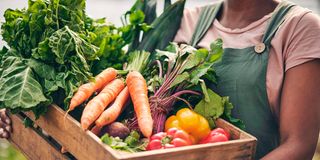
For every 10 plates of food fed to Kenyan children, roughly five contain no vegetables.

What you need to know:
- Globally, fruits and vegetables account for about 40 per cent of the least-cost healthy diet.
- In Africa, that share stands at around 31 per cent, a significant constraint for low- and middle-income countries.
For every 10 plates of food fed to Kenyan children, roughly five contain no vegetables, a worrying trend that delegates at the 20th Africa Food Systems Forum in Kigali warn could lead to poor nutritional outcomes. Experts stress that Kenya, and Africa at large, must invest in healthy diets, with vegetables placed at the centre of that agenda.
Speaking at a side event titled Powering the Plate: Energy for Nutrition, Dr Máximo Torero, chief economist at the Food and Agriculture Organisation (FAO), identified affordability as a major barrier.
Globally, fruits and vegetables account for about 40 per cent of the least-cost healthy diet. In Africa, that share stands at around 31 per cent, a significant constraint for low- and middle-income countries.
Dr Torero noted that Kenyan children aged six to 33 months are particularly missing out on fruits and vegetables. "It cannot be just what appears on the plate, but the impact it has on a child's development, and ultimately the formation of human capital," he said, describing the vegetables gap as "a nutrition problem, a human capital problem, and an economic problem that we need to resolve."
Underscoring the health stakes, he added that vegetables provide fibre, vitamins, minerals, and bioactive compounds essential for health and the life cycle, and that high consumption is linked to lower risks of premature mortality, stroke, and some cancers.
Despite these benefits, vegetables remain seriously under-consumed across sub-Saharan Africa, with average intake estimated at only about two-thirds of recommended levels.
According to Dr Torero, this is not merely a matter of consumer preference, but also of education, availability, and affordability. "We cannot ask people to choose a healthy diet if the healthy choice is scarce, unavailable, or unaffordable. This is why investment matters."
He clarified that the challenge is not about first-time consumption; most people already eat some fruits and vegetables, but rather about consuming them frequently and in sufficient quantities. Bridging the supply gap is essential to understanding why consumption remains low.
Data from 2000 to 2017 shows that while fruit and vegetable availability increased in most regions of the world, Africa recorded little improvement. By 2017, per capita availability remained below half of the recommended 400 grams per day. "This is a critical point because it tells us that the problem cannot be resolved only at the consumer end. There is fundamentally a supply challenge, and simply producing more will not necessarily solve it alone."
Dr Torero also emphasised that vegetables are highly perishable, and what matters for nutrition is not merely what is harvested, but how much of that nutritional value reaches the consumer in good condition and at an affordable price. "A vegetable produced but lost between the farm and the market does not improve dietary quality, and it generates little value for the farmer," he said, adding that tackling post-harvest losses, estimated at 70 per cent of the process, is critical to resolving the problem.
He argued that African countries cannot separate the need for energy from nutrition solutions. Vegetable production relies on energy at multiple stages, including transportation, cold storage, and irrigation in water-scarce areas. "Markets need reliable energy. Without it, perishability becomes loss. Loss becomes scarcity, and scarcity eventually becomes higher prices," he explained.
Investments in reliable, affordable, and increasingly sustainable energy systems, he said, can double as investments in nutrition. Yet the vegetable supply is failing to keep pace with demand. When scarcity increases, prices remain high, and healthy diets stay out of reach for consumers.
"When resources are very limited, households first protect the basic energy requirements. They secure calories and dietary diversity becomes afterwards," Dr Torero noted. He warned that when prices rise or incomes fall, poor households are particularly likely to cut back on vegetables and other nutrient-rich foods.
Closing Africa's vegetable gap, he stressed, requires deliberate investment. "We cannot simply assume that broad-based agricultural investment will automatically deliver more vegetables or make them more affordable." He observed that agricultural policies and investments have traditionally and understandably focused heavily on staple foods and calorie security. "If your objective is healthy diets, then our investment portfolio must also affect the foods that constitute a healthy diet."
Echoing that sentiment, Hailemariam Desalegn, former Ethiopian Deputy Prime Minister and current Board Chair of AGRA, said Africa must produce and consume more vegetables to achieve healthier diets, stronger livelihoods, and more resilient food systems.
"Africa does not lack ideas, entrepreneurs, or innovation. Solutions are already emerging in irrigation, especially solar-driven irrigation, and in cold chains, storage processing, and market development," he said. "The challenge is not simply to generate more ideas; it is to identify what works and create the conditions for those solutions to scale."
He cautioned that innovation alone will not transform food systems. "We need investment in productive, renewable energy, cold chains, logistics, processing, and local enterprises." He called on African governments to take a leadership role and enable farmers to produce healthier foods. "Investors and innovators can only go so far without the right enabling environmental policies. We need governments to put in place clear policies and supporting regulations."
Concluding, Desalegn urged collective action: "It is time for us to come together, turn this agenda into action, and ensure that nutritious vegetables are accessible and affordable to millions more people. A robust extension system is critical, and government has to invest in it."