In many homes today, there is often a standoff during meals. A child happily eats bread for breakfast and chips for lunch, but refuses to touch the sweet potatoes or terere on their dinner plate. Parents may plead and negotiate, but many give up and end up eating the traditional foods they have.
But every time those nutrient rich foods are rejected, your child may be missing out on something. Clinical nutritionist Agnes Wando says many indigenous foods that urban children dismiss as "grown-up food" are packed with iron, vitamin A, calcium, zinc and fibre that support healthy growth, immunity and brain development.
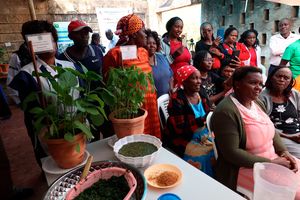
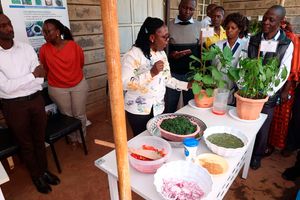
Clinical Nutritionist, Agnes Wando, says that compared to other foods, traditional foods give children the highest amount of nutrients in terms of fibre content.
Photo credit: Pool
“As nutritionists, we look at nutritional value in each vegetable. For instance, we have very many traditional vegetables but managu and terere are high in iron, calcium, vitamin A, zinc and fibre,” Agnes says.
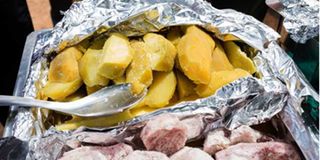
She adds that the benefits go beyond traditional vegetables. Children who regularly eat foods such as sweet potatoes get more nutrients than those who rarely eat them, giving them a richer mix of foods to support healthy growth.
“White bread only gives you carbohydrates with no nutritional value. But look at sweet potatoes. They are full of vitamin A, Vitamin C, fibre and potassium.”
Agnes says the correct way to introduce traditional foods to children is by making them a family food, and not foods for adults or certain people in the house. Sitting together around the table and training children how to serve and eat colourful potions are other ways parents can help children to grow up enjoying these foods.
“It is your responsibility as a parent to introduce these foods to your child. If they are five years and older, invite them to your kitchen so that they see how you are cooking the vegetables. Also, don’t keep substitute meals. Make your children eat what is on the table and show them that you enjoy eating it.”
Agnes encourages parents to make mealtimes more engaging instead of turning them into a battle. She recommends switching off screens during meals, talking to children about the colourful foods on their plates, and modelling enthusiasm by eating traditional foods together as a family. Positive, repeated exposure, she says, helps children become more willing to try foods they initially reject.
Fried cassava.
Photo credit: Shutterstock
“Start introducing traditional foods to your children the moment you start complementary feeding, as early as six months. Traditional foods are very nutritious but it does not mean that you don’t offer other foods. You need a balanced diet so that your child can get enough fibre, nutrients, magnesium, potassium and vitamins which are very essential.”
“When my children were toddlers, they had no choice. They would be forced by the house help to take the traditional foods, and they would eat. But the moment they started noticing the difference in taste, they stopped eating traditional vegetables,” the mother of two shares.
“If I forced them to eat, they would throw up immediately, even if it was plain porridge. My older son used to say he gets heartburn whenever he eats sweet potatoes. The younger one has completely refused to eat them,” says Wakanyi.
Githeri.
Photo credit: Pool
Agnes says parents who find themselves in Wakanyi’s shoes can try to substitute with other foods instead of giving up. such parents should ensure the substitute foods offer their children Vitamin A which helps with healthy skin, Vitamin C which helps in boosting and repair of the immune system, Vitamin K which helps with blood clotting, zinc and fibre which also help with digestion and good gut health.
“What we are looking for is whether your child is having enough calcium which also helps with the formation of proper bones and iron which helps with red blood cells formation,” she notes.
She however emphasises that traditional foods such as sweet potatoes come with high amounts of beta-carotene which is converted to vitamin A in the body.
“You can always substitute sweet potatoes with carrots, pumpkin, or spinach which are also high in Vitamin A. This beta-carotene or Vitamin A, is very important for helping with healthy eyes, boosting immunity and also helps with skin for the baby. You can also get legumes like beans, lentils or other whole grains because they are also high in fibre.”
According to Agnes, it is never too late for parents to introduce complex carbohydrates and other indigenous foods.