Only 61 per cent of Kenya's health facilities meet quality standards

Acting Director General for Health Dr. Patrick Amoth.

What you need to know:
- The assessment covered 3,605 facilities across all 47 counties through a census of public Level 4 and 5 hospitals and port health facilities, with random sampling for Level 2, 3, and non-public Level 4 facilities.
Only 61 per cent of Kenya's health facilities are adequately equipped to deliver effective, safe, and patient-centred care, according to a comprehensive government report launched this week.
The 2024 Kenya Health Facility Assessment: Quality of Care and Human Resources for Health Report, unveiled by Health CS Aden Duale on Tuesday, exposes a healthcare system struggling to meet basic standards.
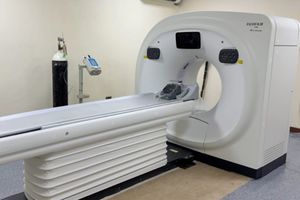
The crisis is compounded by 41 out of 47 counties urgently requesting laboratory equipment through the National Equipment Service Programme (Nesp), leaving thousands of patients unable to access essential medical tests.
Nesp, launched after the Medical Equipment Service programme expired in December 2023, operates on a Fee-for-Service model where vendors provide, maintain, and upgrade equipment at no upfront cost to counties.
Mixed performance across facilities
Dr Patrick Amoth, director general at the Ministry of Health, revealed significant disparities in quality across different facility types.
"The Structures Index, which quantified the extent to which health facilities are equipped with necessary building blocks to enable delivery of effective, safe, and patient-centred care, was 61 per cent," Dr Amoth said.
"Generally, hospitals and faith-based organisations/NGO facilities had high scores compared to primary level facilities and public facilities."
The Process Index, measuring standardised, evidence-based clinical and administrative procedures, also stood at 61 per cent. Hospitals and FBO/private facilities outperformed Level 2 and 3 facilities and public facilities.
The assessment covered 3,605 facilities across all 47 counties through a census of public Level 4 and 5 hospitals and port health facilities, with random sampling for Level 2, 3, and non-public Level 4 facilities.
Quality improvement teams were present in 92 per cent of Level 5 facilities and 85 per cent of Level 4 facilities, but only 63 per cent of Level 3 facilities. Rural facilities lagged at 62 per cent compared to 76 per cent in urban areas.
Nationally, 20,044 healthcare workers have been trained on quality improvement initiatives in the last two years, with 25 per cent from Level 5 facilities.
Critical patient safety gaps
While overall death reviews stood at 73 per cent, surgical death monitoring remained critically low at 34 per cent. Maternal and perinatal death reviews performed better at 84 per cent.
"Surgical adverse events—deaths and infections within 24 hours of surgery—are at 28 per cent," Dr Amoth said, noting that the infection rate for all eight antimicrobial-resistant priority pathogens examined stood at nine per cent.
Antimicrobial monitoring was below average: only 38 per cent of facilities monitored antibiotic use, 32 per cent conducted prescription audits, and more than half—56 per cent—did not conduct surveillance for World Health
Organization priority pathogens.
Surgical monitoring disparities
All Level 5 facilities conducted formal death reviews compared to only 58 per cent of Level 2 facilities. Public facilities performed better at 96 per cent versus 64 per cent of private facilities.
Out of 427 maternal deaths reported from October to December 2023, 98 per cent were audited. Of 4,094 neonatal deaths, 76 per cent were audited.
Only 35 per cent of facilities conducted surgical-related death reviews. Private facilities led at 45 per cent compared to 24 per cent of public facilities. Among Level 5 facilities, 83 per cent reviewed surgical deaths compared to 51 per cent and 22 per cent of Levels 4 and 3 respectively.
Just 28 per cent of facilities offering in-patient services had systems to monitor surgery-related adverse events—83 per cent of Level 5 facilities but only 18 per cent of Level 2 facilities.
NGO facilities led at 55 per cent compared to 25 per cent of public facilities. Kajiado County topped performance at 90 per cent, followed by Bomet at 66 per cent. Alarmingly, no facilities in Tana River County had systems to monitor surgery-related adverse events.
Only 26 per cent of facilities conducted surveillance for patient safety incidents—65 per cent at Level 5 facilities but far lower elsewhere. Medication errors were most monitored at 74 per cent, while blood transfusion errors were least monitored at 14 per cent.
The National Policy on Patient Safety, Health Worker Safety and Quality of Care, 2022 was available in only 25 per cent of facilities nationwide.
Health worker safety and conditions
Only 24 per cent of facilities implemented health worker safety surveillance. Just 21 per cent of medical staff reported promotions in the last three years, though 85 per cent received timely salary payments.
Seventeen per cent of health workers reported assault—physical or verbal—with 77 per cent perpetrated by patients and 22 per cent by caregivers. Busia County had the highest assault rate at 33 per cent. Sixty-eight per cent of staff felt workload was fairly distributed.
Staff distribution and qualifications
Medical officers comprised four per cent of staff; general clinical officers 13 per cent; registered nurses 28 per cent; enrolled nurses five per cent; specialist medical officers, clinical officers, and nurses three per cent each; and laboratory staff 10 per cent.
Sixty-seven per cent were diploma-trained, 13 per cent held undergraduate degrees, and eight per cent had certificates. Forty-nine per cent were permanent employees, 33 per cent on contract, and 13 per cent on other terms.
Only 63 per cent of facilities had routine performance review processes. Bomet led at 96 per cent, followed by Kajiado at 91 per cent and Laikipia at 90 per cent. Marsabit had the lowest at 20 per cent, followed by Lamu at 30 per cent and Embu at 36 per cent.
Almost all family planning clients—98 per cent—felt treated with courtesy, and 90 per cent were allowed to ask questions.
"Eighty-two per cent of family planning clients nationally received their preferred method, while 15 per cent felt coerced to take another method," Amoth said. Ninety-five per cent felt their choices were considered, and 87 per cent were informed about common side effects.
Assessment context
CS Duale explained the assessment aimed to bridge gaps between high service coverage and slower progress in health outcomes.
Despite strides in skilled birth attendance, antenatal care and childhood vaccinations, Kenya faces persistent challenges: high maternal and childhood mortality rates, stagnant infant and neonatal death declines, and rising non-communicable diseases.
"This report presents findings of the Harmonized Health Facility Assessment conducted in Kenya, a comprehensive evaluation aimed at understanding availability and quality of healthcare services," Duale said. "The assessment was initiated in response to the need for accurate data to inform policy decisions and improve healthcare
delivery."
He said the insights will serve as a critical tool for policymakers, health administrators, and stakeholders to identify service delivery gaps and improve health outcomes.
"The findings are based on rigorous data collection and analysis, reflecting experiences and perspectives of county managers, healthcare providers, and patients alike," he said. "We believe this information will contribute to informing decision-making and strategic planning, guiding us toward a healthier future for all Kenyans. Together, we can build a healthcare system that is not only accessible and affordable but also of the highest quality."