Only three laboratories in Kenya can test for Ebola
Ebola spreads through direct contact with bodily fluids such as blood, saliva and sweat from an infected individual.

Walk into any hospital laboratory in Kenya, public or private, and ask the staff to test a sample for Ebola, and the probability of having the samples tested is nil.
Only three facilities currently have the capacity to test for it.
The majority of facilities lack qualified personnel, and were not designed to handle Ebola demands. Therefore, attempting to process such a sample would put everyone inside at serious risk.
Dr Ahmed Kalebi, an independent consultant pathologist, confirmed to the Nation that among the hundreds of laboratories operating across Kenya’s health system, only three meet the biosafety standard required to conduct confirmatory Ebola testing.
The National Public Health Virology Reference Laboratory, Kenya Medical Research Institute (KEMRI), Nairobi and KEMRI Kisumu are the only facilities in the entire country equipped to safely receive, handle and confirm an Ebola sample.
In a country with a population of 55 million, a single confirmed case could require testing dozens of samples from contacts across multiple counties, making it a call for action.
“Every other laboratory, from the largest public teaching hospital to the best-resourced private diagnostic centre, does not qualify. Even my own laboratory, one of Kenya's most well-equipped private laboratories, cannot test for Ebola. It does not meet the standard,” Dr Kalebi said.
The standard in question, he said, is so demanding that most laboratories in sub-Saharan Africa do not meet it either.
The standard, he said, is a Biosafety Level 4, the highest classification in the international laboratory safety framework. Most Kenyan laboratories operate at BSL-2. A small number of specialist facilities operate at BSL-3. Neither is equipped for Ebola.
“A BSL-4 requires negative air pressure systems that prevent any particle from escaping the room, full pressurised suits with independent air supplies, chemical decontamination showers, and waste treatment systems that process everything, including air and water, before it leaves the building,” Dr Kalebi said.
“It is an entirely different class of infrastructure from anything found in a standard clinical laboratory. You cannot upgrade a BSL-2 facility to BSL-4 with a policy decision or an emergency budget line. The building either meets the standard or it does not.”
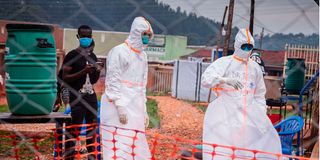
Doctors at an Ebola isolation centre. The current Ebola outbreak in DR Congo is caused by the Bundibugyo virus, a rare Ebola strain.
This is Kenya's laboratory reality as an Ebola outbreak continues to spread across the DRC and Uganda, with over 130 deaths recorded and the World Health Organization declaring it a global public health emergency.
With hundreds of thousands of people crossing Kenya's borders every week, “it is just a matter of time before we register a case,” Dr Kalebi said.
“Even moving a blood sample from a suspected patient is a high-stakes operation. Every step of transport requires the most stringent containment protocols, with samples packaged in specialised multi-layered containment systems. If somebody came to my private facility and said they wanted to test for Ebola, the first question becomes, ‘Have you travelled to the Democratic Republic of the Congo (DRC)?’ If the answer is yes, I tell my staff to stop, move away as fast as you can, and call the ministry; they'll come and handle that person,” he said.
However, the Ministry of Health has assured Kenyans that the country is prepared. Rapid response teams are on standby. Screening is active at points of entry. Laboratory personnel are on heightened readiness. All of that may be true, however, preparedness is only as strong as its weakest link.
Health Principal Secretary Mary Muthoni said that Kenya maintains strong laboratory diagnostic capacity through the National Public Health Virology Reference Laboratory, Cambridge Centre for Virus Research Laboratory and other designated national laboratories, capable of processing and releasing Ebola test results within six to eight hours after receipt of the specimen
“Initially, and during the Covid-19 pandemic, we would send our samples as far as South Africa to get results, which would take a longer time. But right now, we have the capacity as a country to release our results between six and eight hours of receipt of the specimen.”
Mobile testing units have also been deployed to key border points and are capable of conducting rapid antigen tests and some PCR tests on-site, with preliminary results available within hours before confirmatory testing is done at the main laboratories.
“Kenya has an established isolation and treatment capacity for viral haemorrhagic fever management, including Ebola. And there is a national viral haemorrhagic fever treatment unit at Kenyatta National Hospital, which is operational and available for management and confirmed cases,” PS Muthoni said.
“In addition, the counties and points of entry have also identified holding areas and isolation spaces for temperature management and assessment of suspected cases before referral where necessary.”
WHO director-general, Dr Tedros Adhanom Ghebreyesus, said the number of suspected Ebola cases in the DRC and Uganda has risen to 600, with 139 suspected deaths. The numbers are expected to rise given the time taken to detect the virus.
Dr Kalebi notes that the current Bundibugyo strain kills between 30 and 50 percent of those it infects. That means that between five and seven out of every 10 infected people recover. However, he notes that the time between infection and the appearance of symptoms ranges from two to 21 days. This means that an infected person can move freely for up to three weeks before falling ill.
“Most of the time, they won’t look like an Ebola patient. They won’t be bleeding from their mouth. They’ll look like they have the flu, some bowel infection, and some food poisoning. Because of the high mobility, as people travel, they transfer the infection to other places. By the time it’s actually discovered that there’s an outbreak, so many people have been infected,” Dr Kalebi said.
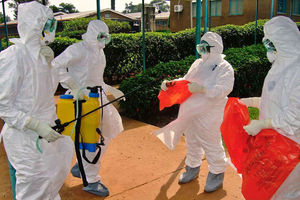
For the healthcare workers who would treat a confirmed Ebola patient, the protective equipment required bears no resemblance to the masks and gowns that became familiar during Covid-19.
“We’re talking about masks that literally nothing can go in, not even air. The way you wear your gloves, the way you put on each layer, has to be done in a very particular way. The PPE is almost like a spacesuit. And once that equipment comes off after treating an Ebola patient, it goes straight to destruction. No decontamination. No reuse. No second chances,” said Dr Kalebi.
“Once you get to attend to a patient with Ebola, you are assumed to be exposed. When you remove the PPE, it has to be destroyed. You can’t put on the same one you already used. If you do, you get infected. And anything that has been in contact with the patient does not leave that facility. It must be burnt.”
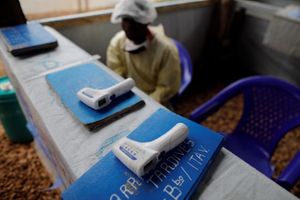
In her latest address, PS Muthoni directed port health officers stationed at every airport, seaport, and land border crossing to screen every person and facilitate temperature checks and risk assessment of incoming passengers.
“Nobody should enter into the country without being screened. I would rather we delay clearance of some of the travel modes, but we make sure that the passengers are clearly checked. We have instructed port health officers to strictly implement screening protocols and referral procedures, case identification measures, and reporting systems at all points of entry. Travellers that are arriving from high-risk countries and those transiting through affected areas are also subjected to enhanced screening and risk assessment at points of entry,” said PS Muthoni.
Over 34,500 travellers have already been screened since the alert was raised, including 18,552 international passengers, 5,848 local travellers, 2,514 truck drivers, and 4,729 conveyances.
While a vaccine exists for the Zaire strain of Ebola, it offers zero protection against the Bundibugyo strain now spreading across the region. This leaves healthcare workers with only supportive care to offer to patients.
“What keeps a patient alive is early, aggressive supportive care. This includes intravenous fluids to fight dehydration, medication to control fever, and relentless monitoring. But that only works if the patient gets to a facility in time. And too many do not,” said Dr Kalebi.
“People stay at home trying to medicate. You can’t take enough drips to keep yourself from getting dehydrated, and that’s basically what kills. Things can deteriorate very, very fast. You can get high fevers, you get dehydrated, you start vomiting, and you can start bleeding,”
Dr Kalebi gave Kenya's current preparedness a cautious pass. For now, three laboratories are enough. The testing capacity is adequate for the scale of threat currently being seen. Thousands of healthcare workers have been trained, including over 170 Kenyan health workers who served on the frontlines of the West Africa Ebola response between 2014 and 2016 and who are still in the country. A virtual academy platform has been activated to accelerate training reach across the country.
However, should the virus take hold and spread at the pace it has in eastern DRC, where over 336 alerts and suspected cases are currently under investigation, Kenya's testing infrastructure would be overwhelmed rapidly. According to Dr Kalebi, labs can be scaled up, and others repurposed, but only with significant investment and time.
Ebola, unlike Covid-19, does not travel through the air. It requires direct physical contact with the bodily fluids of an infected person. That means it can be stopped if people act fast enough, honestly enough, and without the fear and stigma that have allowed previous outbreaks to spiral into catastrophe.
“If someone has a credible suspicion for Ebola, the first point of call is the Ministry of Health. They have county response units and a hotline. Don’t try to be clever if you're a health worker. Don't try to be smart if you're a patient. Just report,” Dr Kalebi said.
Internationally, support for the Ebola response is increasing. The British High Commission Nairobi on Thursday announced up to £20 million (about Sh3 billion) in new funding to contain the outbreak in DRC. The funding will help the WHO, UN, international and NGO partners to respond rapidly to the outbreak by strengthening disease surveillance, supporting frontline health workers, improving infection prevention and control, and helping affected communities access lifesaving care.
Follow our WhatsApp channel for breaking news updates and more stories like this.