Ozempic, Wegovy get new rivals as Kenya approves seven Semaglutide drugs
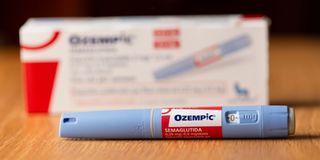
The black market for Ozempic injections is thriving, thanks to the growing demand for the drug.

What you need to know:
- Kenya has registered seven semaglutide products for the treatment of type 2 diabetes and weight management.
- The country has had only two original semaglutide products, Ozempic and Wegovy, both manufactured by the Danish pharmaceutical company Novo Nordisk.
- A generic option, Truglyx, was launched in Nairobi last month at a conference dubbed Reset Diabesity.
Kenya's drug regulator has registered seven semaglutide products for the treatment of type 2 diabetes and weight management, as experts warn of rising obesity and diabetes cases in the country.
According to the World Health Organisation (WHO), semaglutide is a prescription medicine that mimics a natural body hormone to lower blood sugar and reduce appetite. The WHO added it to its Model List of Essential Medicines in September last year.
The Pharmacy and Poisons Board (PPB) says the approval follows a regulatory evaluation of the quality, safety and efficacy of the medicines, which are sold under different brand names.
Until now, Kenya has had only two original semaglutide products, Ozempic and Wegovy, both manufactured by the Danish pharmaceutical company Novo Nordisk. A generic option, Truglyx, was launched in Nairobi last month at a conference dubbed Reset Diabesity.
PPB warns that each registration is tied to a specific approved use. Ozempic is approved for adults with insufficiently controlled type 2 diabetes, alongside diet and physical activity. The five newly registered generic semaglutide products have also been approved for treating type 2 diabetes. Wegovy, on the other hand, is approved specifically for adult weight management alongside diet and exercise, supporting both initial weight loss and long-term maintenance in people with a high Body Mass Index (BMI).
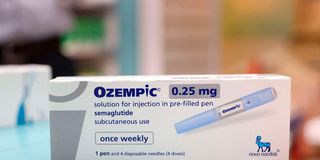
Wealthy Kenyans are stocking up on Ozempic, Wegovy and Mounjaro; injectable drugs promising dramatic slimming results
"While these products contain the same active ingredient, their approved uses are not necessarily interchangeable and must be understood with reference to the indication approved for each individual product," says Dr Ahmed Mohamed, PPB's chief executive officer.
The board does not set retail or market prices, but the generic drugs cost between Sh13,000 and Sh18,500 a month, while the original drugs cost between Sh50,000 and Sh75,000 per injection.
PPB had previously raised concerns over the growing off-label and unsupervised use of semaglutide-containing products, particularly Ozempic, for weight loss. It is now urging the public not to buy or use these medicines for self-directed weight loss or from unauthorised sources, and to seek advice from qualified healthcare professionals instead.
"Semaglutide-containing medicines are prescription-only medicines and should only be used following appropriate assessment and prescription by a qualified healthcare professional," says Ahmed.
Consultant endocrinologist Dr Kirtida Acharya says the country is seeing a rise in "diabesity," a term describing the combination of diabetes and obesity. It is not an official diagnosis.
"Globally, we are seeing an epidemic where these two conditions are just the tip of the iceberg. Beneath them lies a host of other preventable metabolic issues, including mental health disorders, certain cancers, heart disease, and kidney failure," she says.
Acharya says a significant portion of Kenya's population is already at risk, noting that the condition is not confined to the wealthy but is also present in slums and rural areas. While obesity is a primary driver of type 2 diabetes, she says it is also directly linked to other diseases.
"It leads to changes in the body's adipose tissue that can trigger oncogenes, increasing the risk for cancers like colorectal, breast, ovarian, endometrial, and prostate cancer. Similarly, it causes hypertension, strokes, and kidney issues. It is very difficult to separate these conditions because they are all part of a chain reaction of metabolic dysfunction," she explains.
Generic drugs like Truglyx are injected once a week, mimicking a natural hormone that regulates appetite and blood sugar. Acharya says the drug can treat both diabetes and obesity, helping patients feel full faster and reducing cravings, which leads to significant weight loss.
"The best candidates are patients with poorly controlled diabetes, especially those with cardiovascular or kidney issues. Patients with obesity who have not had success with other methods are also good candidates," she says.
The black market for Ozempic injections is thriving, thanks to the growing demand for the drug.
She advises anyone considering the drug to consult a medical practitioner first to check their eligibility. Pregnant or breastfeeding women, and people with a history of medullary thyroid carcinoma or pancreatitis, are not eligible.
"A doctor must prescribe it, start the dose slowly, and monitor the patient for side effects. Do not self-prescribe based on social media trends; that is dangerous," she says.
Although cases are rising, the endocrinologist says diabesity and the metabolic conditions it drives are largely preventable.
"We need to lead healthier lives. Start early in schools by promoting healthy eating and exercise. We need to reduce processed foods, smoking, and alcohol consumption. We need to eat our fruits and vegetables, the 'rainbow' of five portions a day instead of exporting them. We need to walk the talk as families and set examples. Individuals to adopt healthier lifestyles and to consult medical professionals, not quacks, for treatment. We need to move from treating complications to preventing them altogether," she advises.
She warns that people who take the injections for weight loss without a prescription risk sarcopenia, a condition marked by muscle weakness and loss of muscle mass, which can leave them looking haggard, with flabby arms and sagging faces.
"We don't want to replace weight loss with an illness. That is why we emphasise resistance exercises, adequate protein intake, and hydration. Weight loss should be slow and steady, not sudden and dangerous," she says.
People living with HIV can use semaglutide but need to be cautious about dehydration and should be under strict medical supervision, since they may be on other medications that interact with the drug.
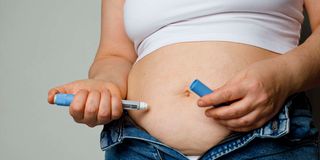
Influencers are ignoring government warnings to continue marketing Ozempic and Mounjaro for weight loss.
"It is not an absolute contraindication, but it requires a doctor's careful oversight," she says.
Cancer patients, except those with medullary thyroid carcinoma, can also take the drug, provided they stay hydrated to avoid pancreatitis. Acharya says semaglutide can even be beneficial in such cases, since obesity is linked to cancer risk.
"Oncologists sometimes want their patients to lose weight so they can fit into radiotherapy machines or scanning equipment," she says.
She also advises against drinking alcohol while on semaglutide, since alcohol can cause dehydration and worsen side effects such as nausea and constipation.
"I tell my patients to choose the day of the week when they are not going out to inject. I say no to weekends, because most Kenyans will go out on Friday, Saturday, or Sunday. I tell them to inject on a Monday or Tuesday, when they are less likely to be drinking socially," she shares.
According to the 2026 report State of Food Security and Nutrition in the World, the number of Kenyan adults living with obesity has more than doubled over the past 12 years, rising from about 1.6 million in 2012 to 3.6 million in 2024. Kenya's obesity rate of 11.3 per cent is higher than the Eastern Africa average of 8.1 per cent, but remains below the African average of 16.6 per cent and the global average of 16.2 per cent.
Follow ourWhatsApp channel for breaking news updates and more stories like this.