Client zero: The first Kenyans to receive the HIV injection
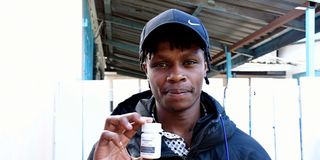
Samson Mutua, a community health promoter, during the interview at Riruta Health Center on February 26, 2026. Mutua became the first Kenyan to receive Lenacapavir, the first-ever long-acting injectable HIV prevention drug.

What you need to know:
- To qualify, a client must be HIV negative, weigh over 35kg, and disclose their medical history and any medication they are on.
- Health Cabinet Secretary Aden Duale said Lenacapavir gives Kenya renewed strength in the fight against HIV.
Samson Mutua, 27, took to the podium minutes after becoming the first Kenyan to receive Lenacapavir, the first-ever long-acting injectable HIV prevention drug, launched on Thursday by the Ministry of Health at Riruta Health Facility in Nairobi.
He was invited to address officials from the ministry and development partners gathered for the occasion.
"I feel lucky, empowered and safe," Mr Mutua told the audience.

Samson Mutua, a community health promoter, gives a speech at Riruta Health Center on February 26, 2026. Mutua became the first Kenyan to receive Lenacapavir, the first-ever long-acting injectable HIV prevention drug.
Earlier in the morning, the Daily Nation had met Mr Mutua before the process began. He sat pensively in consultation room 4 as nurses registered him and confirmed his eligibility.
To qualify, a client must be HIV negative, weigh over 35kg, and disclose their medical history and any medication they are on.
Argwins Mawira, the nurse at the facility whom his colleagues have since nicknamed the 'LEN nurse', sat with Samson and talked him through the process.
"I am ready for today. I feel a bit nervous, but happy. This is the first injection we have for HIV but it will be of great benefit. We have had extensive training for this day and I know everything will be okay," Argwins told the Daily Nation.
After registration, Samson was taken to another room for a mandatory HIV test, since Lenacapavir is specifically for HIV-negative clients.
This was not Samson's first time on pre-exposure prophylaxis, or PrEP. He has been a client since 2017, the year Kenya introduced daily oral PrEP pills.
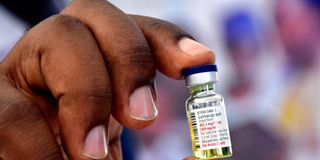
A vial containing Lenacapavir, the first-ever long-acting injectable HIV prevention drug.
Before then, he was so afraid of HIV testing that he once refused to donate blood to a friend's father, knowing a test would be required. When he finally worked up the courage to test, he decided he would always take up HIV prevention.
Until Thursday, Kenya offered only one PrEP option: daily oral pills. That has now changed with the introduction of two more: Lenacapavir, given every six months, and long-acting Cabotegravir, given every two months, both as injections.
Teresia Wanjiku became the first woman in the country to receive Lenacapavir. The Daily Nation reached her that morning as she was dropping off clients from her boda boda rounds before heading to the facility.
"I am over excited and a bit anxious about today," she said. "I never thought this day would come. I have been waiting for this for more than 10 years."
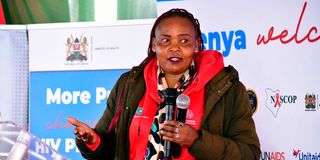
Teresia Wanjiku during the interview on February 26, 2026 at Riruta Health Center. Teresia became the first woman in the country to receive Lenacapavir.
Teresia was part of a 2015 clinical trial that contributed to the approval of oral daily PrEP pills by the Pharmacy and Poisons Board. She sees the injectable option as a welcome improvement.
"This is much easier than taking the pills every day. I am not afraid of getting a prick. At times, one may forget and miss out on taking the pills," she said.
Before coming to the event, she told her husband and children about her decision.
Fight against HIV
"I talk to my children about the risk out here so many times. I tell them about condoms. They asked me so many questions about LEN, especially about its safety, how it works, and how long it stays in the body," she said.
She will return for her next dose in August.
The Daily Nation also met 28-year-old Daisy Oside outside the room shortly after her injection. Growing up in Ng'ando, in Nairobi's Dagoretti South, she witnessed the toll HIV took on her community.
People living with the virus were referred to by local euphemisms like kamdudu, loosely meaning "the one with the virus." Many died, she said, with little or no guidance on how to protect themselves.

Daisy Oside, a social worker during the interview at Riruta Health Center on February 26, 2026. She was among the first volunteers to receive the long-acting injectable HIV prevention drug.
"I am lucky to have been born in an era where there are options. I know if PrEP existed many years ago, we wouldn't be having the many cases of HIV," she said.
Daisy was also clear that Lenacapavir and other PrEP options are not only for those labelled as promiscuous.
"I am taking this because anyone is at risk of getting HIV. I am just happy to get prevention which is better than taking the daily pills," she said.
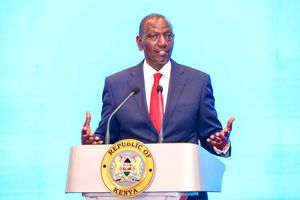
Health Cabinet Secretary Aden Duale said Lenacapavir gives Kenya renewed strength in the fight against HIV, but cautioned that it should not be used as a licence for promiscuous behaviour.
He assured Kenyans that the drug had been properly procured with Global Fund support and had not been rushed.

Health Cabinet Secretary Aden Duale makes his remarks during the launch of Lenacapavir at Riruta Health Center on February 26, 2026.
"This medicine has undergone rigorous scientific review and has been approved by respectable international health authorities as well as our own Pharmacy and Poisons Board," he said.
He added that new infections among young people aged below 24 remain a concern.
Douglas Bosire, acting chief executive officer of the National Syndemic Disease Control Council (NSDCC), noted that two decades ago Kenya recorded about 110,000 new HIV infections in a single year and about 94,000 HIV/Aids-related deaths. Last year, new infections stood at 19,000, roughly 54 Kenyans infected every day.
"This number is unacceptably high for us to close the tap and end new infections by the year 2030," he said. "The launch today is a bold and important move and it is an intervention that saves lives."
Dr Andrew Mulwa, Chief Executive Officer of the National Aids and STI Control Programme, said Lenacapavir does not replace existing HIV prevention methods.
"We are providing options for people to choose from," he said, adding that supply had been structured around existing data on PrEP needs. "Every Kenyan in need of the option that suits them is accommodated and none is superior to the other."
Dr Elizabeth Gitau, Acting Secretary General of the Kenya Media Association, said she was confident the new drug will significantly contribute to efforts to reduce HIV incidences in Kenya and globally.
The Global Fund has invested USD 2.9 million (approximately Ksh370M) for the initial procurement of Lenacapavir, and a further USD 2 million (approximately Ksh256M) for programme implementation to ensure access by targeted beneficiaries.