Private hospitals issue 14-day go-slow notice over Sh76bn debt
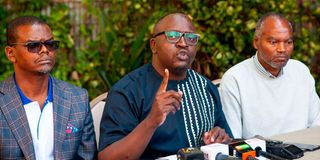
Members of the Rural and Urban Private Hospitals Association of Kenya, from left, Vice Chairman Joseph Kariuki, Chairman Dr Brian Lishenga and Simon Mbugua address journalists at the Boulevard Hotel in Nairobi on February 20, 2025.

Private hospitals across the country have delivered a stark ultimatum to the government: pay outstanding debts within 14 days or face a complete collapse of the healthcare system.
The Rural and Urban Private Hospitals Association (Rupha) issued a two-week go-slow notice to the Social Health Authority (SHA), effective Friday, September 5, warning that the country's healthcare infrastructure teeters on the brink of total breakdown.
Speaking during a press briefing at the association's Nairobi offices yesterday, Rupha chair Dr Brian Lishenga painted a grim picture of hospitals drowning in unpaid government bills totalling Sh76 billion.
"We are willing to continue with the difficulties we have been having in the next 14 days. After that, we only have two options: either we all collapse and get auctioned and sold out or they pay us something and we continue offering services to Kenyans," Dr Lishenga said.
The colossal debt comprises Sh33 billion owed by the defunct National Hospital Insurance Fund (NHIF) and Sh43 billion accumulated under the new SHA system. Rupha is demanding that the government pay at least half of the SHA debt within the next fortnight.
During the 14-day notice period, hospitals will comply with a recommendation from the Kenya Healthcare Federation (KHF) requiring patients to either sign liability letters promising payment should SHA fail to settle bills, or pursue their payments directly with the authority.
Dr Lishenga expressed frustration over the government's continued silence on systemic problems plaguing SHA, warning these could trigger a healthcare collapse within three months.
The association chair revealed that six months have elapsed since President William Ruto publicly announced payments would be made to facilities owed less than Sh10 billion, yet hospitals continue waiting.
"We do want to wait for hospitals to collapse (like St Mary's Hospital in Mumias), so that we go there to revive them," Dr Lishenga said. "The whole idea that payment is happening is a fallacy."
He accused the government of politicising NHIF debt settlement whilst hospitals struggle with mounting financial pressures. He cited delayed Primary Healthcare reimbursements across most counties as evidence contradicting government claims of timely payments.
"This is the lived reality of hospitals, not the narrative of 'timely payments' presented to the public," he said.
The association chair questioned the sustainability of the current SHA model, despite increased registration numbers.
"The bottom line of the problems is that SHA as is at the moment, is unsustainable. We want to appeal to the President to rewrite the model of SHA," Dr Lishenga said.
"Why are we celebrating celebrations? What if 50 million Kenyans registered and there were no contributions?" he asked, highlighting that only a small percentage of registered members actually remit payments.
Rupha has presented several demands to the government, including activating a clarification mechanism within the SHA portal, enabling facilities nationwide to resubmit valid but rejected claims.
The association also called upon Health CS Aden Duale and Chief Justice Martha Koome to establish a dispute resolution tribunal as required under the Social Health Insurance Act.
Additionally, Rupha demands transparent publication of claims data showing both payment amounts to hospitals and portal information.
Whilst opposing all forms of fraud, Dr Lishenga urged CS Duale to publish the names of hospitals found engaging in fraudulent activities for transparency purposes.
He advocated for maintaining human oversight alongside technological solutions, noting, "NHIF used to have surveillance officers and quality assurance officers on the ground. Let us not imagine that AI will replace every human intervention. There is some sense in having people on the ground to see and visit these ghost hospitals to see whether the patients are there."
"We are just sounding a warning that if they (government) won't sort out issues soon, there will be no healthcare to talk about, only a few hospitals will remain standing," he said.