Redefining resilience: One woman's mission to change the sickle cell narrative
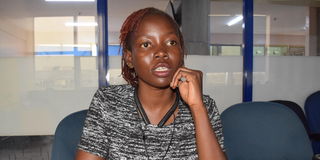
Mitchelle Omullo, who has sickle cell disease, during the interview on September 3,2025.

What you need to know:
- Sickle cell patients experience crises—episodes of pain and complications caused by abnormal, sickle-shaped red blood cells that block small blood vessels, impairing blood flow.
- These crises are often triggered by stress, malaria, and changes in weather.
The adage "when life gives you lemons, make lemonade" is embodied in the life Mitchelle Omullo, a resident of Kisumu. Resilient, determined, and a fighter, she has turned a lifelong diagnosis into a mission of advocacy and hope.
Born healthy in a family of six, Mitchelle’s life changed at the age of three when her mother noticed the unsettling yellow in her eyes.
“My mother gave birth to me at Pumwani Hospital. She always described me as the healthiest of all her children,” she says.
Tests at Kenyatta National Hospital confirmed her mother’s fear: Mitchelle had Sickle Cell Disease (SCD). In a region where 90 per cent of children with SCD don’t live to see their fifth birthday due to a lack of early screening, Mitchelle’s survival was the first of many battles she would win.
Now 32, she is determined to rewrite the narrative of SCD. She runs two organisations: the West Kenya Sickle Cell Organization and Victoria Youth in Film Empowerment, using them to raise awareness, educate, and inform people about SCD.
Her career in film production and the high burden of sickle cell disease in the Lake Region inspired her to start these initiatives. "I wanted to use my skills to shoot SCD-related documentaries across Sub-Saharan Africa," says Mitchelle. "The West Kenya organisation was started to bring sickle cell warriors together and give them a platform to share experiences and sensitise the community."
Mitchelle’s daily routine is a balancing act of work and self-care. Her typical day starts at 5:30am with prayers, followed by emails, house chores, and then meetings or her online work with Havi International. "Though sometimes I get tired, I take a rest and then proceed," she says.
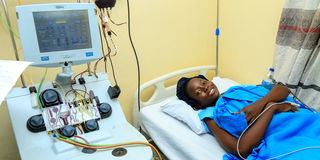
Mitchelle Omullo receiving treatment at Victoria Annex Hospital, Kisumu on September 1, 2025. Ms Omullo is among the first patients to benefit from red blood cell exchange at the facility.
This discipline is hard-won; living with SCD has been far from a walk in the park. She has faced profound stigma, discrimination, and bullying since childhood, often misunderstood due to her condition.
As a child, she was bullied by her peers and frequently missed school due to her condition.
"People often misunderstand us. Personally, I have gone through humiliating and discouraging moments. I thought starting an organisation would help to create awareness of the disease and bridge the gap of misinformation," she says.
Sickle cell patients experience crises—episodes of pain and complications caused by abnormal, sickle-shaped red blood cells that block small blood vessels, impairing blood flow. These crises are often triggered by stress, malaria, and changes in weather.
"Since we moved to Kisumu, the crises started to increase. I missed so many classes I had to repeat a year twice," she recalls.
The constant struggle led to depression and declining grades. "Unfortunately, some family members didn’t understand my condition and would compare me to other children."
Despite these setbacks, she was determined to finish school and pursue filmmaking. She enrolled at the Africa Film and TV Training Institute, though a mild stroke that caused a limp presented new challenges. "Some classmates felt I was slow and unproductive. I was alone most of the time," she says.
After graduating, she landed a job as a social media manager at a film production company, but it lasted less than a month.
But when a crisis kept her out of work for a week, she was terminated upon her return, despite having explained her condition.
"I was served with a termination letter and one month's salary," she says.
For months, job applications went unanswered. "I’ve never been shy about my health status, especially to potential employers. However, I know that firms are a bit hesitant to recruit 'sickly' people,” she states, arguing that people with blood disorders should be judged on their ability, not their health. "There's a need for public awareness to end the discrimination warriors face."
Her desire is to live a purposeful and fulfilling life. Over the years, she has learned to prioritise self-care, including maintaining a balanced diet. She credits her family and her faith with providing a strong support system. Regular checkups at Victoria Annex Hospital have also been instrumental in managing her health.
Single and open to having a family, Mitchelle continues to be a pioneer for the sickle cell community. Recently, she marked a new milestone in her health journey: she was among the first patients to benefit from a Red Blood Cell exchange at Victoria Annex Hospital in Kisumu; a beacon of hope for her and many other warriors.