Relief for Nyandarua patients as new rural dispensaries end long treks for care

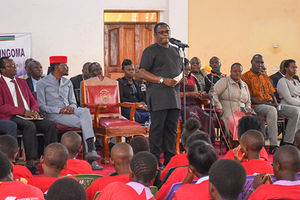
Nyandarua Governor Kiarie Badilisha inspecting medicines at the newly opened Munyeki Dispensary on December 17, 2025.

What you need to know:
- The county’s Health Department has increased the number of public facilities to 92 over the past three years.
- Five additional dispensaries—Olmagogo, Kiganjo, Kangubiri, Moset, and Matindiri—are set to open early this year.
The Nyandarua County government is undertaking a major construction initiative to build primary healthcare facilities across the region. This effort aims to decongest the overburdened JM Memorial Hospital in Ol Kalou and Nyayo Ward Hospital in Kinangop, both Level 4 facilities, while extending essential health services closer to residents.
For years, the scarcity of rural dispensaries and health centre has not only strained referral hospitals but also deprived many residents of their right to free primary healthcare. In the absence of public facilities, communities have been forced to rely on private clinics, which significantly outnumber public options. According to 2022 county data, only 86 of the county’s 193 health facilities were publicly owned.
In response, the county’s Health Department has increased the number of public facilities to 92 over the past three years. Five additional dispensaries—Olmagogo, Kiganjo, Kangubiri, Moset, and Matindiri—are set to open early this year.
Residents say the opening of satellite facilities for Level Four referral hospitals ends decades of inaccessible health services.
“We were traveling more than 12 kilometres to JM Level Four Hospital, where outpatients pay cash for almost every service,” explains Emma Gaceri, a resident of Munyeki, where the latest dispensary opened on December 17, 2025. “This is despite the fact that the health conditions we presented at JM Memorial Hospital should primarily be offered at dispensaries and health centres.”
Besides the requirement to pay cash for outpatient services at JM Memorial Hospital, Loise Wagaki complains that the facility was always congested.
“I nearly lost my child due to long queues at the JM Memorial Hospital, yet most of the cases attended there would have been handled at a dispensary or a health centre. We appreciate and welcome the county’s resolve to open more dispensaries in the rural areas," says Loise.
Peris Mukami from Muhaka-ini in Shamata Ward, Ndaragua Constituency, says patients from her village spent a fortune seeking health services at either Nyahururu Referral Hospital in Laikipia or JM Memorial Hospital.
“Before the opening of the Muhakai-ini dispensary, patients spent Sh400 to go to Nyahururu town, a total of Sh800 in a day, not inclusive of treatment charges, which are, in most cases, paid in cash for outpatients and those without the Social Health Authority (SHA) subscription. This forced many residents to seek treatment from private clinics,” said Mukami.
Through national government and SHA initiatives, the county government’s burden in managing the dispensaries is partly lifted, as patients seeking treatment at the primary healthcare level are not required to pay anything.
Dr Beatrice Mugure, Nyandarua Medical Services director, explained the financial model supporting these new facilities: “At dispensaries and health centers, patients only need to be registered with SHA for completely free treatment. The national government directly compensates the facilities for services rendered, which is why every resident’s registration is so important. Seeking care locally not only makes services more accessible; it also directly upgrades our primary healthcare system because facility compensation is guided by the number of patients treated.”
Not a privilege
Governor Kiarie Badilisha affirmed the county’s commitment: “Investing in new health facilities is about making healthcare accessible, affordable, and dignified for every resident. It is a right, not a privilege.”
He acknowledged that the lack of primary care units had exacerbated congestion at referral hospitals, especially after introducing specialised services such as neurology, orthopedics, cytology, and CT scans at JM Memorial, and a neonatal unit at Nyayo Ward Hospital.
“For instance, JM Hospital has expanded to offer neurology; handling 189 cases since July, orthopedic surgery, cytology, and a CT scan and ultrasound unit that has served over 100,868 patients in the last two years. Operationalising rural dispensaries will be critical in streamlining service delivery and enabling our county-level referral hospitals to continue expanding their specialized care.”
At Nyayo Ward in Kinangop, newly introduced services now include a dedicated newborn unit. This facility ensures vulnerable newborns receive specialised care during their critical first days of life. The unit is staffed by a qualified neonatal doctor and has managed 54 cases since its opening in July of this year.
To further extend healthcare into rural areas and pave the way for expanded services at referral facilities, the county is upgrading more than 10 rural health centre to offer maternity services. The targeted facilities include Kaimbaga, New Mawingu, Heni, Chamuka, and North Kinangop.