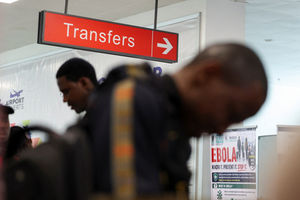
Saudi travel ban on Kenya unjustified, says Africa CDC
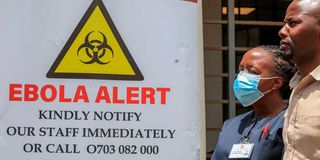
Posters displaying information about Ebola symptoms and hygiene precautions at Nairobi Hospital on October 7, 2026.

Africa CDC has called on Saudi Arabia to review its travel restrictions on Kenya, arguing that a country that detects and contains an imported Ebola case should be supported, not penalised. The appeal comes as Kenya says it has gone 18 days without a new case.
On October 30, Saudi Arabia suspended travel by its citizens to Kenya and halted all visa issuance for individuals arriving from Kenya. It also barred entry to travellers arriving directly from Kenya, or transiting through third countries, if they had stayed in Kenya or any other country with an active Ebola outbreak in the 21 days preceding their arrival in the kingdom.
The kingdom said the measures are meant to mitigate Ebola virus risks. It said they are based on epidemiological assessments by its national health authorities and reflect ongoing coordination with local and international health agencies to evaluate risks, safeguard the health of citizens, residents and visitors, and contribute to global health security.
Dr Wessam Mankoula, Director of the Centre of Public Health Emergency and Lead of the Continental Incident Management Support Team for Ebola Response at the Africa Centres for Disease Control and Prevention (Africa CDC), made the call at Friday's press briefing. He said an imported case is not evidence of failed health security and that Kenya's response was a model for others.
"What has happened in Kenya is a good model. We commend the effort done by the Kenyan authorities in early detection and also having the measures in place for containing this imported case, identifying all possible contacts, putting them under quarantine, investing in having laboratory capacity that's able to diagnose and confirm those cases, having proper case management facilities in addition to also having quarantine facilities, investing in risk communication and community engagement," said Dr Mankoula.
"This is how we see the good model that Kenya is presenting so far with controlling this outbreak. So, countries shouldn't be punished for transparency; countries that are invested in preparing themselves shouldn't be punished for this. Let's focus on isolating the virus, not isolating the country," he added.
Africa CDC says no country should impose such measures without scientific evidence and public health justification. It warned that punishing honest reporting could push countries to hide future outbreaks, putting everyone at greater risk. "In this regard, we are calling for Saudi Arabia to review the measures that have been taken toward travel restrictions for Kenya, and for other countries, no similar restriction should be put in place without public health justification," said Dr Mankoula.
The Ministry of Health said on October 31 that it objected to the measures Saudi Arabia took on October 30. Health Cabinet Secretary Aden Duale said they were out of step with the situation on the ground.

Health CS Aden Duale at a past event.
"We reiterate that the measures taken are not only excessive but also not backed by the current epidemiological situation in the country. For avoidance of doubt, our index case was imported, and we quickly listed and traced all the 135 contacts (100 per cent) related to the case," said CS Duale.
"In addition, we went ahead to place 118 contacts under quarantine. All nine confirmed cases were related to the index case as either healthcare workers (four) or close family members (four). We have not had any transmission of the disease outside this cluster, and I reiterate we have no evidence of community transmission. We have not reported any new case since October 19, 2026," he added.
Director-General for Health Dr Patrick Amoth said the results were deliberate and not a matter of chance.
He said Kenya followed the proven steps that stop Ebola: finding every case early, isolating and treating the sick, tracing and monitoring everyone they came into contact with, protecting health workers, and burying the dead safely and with dignity.
"When the last patient leaves the treatment centre free of the virus, Kenya will begin a 42-day countdown, twice the longest time it takes for the illness to appear. If no new case is recorded in those 42 days, the outbreak will be declared over," said Dr Amoth.
"Ebola is still active in the region, and outbreaks in one country can quickly reach another. Kenya will keep screening travellers at all 26 points of entry, where to date more than 760,000 travellers have been screened, and will keep its emergency operations centres and rapid response teams on alert in every county," he added.
According to the Ministry of Health's Ebola response update for November 6, 2026, Kenya has recorded nine confirmed cases in total, with two deaths.
Six patients have recovered, including one discharged on November 6, while one patient remains under treatment. No new cases have been confirmed for 18 consecutive days since October 19, 2026.
A total of 66 contacts have completed their 21-day monitoring period, while 52 remain under observation. The ministry says Kenya remains open, with no restrictions on travel, trade or public gatherings. It has asked travellers to complete the electronic surveillance form on the UHAI Chatbot before arrival and to report any illness within 21 days.
Members of the public can call 719 free of charge or use the Jali WhatsApp chatbot on 0700 719 719.
Follow our WhatsApp channel for breaking news updates and more stories like this.