Scans, drugs, fares: How breast cancer empties pockets
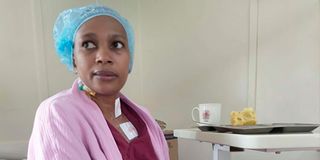
Christine Msungu, a 32-year-old registered nurse who has stage 4 breast cancer.

What you need to know:
- Christine Msungu, a 32-year-old registered nurse, has used her savings, borrowed from friends and relatives, and relied on donations to cover some of her medical bills.
- In less than a year of treatment, she has almost exhausted her cancer benefits under the Social Health Authority, yet she still needs further treatment.
For breast cancer patients, the cost of treatment does not end with surgery or chemotherapy. Diagnostic tests, medicines, hospital travel, and other expenses keep piling up long after diagnosis, even when insurance covers part of the bill.
Christine Msungu, a 32-year-old registered nurse, has used her savings, borrowed from friends and relatives, and relied on donations to cover some of her medical bills. In less than a year of treatment, she has almost exhausted her cancer benefits under the Social Health Authority (SHA), yet she still needs further treatment.
The cost of treatment
Christine's illness began in July 2025, when she felt pain in her right upper arm and armpit. There was no visible lump in her breast, and she did not suspect cancer.
“I just felt pain in my arm and armpit, but it never occurred to me that it could be anything serious,” she says.
She first visited a mission hospital in Kisumu in August 2025.
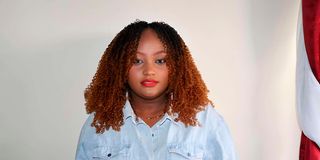
Winfred Mwangi, a stage 4 breast cancer survivor. She celebrated her first year in remission in September after two years of treatment.
“They did some palpation, but couldn’t feel anything, so I went and bought some painkillers,” she says.
She was later referred to Aga Khan Hospital in Kisumu, where she underwent imaging tests and a biopsy. After returning to Nairobi in November, she had further tests, including a mammogram, CT scan and MRI, at the Defence Forces Memorial Hospital, where she worked. Her employer's insurance covered part of the cost.
The tests showed stage 3B breast cancer. She later developed chest pain and difficulty breathing. Further tests showed that the disease had spread to her lungs and kidney, and she was diagnosed with stage four breast cancer.
The tests were costly. She paid Sh4,000 for a mammogram, Sh12,000 for a CT scan, Sh18,000 for an MRI scan and Sh13,000 for a fine-needle aspiration. A PET scan cost Sh56,000.
“I also paid around Sh15,000 for a bone scan, Sh6,000 for an ultrasound and Sh11,000 for a radionuclide scan. Tumour-marker blood tests cost around Sh1,500 per marker, while a cancer-related PCR genetic test costs approximately Sh8,000 for a marker profile,” says Christine.
“SHA paid for the PET scan. But if I need another one, I will have to pay for it in cash,” she says.
In late December 2025, she went to Avenue Hospital in Parklands, where she began chemotherapy in January 2026. She has now completed eight cycles. She says the cost depends on the type of chemotherapy and ranges from Sh40,000 to Sh150,000 per session. SHA paid Sh5,500 towards each session, and she paid the rest.
She now needs another six cycles to target the cancer that has spread to her lungs.
She also needs medication and fluids before treatment, and injections after each cycle to increase her white blood cell count. Each injection costs between Sh3,600 and
Sh4,000 —medication for low haemoglobin costs around Sh1,500 per pack.
“I spend between Sh50,000 and Sh60,000 on medicines, supplements, and other medical necessities each month,” she says.
Christine also lives with a heart condition and migraines that require medication. Pain management adds to her expenses. Morphine syrup costs around Sh3,700 for a 100-millilitre bottle, while morphine tablets cost between Sh170 and Sh220 each. She takes pain medication at regular intervals, sometimes every four hours.
She is also due to have 35 radiotherapy sessions at Nairobi West Hospital, at Sh3,600 each. The full course will cost Sh126,000, before transport and other expenses.
Under the published SHA tariff, radiotherapy is covered at Sh3,600 per session for up to 30 sessions, which comes to Sh108,000. However, the tariff does not automatically cover the remaining five sessions of her prescribed course.
A trip to and from hospital costs her at least Sh3,000.
“The total amount allocated to me is Sh800,000. I have completed the first line of treatment and should start the second as soon as possible. My benefit is almost finished because of the expensive medication, procedures, consultations and accommodation,” she says.
The cost beyond hospital bills
Christine has not been able to work since December 2025, when her illness and treatment made it difficult to continue in her job.
After the death of her partner, who had been a major source of support, she now depends on friends, colleagues, former bosses and online well-wishers for help.
“Sometimes I have struggled to buy prescription drugs, meet treatment-related expenses and cover my basic living costs while being unable to function as before,” she says.
“When I can’t afford my medication, hospital visits or immediate financial bills, I become anxious, emotionally exhausted and tense, especially for my son,” she says.
She has seen other patients struggle to afford transport to and from hospital for chemotherapy.
“I have seen patients just hanging around the hospital waiting for chemotherapy because they can’t afford to go home and come back another day,” she says.
“Right now, I totally depend on medication to survive. It’s really draining. I have used all my savings and borrowed from everywhere until I have nowhere left to borrow from.”
The money struggles have also strained her relationships with people she once relied on.
“Sometimes friends just ignore my messages and calls because they know I’m going to ask them for money,” she says.
The experience has been especially hard because she spent much of her working life caring for others before becoming a patient herself.
“I am a registered nurse and a mother. I have spent much of my life caring for others, and I never imagined that one day I would find myself on the other side, fighting for my own health,” she says.
“It has impacted my finances, my independence, my peace of mind and almost every aspect of my life.”
What keeps her going, she says, are her son, her nursing identity, faith, her role as a carer, the friends who have supported her, and her desire to keep living.
She wants cancer patients to receive treatment without having to depend on public appeals or the generosity of strangers to afford essential medicines.
“I wish for cancer patients to have access to affordable, continuous treatment. Financial hardship should not make an already difficult illness even harder to manage,” she says.
“I would advocate for affordable, accessible cancer treatment so that no patient has to choose between buying medication and meeting their basic needs. No patient should have to fight for their life while feeling abandoned or wondering where their next dose of medication will come from.”
The cost of diagnosis and recovery
For Winfred Mwangi, 33, the costs of breast cancer treatment began with the tests to find out whether a lump in her breast was cancerous.
She first noticed a small, painless lump in her breast in 2022. By January 2023, it had grown and become visible.
The first scan did not show some of the signs commonly linked to cancer, including blood supply to the mass. She also had no other noticeable symptoms, such as nipple discharge, skin rippling or an inverted nipple.
“In January 2023, the lump started to become visible and grew bigger. So, I decided to get a scan, which showed that it was not cancerous,” she says.
In May 2023, she had a lumpectomy at Luton Hospital in Nairobi, costing around Sh80,000. The surgeon removed three suspicious-looking masses.
A biopsy confirmed cancer cells in the masses, though the surrounding tissues were not affected. Immunohistochemistry tests were then done to determine the type of cancer.
Before treatment, a CT scan of her chest and pelvis showed changes in her lungs. She had suffered from tuberculosis in 2007, when she was in Class Eight. Even so, doctors first suspected that the cancer had spread from her breast to her lungs, and told her she had stage four disease.
She sought a second opinion at Kenyatta National Hospital (KNH), where she was referred to Kenyatta University for a whole-body PET scan.
At KNH, she paid Sh1,200 for a consultation, Sh400 to open a file and Sh50 for a patient card.
For the PET scan, a tracer was injected into her body before imaging to find out whether the cancer had spread to other parts. The scan cost Sh55,000 and was covered by her insurance at the time, the National Hospital Insurance Fund (NHIF).
The tests showed that an earlier tuberculosis infection, not cancer, had caused the changes in her lungs. Further assessment showed that the cancer had spread to the lymph nodes in her armpit.
Doctors recommended eight chemotherapy sessions before surgery to remove the affected breast tissue and lymph nodes.
Each session cost about Sh30,000 when all the necessary medicines were available. The total for eight sessions was about Sh240,000.
When the hospital ran out of some medicines, she had to buy them from private pharmacies. In such cases, the hospital charge was between Sh18,000 and Sh22,000, and the missing medicines added to her out-of-pocket costs.
Blood tests before each chemotherapy session cost around Sh3,000, or about Sh24,000 for the eight sessions. She also needed medication before and after treatment, injections to boost her immunity and drugs to manage side effects.
After chemotherapy, she had surgery costing about Sh135,000, which she says was covered by insurance and SHA. However, the medicines and equipment used during her recovery, including a drainage system, cost an extra Sh5,000. This is besides other aftercare medicines.
She later had about ten radiotherapy sessions at the Texas Cancer Centre, which were also covered by insurance.
The costs did not stop there. After her first lumpectomy, she had to return every week for wound dressing, paying between Sh1,000 and Sh1,500 in cash each time.
Transport from her home in Utawala, Nairobi, to KNH also added to the bill, costing between Sh1,500 and Sh2,000 per visit.
“If you add up these fares, you’ll realise that a lot of money is spent on travel. Then there is also blood work to be done, which you have to pay for yourself, not to mention the dietary requirements,” says Winfred.
The frequent hospital visits and the side effects of treatment meant she could not work regularly. She worked from home whenever she was able, but her family and friends helped cover some of the expenses.
She says fundraising and contributions from relatives helped her pay for treatment and related costs. Her parents and an uncle also helped with the initial surgery and aftercare expenses.
September 2026 marked her first year in remission.
The household cost of breast cancer
The experiences of Christine and Winfred are reflected in a study by radiation oncologist Lyndah Kemunto, titled ‘Household Costs of Breast Cancer and Coping Mechanisms in Kenya: A Case Study of Kenyatta National Hospital’. The study looked at the financial burden on 103 breast cancer patients treated at KNH in 2024.
It estimated the average total household cost of breast cancer at Sh2.14 million per patient. This included direct medical expenses averaging Sh1.34 million, non-medical expenses of Sh287,625, and indirect costs, including lost income, of Sh513,229.
Targeted therapy cost an average of Sh606,847 among the 46 patients who received it. Inpatient care cost an average of Sh146,962 among the 13 patients who received it, while surgery cost an average of Sh128,083 among the 60 patients who had it. Chemotherapy cost an average of Sh125,118 for the 98 patients who received it, and hormonal therapy cost an average of Sh103,744 for those who received it.
The study found that the cost of treatment depended on the type and stage of cancer, as well as the treatment a patient needed. Patients with Luminal B cancer and those diagnosed at stage four had the highest overall costs.
“Although NHIF covered between 25 per cent and 50 per cent of direct medical expenses for insured participants, patients still had to meet the remaining costs,” Dr Kemunto said in her research.
To raise money for treatment, 97 per cent of participants relied on personal income and savings, 29 per cent sold assets, and 22 per cent took loans.
For patients on trastuzumab, a targeted breast cancer medicine, one dose costs around Sh33,800. Eighteen doses would come to Sh608,400, not including blood tests and other related expenses. Eight rounds of blood work at Sh4,500 each would add another Sh36,000.
What SHA covers
Christine and Winfred's experiences come as the government expands the cancer benefits package under SHA.
The annual cancer benefit has gone up from Sh550,000 to as much as Sh800,000. This includes Sh400,000 from the Social Health Insurance Fund (SHIF) and another Sh400,000 from the Emergency, Chronic and Critical Illness Fund (ECCIF) for patients who have reached their SHIF limit.
The previous Sh550,000 package included Sh400,000 from the SHIF and Sh150,000 from the ECCIF.
The extra allocation is intended to help patients whose treatment costs exceed the initial SHIF cover. However, access to the additional Sh400,000 depends on eligibility, paid-up SHIF membership and budget availability. It is therefore not an automatic extra payment for every cancer patient.
SHA chief executive officer Dr Mercy Mwangangi says the authority is working to improve access to cancer care and ensure that patients are treated at its contracted facilities.
Health Cabinet Secretary Aden Duale says patients should not be charged for services covered by the package.
“While some facilities may experience operational or cash flow pressures, patients should not be charged for covered services, and any confirmed violations will be addressed,” says Duale.
The revised tariff schedule under Legal Notice No 78 of 2026, which took effect on May 8, 2026, sets out specific payments for cancer services.
It covers up to four oncology consultations at Sh2,500 per visit. These consultations bring together a team of specialists, including an oncologist, nutritionist, pharmacist, social worker, palliative care provider, spiritual care provider and mental health specialist.
Chemotherapy administration is covered at Sh5,500 per session, while radiotherapy is covered at Sh3,600 per session for up to 30 sessions. The package also covers chemotherapy port insertion at Sh15,000 and supportive care medicines worth up to Sh10,000.
Diagnostic services include CT scans at Sh6,900, MRI scans at Sh11,000, PET scans at Sh53,500, and bone scans at Sh15,000. Other laboratory and specialised tests, including full blood counts, kidney and liver function tests, histology, cytology and PCR gene detection, are covered at set tariffs.
The package also includes brachytherapy at up to Sh40,000 for three sessions, and stereotactic radiotherapy at up to Sh70,000 for five sessions. Follow-up care for patients in remission will be provided in line with national cancer treatment protocols.
The tariffs are the rates used to reimburse approved services at contracted facilities. This does not mean SHA will pay any amount a hospital charges. Payments depend on benefit limits, the approved treatment plan, and whether the facility is contracted and authorised to offer the service.
For example, the authority paid Sh5,500 towards each of Christine's chemotherapy sessions. This is the administrative fee and should not be confused with the total cost of the medication and other treatments needed during a session. She says this can range from Sh4,000 to Sh15,000, depending on the type of chemotherapy.
The package is available to eligible members through facilities that are contracted and approved to provide oncology services.
According to the Ministry's 2026 tariff assessment, oncology services under the package are offered at Level 3 to Level 6 facilities that are certified by the National Cancer Institute and have the capacity to provide the service.