Before her operation, Catherine Nafula, 33, did not dread losing a breast. A counsellor had told her she could wear a prosthesis, an artificial breast, afterwards to restore her appearance and lift her self-esteem, and she was focused on getting through the surgery.
“It was only after the operation that the reality of losing a breast began to sink in,” said Catherine, a mother of two who was diagnosed in 2025. “I was afraid of coming out of the house or people looking at me, and I did not want to interact with people.”
Her recovery began with a friend, who introduced her to a woman who had worn a prosthesis for years. Catherine bought a crocheted one, which cost far less than silicone. It was not comfortable.
“The yarn and fibre filling made the prosthesis feel heavy and rough against my skin. I had to adjust to wearing an elastic bra after years of using ordinary bras.”
The rough material kept irritating her skin, so she bought breast pads to stop it rubbing against the wound.
Still, the prosthesis gave back something she had lost. “The prosthesis has helped me regain some of the confidence I lost after surgery. I can now move around more freely and interact with people without the same fear of being noticed.”
Her husband and children were central to that. They stayed with her through hospital visits and chemotherapy, when her hair began to fall out. “They kept reminding me not to focus on how I look, but to be grateful that something that was meant to kill me had been removed,” she said.
She hopes to buy a silicone prosthesis one day. For now, the crocheted one will do.
Her experience is common among women who have had a mastectomy, a surgery where a doctor removes one or both breasts in Kenya. Prostheses and specialist bras are expensive, hard to find outside the capital and rarely covered by insurance.
For Selpheranne Omukami, 41, the idea of wearing a prosthesis took time to accept. In 2025, she noticed a lump on her left breast. It vanished, then returned in April with a wound. After seeing several doctors and finally a breast specialist, a biopsy confirmed cancer.
Preparing for surgery to remove the diseased breast she found, was not the same as being ready for what came after. “Before surgery, my mind had not accepted that I was going to live with one breast,” she said.
About two months passed before she tried a prosthesis. She began with padded bras, which were softer than the crocheted form and did not irritate her skin. Then she discovered silicone. It is more expensive, but it feels more natural and is easier to clean. Crocheted prostheses, she said, can lose their shape in the wash, leaving them hard to match to the remaining breast.
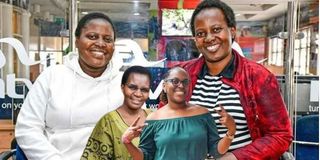
Catherine Nafula Wamalwa (left) and Selpheranne Omukami during an interview at Nation Centre on October 16, 2026.
Photo credit: Francis Nderitu | Nation Media Group
Selpheranne changed how she dressed, choosing looser clothes that do not press on her scar. Her confidence grew as she became more at ease wearing mastectomy bras and prostheses around other people.
Then came another setback. While she waited for radiotherapy, the cancer returned, and she needed more intensive treatment. “It is not an easy journey starting again, but despite the recurrence, I am still hopeful that one day I will beat the cancer,” she said.
Joyce Opumbi, 41, was diagnosed at 34 with cancer in her left breast. The prospect of a prosthesis felt less like help than like a reminder of what she was about to lose.
Joyce Opumbi, 41, shares it took almost 3 months to fully get adjusted to wear her prosthesis after her diagnosis with breast cancer at 34 years.
Photo credit: Pool
“My mind was already racing with the diagnosis and the prospect of surgery,” she said. “Being told that I would need artificial foam or silicone inserts felt like another reminder of what I was about to lose. I worried about whether the prosthesis would look artificial, whether people at work or on the street would notice it, and whether it would slip out of place.”
She waited about three months after surgery before trying one. The first time brought a mix of strangeness and relief. “The surgical site was still tender, and the weight of the silicone form felt unfamiliar against my chest. But looking in the mirror while wearing my clothes gave me an unexpected boost.” For the first time since the operation, she looked like the woman she remembered. The scar had made her feel that part of her identity had been taken.
“The prosthesis did not erase that loss, but it helped me feel more comfortable in public without worrying that my medical history was visible to everyone around me.”
Practical problems remained. Her skin was sensitive, and certain fabrics, seams and under-wired bras hurt. “Silicone forms could feel warm and cause me to sweat, and the lighter options sometimes shifted out of place,” she said. “Attending social gatherings, church or family events brought anxiety over whether hugs would feel unnatural or hard to the person embracing me.”
That changed once she found a secure, well-fitted bra. “Being able to wear my favourite button-up blouses or tailor-made outfits without obvious asymmetry allowed me to engage in social life without feeling defined by my diagnosis.”
The reactions of those around her mattered too. “When loved ones treated the prosthesis simply as a practical accessory (like eyeglasses) rather than something uncomfortable or taboo, it validated my feelings and relieved the pressure I felt to hide my altered body.”
The experience reshaped how she thinks about herself. “Before surgery, like many women, I subconsciously tied femininity to conventional physical traits like symmetry, cleavage, and curves. Losing a breast shattered that superficial definition. It forced me to detach my self-worth from societal body standards and look deeper into what true womanhood means.”
“The scars on my chest ceased to represent loss; instead, they became proof of endurance and life,” she said. “Femininity became an inner state of grace, warmth, courage, and authenticity that no surgery or physical alteration could ever diminish.”
Grace Okello, 53, was diagnosed at 49. She had chemotherapy and later a mastectomy of her right breast.
Grace Okello, 53, was diagnosed with breast cancer when she was 49 years but started wearing her prosthesis in 2023.
Photo credit: Pool
“On August 22, 2022, I got my first breast prosthesis and mastectomy bra. I was excited about the possibility of restoring my appearance and feeling more like myself again. At the same time, I found the set quite expensive,” she said.
She tried it on in hospital before she was discharged. It fitted so well that she thought: “No one will ever notice that I lost my right breast to cancer.” For a moment she believed she could face the world without worrying about the change.
But she did not wear it consistently in the following months, while her wound healed. “When I wore it again, I felt the weight. It was heavier than my normal breast. I opted for a crocheted one filled with fibre, which was lighter as opposed to the silicone one.”
The lighter form brought other problems. It did not balance with her remaining breast and sometimes crept upwards or slipped, especially under loose tops. Front-buttoned dresses and blouses made the asymmetry more obvious, and low necklines left her worrying that the prosthesis or scar might show. Cotton was comfortable, but polyester irritated her skin, particularly in hot weather.
Second-hand bras, though cheap, rarely worked. “The other prosthetic bras that I bought second-hand never really fitted well. As much as they were cheap, it was hard to get the right size.”
Grace is still aware of the imbalance and sometimes finds herself tugging a blouse back into place. She misses the African-print outfits she used to wear.
Still, she has learnt that recovery is about more than appearance. “On days when I am not working, I prefer to go without the prosthesis because I feel free, natural and comfortable,” she said. “It is sometimes the stare of a stranger that reminds me of the change.”
For these women, comfort depended on more than their feelings. It also depended on what was available and what they could afford.
Joyce pointed out that specialist shops and fitters are hard to find outside major centres such as Nairobi. “Even in urban areas, choices can be limited, leaving women to rely on recommendations from other survivors or to seek products abroad. Health insurance schemes rarely cover post-mastectomy prostheses and specialised bras, with some treating them as cosmetic rather than essential to physical comfort and emotional well-being.”
At the Basic Intimates shop, prostheses and mastectomy bras cost between Sh3,500 and Sh6,500, depending on the weight of the prosthesis. It stocks silicone forms in nude and sable brown, from 250 to 900 grammes, and bras in sizes 34B to 46D.
“Customers who do not know their bra size are assisted in finding a suitable fit,” said Rehema Dalo, a shop attendant. Dalo advised cleaning a silicone prosthesis with lukewarm water and a clean towel rather than soaking it. “It should also be stored carefully to prevent punctures or damage that could distort its shape. Depending on how it is used, a prosthesis can last between two and three years.”
Dr Justus Wambugu, an obstetrician gynaecologist at Aga Khan University Hospital, explains that breast prostheses are commonly used after breast surgery that alters the breast’s shape.
“Soft foam or fibre-fill prostheses are typically used temporarily in the early days after breast removal surgery(mastectomy), while silicone prostheses can either be external or internal, otherwise termed as silicone breast implants. On the other hand, mastectomy bras are supportive undergarments specially designed to hold breast prostheses in place,” he says.
Medically, he notes mastectomy bras can be used to provide comfort and support early on following breast surgery. “They can also be useful in supporting wound dressings or drains placed post-surgery. Later on, breast prostheses and mastectomy bras are crucial in restoring body symmetry and image, which significantly foster a positive body image and emotional well-being of a woman who has undergone breast removal surgery. “
Cynthia Magelo displays breast prostheses at Basic Intimates at Westgate Shopping Mall in Nairobi on October 8,2026.
Photo credit: Evans Habil | Nation Media Group
The benefits go beyond a positive body image in that a well-fitting and appropriately placed prosthesis can also provide a sense of balance, particularly in a woman who has undergone mastectomy only on one breast. They can also offer an alternative to breast re-constructive surgery.
Dr Wambugu notes it is not uncommon for a woman to experience a sense of loss and alteration of self-identity after a mastectomy.
However, he says timing on when to use a prosthesis is primarily determined by the healing stage of the surgical wound. “In the early stages, a foam or lightweight fabric prosthesis can be worn temporarily, supported by a well-fitting mastectomy bra, following suitability assessment by the surgical team,” he says. “After adequate healing of the incision, typically around 8 weeks post-surgery, a woman can be assessed for possible fitting of a long-term silicone prosthesis.”
For those who need further treatment such as radiotherapy, he says use of a prosthesis is usually delayed until after treatment is complete and skin changes have completely healed. “Evaluation by a breast specialist is paramount in determining the timing and appropriateness of one type of prosthesis over another.”
Still, he points out that the choice between a temporary and a permanent prosthesis largely depends on wound healing and whether there’s an indication for further treatment such as radiotherapy post-surgery.
“One may choose to undergo breast reconstruction surgery after adequate wound healing based on factors such as personal preferences, desired shape and size, availability and affordability of the procedure, as well as the comfort of not having to rely on an external device,” he adds.
Several factors, however, influence the suitability for breast reconstruction surgery, including one’s overall health, the characteristics of a particular cancer and the amount of skin or tissue remaining following mastectomy.
Dr Wambugu cautions that women wearing prostheses should watch out for any new-onset rash, blistering or skin sores, persistent skin redness, unusual warmth, swelling or pain, discharge or pressure marks that persist after removing the bra or prosthesis. In the event of such symptoms, they should be reviewed by a doctor.
“Sensitive skin does not mean that a woman cannot wear a prosthesis. The key thing is to have an appropriate prosthesis as guided by a specialist and to watch out for any warning signs discussed above.”