Scientists call for global food system overhaul to avert worsening land crisis
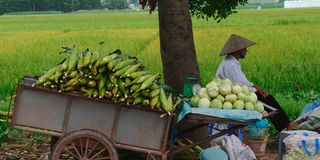
A farmer sells newly harvested maize and fruit on the outskirts of Hanoi on September 7, 2012. Scientists have warned that global food system drives land degradation, urging radical reforms to cut waste and shift diets.

What you need to know:
- Scientists warn global food system drives land degradation, urging radical reforms to cut waste and shift diets.
- Landmark study calls for halving degraded land, reducing food waste, and promoting sustainable seafood by 2050.
Humanity is being urged to radically rethink the way it grows, eats, and wastes food—or risk accelerating land degradation, worsening climate instability, and driving biodiversity collapse on an unprecedented scale.
Once hailed for fuelling population growth and economic expansion, the global food system is increasingly being criticised by scientists, policymakers, and development experts as one of the greatest drivers of environmental destruction, inequality, and vulnerability to climate shocks.
The global food system contributes nearly one-third of greenhouse gas emissions, depletes freshwater supplies, and is a leading cause of biodiversity loss. Yet paradoxically, it still fails to feed everyone.
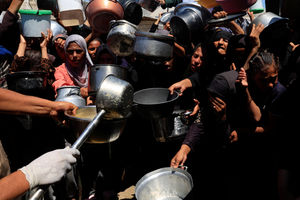
The UN estimates that more than 735 million people went hungry in 2023, while nearly two billion adults are overweight or obese. In Africa, the contradictions are starker: the continent imports food worth billions annually despite vast uncultivated arable land, while climate extremes and post-harvest losses keep millions food insecure.
For example, studies in Kenya show up to 40 per cent of harvested maize is lost to poor storage and pests. “That is land, water, and fertiliser invested in food that never gets eaten,” the paper notes.
In a landmark paper published this month in Nature, a team of 21 global scientists outlined how transforming food systems can halt and reverse land degradation, stressing that this must be a top global priority to curb climate change and safeguard biodiversity.
Their prescription is both urgent and ambitious: “Slash food waste by three-quarters, harness the oceans to provide sustainable nutrition, and restore half of the world’s degraded land by 2050.”
From sprawling farmlands that consume forests, to supply chains that let a third of all food rot before reaching plates, to diets that leave hundreds of millions hungry even as obesity surges—the cracks in the system are widening, the scientists observed.
Globally, some 56.5 million square kilometres of cropland and rangeland are dedicated to food production, yet 33 per cent of that food never gets eaten—about 14 per cent lost on farms after harvest and another 19 per cent wasted in shops, restaurants, and households.
The scientists calculate that cutting food waste by 75 per cent could free up 13.4 million square kilometres of land—an area larger than China—relieving pressure on ecosystems. They called for policies to curb overproduction, ban cosmetic standards that reject “ugly” produce, and promote food donations or discounts for near-expiry items.
New laws in Spain
A good example, they said, is Spain, which is already moving ahead with new laws requiring supermarkets to donate or sell surplus food and restaurants to provide take-home containers.
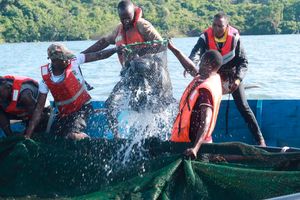
Dietary shifts are another key pillar. Red meat, especially when produced unsustainably, consumes vast amounts of land and water while emitting high levels of greenhouse gases. By contrast, seafood and seaweed are nutrient-rich, lower-impact options.
The authors estimate that replacing 70 per cent of unsustainably produced red meat with responsibly sourced seafood and aquaculture could free up 17.1 million square kilometres of land. Substituting just 10 per cent of global vegetable consumption with seaweed-derived products could spare another 0.4 million square kilometres.
Combined with food waste reduction and land restoration, these changes could free or restore 43.8 million square kilometres of land by 2050—an area nearly the size of Africa.
Beyond restoring land and reducing emissions, the proposed measures would deliver major biodiversity gains by improving habitats and preventing the conversion of natural ecosystems into cropland.
They would also help countries meet commitments under key international accords, including the three Rio Conventions on climate, biodiversity, and desertification, as well as the Sustainable Development Goals. The experts urge closer coordination among the Rio Conventions—CBD, UNCCD, and UNFCCC—so that knowledge can be shared, progress tracked, and science translated more efficiently into policy, ultimately accelerating action on the ground.
“Land restoration, the scientists stress, must centre on the people who live on and manage the land, particularly Indigenous Peoples, smallholder farmers, and women,” they warned. “Most of the world’s food is grown by small and family farms, yet they face systemic barriers.”
The authors urge governments to redirect subsidies from large industrial farms towards sustainable smallholders, while also ensuring they have access to technology, secure land rights, and fair markets. “We cannot keep producing more food at the expense of the planet, while allowing so much to be lost, wasted, or consumed in unhealthy ways,” cautions the paper.
“Land degradation isn’t just a rural issue; it affects the food on all our plates, the air we breathe, and the stability of the world we live in,” warns Barron Orr, UNCCD’s Chief Scientist.
“Once soils lose fertility, water tables deplete, and biodiversity is lost, restoring the land becomes exponentially more expensive. Ongoing rates of land degradation contribute to cascading global challenges, including food and water insecurity, forced relocation and population migration, social unrest, and economic inequality.”
“By transforming food systems, restoring degraded land, harnessing the potential of sustainable seafood, and fostering cooperation across nations and sectors, we can ‘bend the curve’ and reverse land degradation while advancing towards global goals,” adds lead author Fernando T. Maestre of Kaust, Saudi Arabia.
“Land is more than just soil and space; it is a living system that harbours biodiversity, cycles water, stores carbon, and regulates our climate. It feeds more than 8 billion people, yet modern farming practices, deforestation, and overuse are degrading soils, polluting water, and destroying ecosystems. Food production alone is responsible for nearly 20 per cent of global greenhouse gas emissions,” notes co-author Elisabeth Huber-Sannwald, Professor at Instituto Potosino de Investigación Científica y Tecnológica, San Luis Potosí, Mexico.
“To secure a thriving future, we must reimagine how we farm, how we live, and how we relate to nature—and embrace land stewardship, treating land as a living ally rather than a resource to exploit.”
The paper concludes: “Food systems have not yet been fully incorporated into intergovernmental agreements, nor do they receive sufficient focus in current strategies to address land degradation. Rapid, integrated reforms focused on global food systems, however, can move land health from crisis to recovery and secure a healthier, more stable planet for all."